By Staff Reporter
ISLAMABAD: Defence Minister Khawaja Asif on Tuesday dismissed speculation about a military operation in the Tirah valley of Khyber Pakhtunkhwa province, calling the recent migration of residents as a longstanding seasonal practice amid harsh winter conditions, even as displaced families endured hardships under open skies due to alleged mismanagement by authorities.
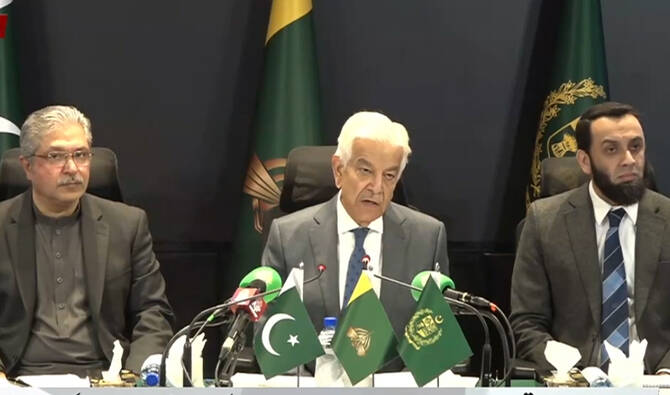
Flanked by Information Minister Attaullah Tarar and Special Assistant to the Prime Minister for Information and Khyber Pakhtunkhwa Affairs Ikhtiar Wali Khan at a press conference in Islamabad, Asif sought to clarify the government’s position two days after a public spat between federal and provincial officials over the evacuation of hundreds from the area ahead of planned action against militants.
The evacuations, coordinated among local elders, the provincial government and the military, have sparked controversy, with residents left stranded in cold weather and complaints of inadequate support exacerbating their plight. Many families, including women and children, have been forced to seek shelter in makeshift camps that offer little protection from freezing cold, and aid efforts fell short.
“The armed forces deployed in that area have nothing to do with it. This is an arrangement between the jirga and the provincial government, and as a result of that, this notification was issued,” Asif told reporters, displaying a notification from the Khyber Pakhtunkhwa government. The Pakistan Tahreek-e-Insaf led provincial government had approved a Rs4 billion package for the migrating population.
The federal information ministry had earlier mentioned the same notification from the provincial Relief, Rehabilitation and Resettlement department, which allocated the funds for short-term, willing shifts from parts of Tirah’s Bagh area. The funds were meant for support to those moving out. The ministry said the army and federal side had not told anyone to clear out the valley.
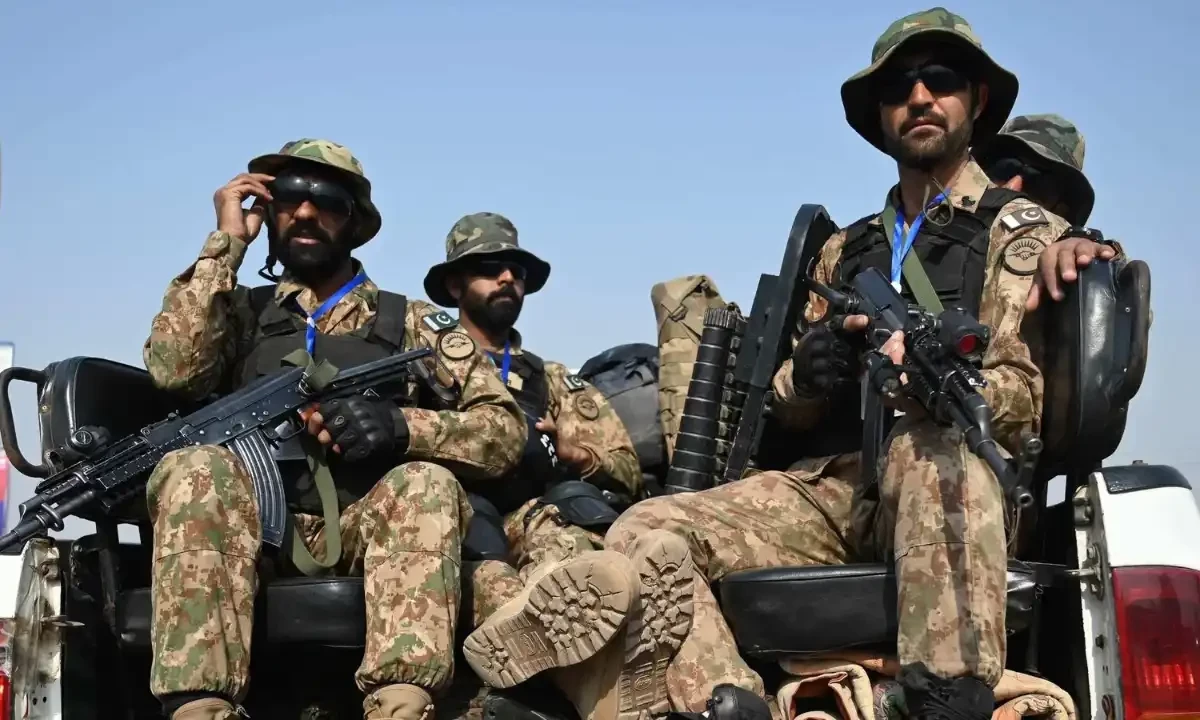
Asif said members of the banned Tehreek-i-Taliban Pakistan (TTP) were present in Tirah with their families, numbering around 400-500. A full-scale military operation in Tirah had occurred years ago, with the strategy shifting to intelligence-based operations (IBOs) to minimise collateral damage. “And it was strategically decided then that intelligence-based operations are way more effective than operations; the collateral damage is way less. So, the armed forces have not carried out an operation in years in favour of IBOs,” he said. “This is why this practice has been ongoing there for many years, and that is why there is no question of any operation there.” People in the valley often head to lower ground in winter, he said.
Responding to a query on reports from international media that 65% of residents had vacated their homes, Asif said: “People escape the snowfall in the area and relocate. And more or less 65pc of the people migrate. There is historical evidence of this. And this will continue to happen in the future as well.”
He blamed politicization for creating an impression of forced relocation, insisting any such issues were between the provincial government and locals. “The military has been carrying out IBOs there and will continue to do so. As I said, there are around 500 TTP members there. The military conducts IBOs and weeds them out,” Asif said.
Asif recalled jirga meetings on Dec. 11, 21 and 31 last year, involving the civilian administration but not the military. The jirga, formed years ago with all 24 members in agreement, had demanded improvements in local infrastructure. “It has been meeting the civilian government. You don’t see the military anywhere in this matter,” Asif said. “Now, in the presence of the jirga and this notification, where do you see the military’s involvement in this?”
He suggested the Khyber Pakhtunkhwa government was shifting blame for its failures onto the military or a non-existent operation. Referring to the migration, Asif said it was a decades-old tradition linked to the area’s climate and topography, even cited in a British-era gazette. “This transition takes place every year. This is nothing unusual, but the PTI government has tried to make it appear unusual.” Asif reiterated that military presence or an operation was merely an “assumption,” with no such action in years.
On Khyber Pakhtunkhwa Chief Minister Sohail Afridi’s claim of not being involved in talks with tribal elders, Asif said that was “his and his government’s problem. The talks were held with his government, and if he was not in the loop, that is not my problem or the problem of the federal government.”
The minister lambasted the provincial government’s performance, pointing to the absence of essential services such as hospitals, schools and police stations. “There is a complete absence of civilian law enforcement agencies in Tirah. There is no police station there.” Asif also mentioned hemp cultivation across 12,000 acres in the valley, yielding profits of 3-3.5 million rupees per acre. The hemp’s uses in medicines, construction materials and bricks, but alleged that revenues were being diverted to political figures or the TTP. “Hemp is harvested there and dividends earned from it either go to the people associated with politics or the TTP. We have initiated measures to stop this, so that Tirah’s people benefit from this harvest, and schools and hospitals are constructed there,” Asif said. He accused the provincial government of aligning interests with the TTP in exploiting this resource.
A journalist noted migrations typically occur in late October or early November, questioning the timing amid reports of families facing dire risks. Tarar attributed it to climate change shifts. “Previously, there was no snowfall at the end of January. It used to start in November.”
The migration has exposed tensions between the provincial government and the military establishment over the use of force in the region. KP Law Minister Aftab Alam Afridi said earlier this month that the provincial government will not allow a military operation to take place in the area, arguing that past military campaigns had failed to deliver lasting stability.
Copyright © 2021 Independent Pakistan | All rights reserved