By Staff Reporter
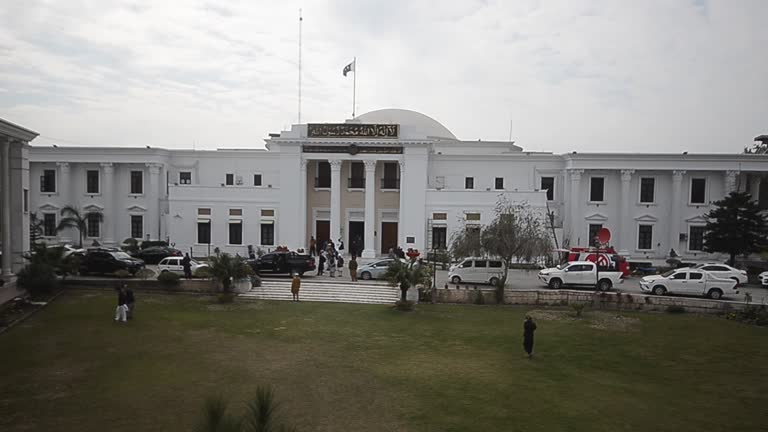
ISLAMABAD: Pakistan’s election authority is scrambling to ensure Khyber Pakhtunkhwa’s Senate elections proceed on July 21, urging the province’s governor and chief minister to convene the assembly and swear in new members elected on reserved seats before a looming deadline.
The Election Commission of Pakistan (ECP) warned in letters on Monday that delays in oath-taking for reserved seat members threaten the polls.
In letters dispatched to Governor Faisal Karim Kundi and Chief Minister Ali Amin Gandapur, ECP Secretary Omar Hamid Khan stressed that the oath-taking of newly elected members on reserved seats remains unresolved.
“The commission is obligated to conduct Senate elections in the province, which had been set for July 21. But the matter of administration of oath is still pending and delayed,” the letter to the governor’s principal secretary read.
Without taking their oaths, these members cannot participate in assembly sessions or cast votes in the Senate elections, effectively stalling the formation of the electoral college. “The notified members of the provincial assembly on the reserved seats cannot take part in the assembly session or vote in Senate polls, if not administered oath,” Khan warned in his correspondence.
The ECP’s efforts hit a snag with the KP Assembly speaker, who was asked on July 4 to administer the oaths but replied that he lacks the authority to call a session on his own. “Neither the Constitution nor the Provincial Assembly of Khyber Pakhtunkhwa Procedure and Conduct of Business Rules, 1988, contain any provision empowering the Speaker to summon a session of Assembly on his own,” the speaker wrote, according to a copy of his response cited by the ECP.
That impasse prompted the ECP to turn to the province’s top officials. In its letter to Governor Kundi, the commission invoked Article 109 of the Constitution, which grants him the power to summon the assembly at his discretion. “In light of the above constitutional and legal imperatives, I have been directed by the Hon’ble Election Commission of Pakistan to request his Excellency, the Governor of Khyber Pakhtunkhwa, to exercise the powers conferred under Article 109 of the Constitution and to summon the session of the Provincial Assembly at the earliest,” Khan wrote.
A parallel letter to Chief Minister Gandapur urged him to advise the governor to act swiftly, citing Articles 105 and 130 of the Constitution. The ECP also pointed to a Peshawar High Court (PHC) ruling from March 27, 2024, in the Shazia Tamash Khan case, which directed the provincial cabinet to take steps to convene the assembly and administer oaths to reserved seat members.
“The commission considers it appropriate to request the chief minister to issue advice to the governor for summoning of the Assembly KP… immediately,” the letter stated.
The urgency is compounded by a legal battle over the allocation of reserved seats. On Monday, an ECP bench led by Chief Election Commissioner Sikandar Sultan Raja reserved its verdict in a case tied to the redistribution of these seats in the KP Assembly, following a July 8 PHC order.
That ruling, spurred by a Pakistan Muslim League-Nawaz (PML-N) petition, nullified the ECP’s earlier notifications on seat distribution and mandated a fresh allocation after hearing all parties. The political landscape in KP adds another layer of complexity. The Pakistan Tehreek-e-Insaf (PTI)-led government commands 92 seats in the 115-member assembly, while the opposition, a coalition including the PML-N, Pakistan Peoples Party (PPP), Jamiat Ulema-e-Islam-Fazl (JUI-F), Awami National Party, and PTI-Parliamentarians, has grown from 18 to 53 seats.
The opposition’s push for a larger share of reserved seats has fueled tensions, with the PML-N citing the late joining of independent lawmaker Tariq Awan as justification.
JUI-F counsel Senator Kamran Murtaza, speaking to reporters after the ECP hearing, countered that argument. “An independent lawmaker who joins a political party after the time stipulated in the law has expired, continues to be an independent, and this in no way affects the share of a political party in terms of reserved seats,” he said.
The ECP’s scramble follows a July 2 notification naming successful candidates for reserved seats for women and non-Muslims, a step upheld by the Supreme Court’s constitutional bench.
Yet, with those members still unsworn, the clock is ticking. The commission has notified five political parties and 71 individuals in the reserved seats case, reflecting the breadth of the dispute.
As July 21 nears, the KP governor and chief minister face mounting pressure to act. A failure to convene the assembly could jeopardize the Senate elections, potentially triggering further legal challenges and deepening political rifts in a province already on edge.
Copyright © 2021 Independent Pakistan | All rights reserved