By Staff Reporter
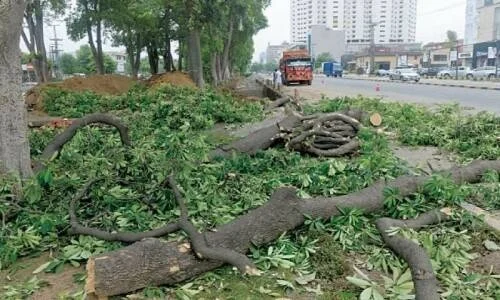
ISLAMABAD: Environmental advocates and opposition lawmakers are challenging the Pakistani government’s assertion that a sweeping tree-removal campaign in the capital is aimed solely at curbing pollen allergies, pointing instead to evidence that the cuts are tied to major infrastructure projects that have stripped away acres of urban greenery.
The World Wide Fund for Nature-Pakistan, in a report released this week, documented extensive land clearing across several sites in Islamabad, including the sprawling Shakarparian parkland, the Lok Virsa cultural complex, the National Museum precinct, the Islamabad Expressway near sector H-8, and the Margalla Enclave Link Road adjacent to the National Institutes of Health. While acknowledging that much of the effort targets the invasive paper mulberry tree, long blamed for exacerbating respiratory ailments — the organisation argued that the drive has gone further, resulting in the loss of other vegetation to make way for roads, monuments and other developments.
“WWF-Pakistan’s field assessments indicate that vegetation loss in the capital is not limited to Paper Mulberry management alone, but is also linked to infrastructure development in multiple locations,” the group said in a statement on social media. “Beyond pollen and allergies, Islamabad’s recent tree removal reflects broader challenges in urban planning.”
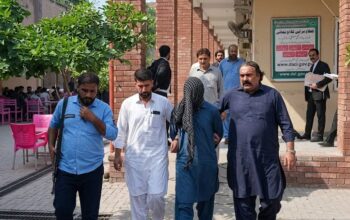
The controversy has spilled into Pakistan’s National Assembly, where members of the ruling coalition and opposition parties clashed on Tuesday over the scale and rationale of the operation. Shazia Marri of the Pakistan Peoples Party described the felling of thousands of trees as a “very serious” matter, while Dr. Farooq Sattar of the Muttahida Qaumi Movement-Pakistan lamented the loss of old-growth trees amid construction. Ali Mohammad Khan of the Pakistan Tehreek-e-Insaf questioned why trees 40 to 50 years old had been targeted alongside the problematic mulberries.
The pushback prompted Minister of State for Interior Tallal Chaudhry to defend the initiative, insisting that only paper mulberry trees had been removed. He outlined three circumstances under which trees are cleared: the presence of the allergy-causing species; development in areas designated as “brown zones” in the city’s master plan, such as Embassy Road, which had been treated as green space until projects commenced; and construction in sectors similarly viewed as verdant until built upon. “I am saying with utmost responsibility that no other species was removed,” Chaudhry told lawmakers.
Official figures cited in the WWF report indicate that more than 29,000 paper mulberry trees have been uprooted citywide since December, from sites including Shakarparian, Fatima Jinnah Park in sector F-9, and greenbelts along Park Road and the H-8 Expressway. The species, known scientifically as Broussonetia papyrifera, has been identified by experts as a primary driver of seasonal allergies, triggering rhinitis, asthma and other issues for up to 37 percent of residents, according to government estimates. Under orders from the prime minister’s office and health authorities, the Capital Development Authority initiated a targeted eradication program last year to strip the trees from parks, belts and public areas.
But WWF-Pakistan’s on-site inspections revealed that infrastructure work has compounded the losses, with an estimated five hectares of tree cover vanished at the H-8 site alone, where a proposed monument is under development. “Several of these activities were associated with major infrastructure development works, including road construction and monument-related projects, resulting in large-scale clearance of trees and natural vegetation,” the report stated.
In a separate research paper published Monday, Muhammad Ibrahim Khan, WWF-Pakistan’s forest director, described paper mulberry as a “non-native, highly invasive species” that has overrun natural pockets from the Margalla Hills foothills to urban fringes, suppressing native flora and wildlife through its aggressive spread and chemical effects on soil. While endorsing efforts to mitigate its health impacts, he warned that outright eradication is “ecologically impractical and technically unrealistic” given the tree’s resilient regrowth. “Sudden, large-scale removal, especially uprooting, risks soil disturbance, erosion, loss of understorey vegetation, and displacement of urban wildlife,” the paper said. “Indiscriminate felling may also unintentionally remove native species and mixed natural growth, further degrading ecological integrity and ecosystem services.”
Khan urged authorities to conduct site-specific ecological assessments and, where required, full environmental impact reviews compliant with the law. He also called for public disclosure of removed and replanted species, along with survival rates, to foster transparency.
Reforestation has emerged as a key point of contention. Chaudhry assured the assembly that Islamabad is “greener than before,” bolstered by satellite imagery from the Space and Upper Atmosphere Research Commission, Google Maps and normalised difference vegetation index analyses showing increased cover between 2023 and 2025. He reported that over 40,000 mature trees, each 8 to 10 feet tall, have already been planted, with 60,000 more slated by March’s end.
Yet WWF-Pakistan expressed scepticism about the efforts’ effectiveness, noting that while compensatory planting is reportedly in progress at various spots, details on their design, consistency and focus on native species remain opaque. “The long-term ecological success of these interventions will therefore depend on transparent decision-making, clear and site-specific restoration planning, prioritisation of native species, and independent monitoring,” the report said.
Every project in the past 18 months has undergone public hearings, review by the Pakistan Environmental Protection Agency, certification and vegetation mapping, Chaudhry said, emphasising that the mulberry removals incur costs rather than profits, as full uprooting is needed to halt resurgence. He extended an invitation to lawmakers and journalists for a technical briefing to inspect the sites and data firsthand.
The assembly referred the issue to its standing committee on environment for deeper scrutiny. Later that day, Climate Change Minister Musadiq Malik toured Shakarparian to oversee the operation. “I have come to see which trees have been cut,” he said, vowing action against any systematic or negligent removal of indigenous species and threatening show-cause notices for noncompliant projects.
Copyright © 2021 Independent Pakistan | All rights reserved