By Staff Reporter
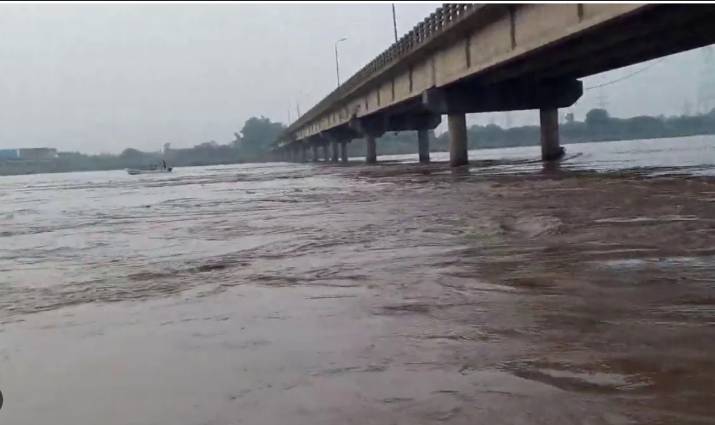
KARACHI: As Pakistan grapples with one of its most severe monsoon seasons on record, floodwaters surging down the Indus River have entered Sindh province after devastating Punjab, prompting urgent warnings of a potential “super flood” at Guddu Barrage and forcing evacuations in low-lying areas.
Officials reported on Monday that the crisis, which has claimed over 900 lives since June, has inflicted an estimated $1.4 billion in economic damage, equivalent to 0.33% of the country’s GDP, with agriculture bearing the brunt as rice crops in Punjab face up to 12% losses.
Heavy rains persisting into a 10th spell have compounded the misery, submerging villages, washing away infrastructure and displacing more than 2.1 million people nationwide. The floods, attributed to intensified monsoon patterns driven by climate change, have ravaged Punjab’s agricultural heartland, inundating over 1 million acres of cropland and affecting 3.9 million residents across 28 districts.
In Sindh, where waters from the north are now converging, authorities anticipate impacts on up to 1.6 million more people, with over 300,000 already displaced and 100,000 evacuated in early September.
Khyber Pakhtunkhwa has suffered the highest death toll at 328, including 274 in Buner District alone, with over 200 still missing amid flash floods and landslides. Balochistan and Azad Kashmir have also been hit, with widespread destruction of homes, roads and bridges. As of September 4, the death toll stood at 892, with 1,116 injuries reported, though figures have climbed to over 900 in subsequent updates.
More than 9,406 homes have been damaged, alongside 6,180 livestock losses, and waterborne diseases are spiking in affected areas. In Punjab, 237 homes were destroyed, and 295,000 acres of farmland flooded, crippling wheat, rice and mango production.
The Rice Exporters Association of Pakistan estimates that floods could damage 10% to 12% of Punjab’s rice crop, countering earlier fears of broader devastation but still threatening food security and exports.
Relief operations are straining under the scale of the disaster, with over 53,000 people in 1,717 displacement sites and 24,000 in 687 relief camps in Punjab alone. Authorities have set up 423 relief camps, 512 medical facilities and 432 veterinary posts, relocating more than 1.5 million animals. The Pakistan Armed Forces, National Disaster Management Authority and groups like Rescue 1122 have rescued over 1,594 people since July, deploying drones, helicopters and boats for evacuations.
In Sindh, emergency announcements urge residents in riverine “katcha” areas to evacuate, with provincial ministers overseeing operations on both banks of the Indus. International aid is ramping up, despite no formal government appeal.
The International Federation of Red Cross and Red Crescent Societies launched a 17 million Swiss franc emergency appeal to support the Pakistan Red Crescent Society in providing relief and restoring livelihoods. The United Nations released $600,000 from its Regional Humanitarian Pooled Fund, with the Pakistan Country-Based Pooled Fund allocating $1.4 million to local NGOs for WASH, health, shelter and psychosocial support. China pledged $6 million for Balochistan, the UK £3.4 million for Sindh preparedness, and Welthungerhilfe €500,000. UN Secretary-General António Guterres expressed solidarity, commending evacuations and calling for a specific response plan.
Forecasts warn of continued heavy rains through September 10, with high flood alerts for the Chenab, Ravi and Sutlej rivers, and risks of urban flooding in Karachi and other cities. The Indus faces super flood potential at Guddu and Sukkur, while flash floods threaten Dera Ghazi Khan and the Kirthar mountains. In Karachi, showers on Monday led some private schools to close, with officials cautioning of waterlogging in low-lying areas.
Copyright © 2021 Independent Pakistan | All rights reserved