By Staff Reporter
ISLAMABAD: Pakistan’s national weather agency warned on Friday that a powerful monsoon system barreling in from the Arabian Sea would bring more than a week of heavy rain, high winds and thunderstorms to much of the country, with forecasters cautioning that flash floods and urban flooding could threaten low-lying cities from the capital to Lahore.
The Pakistan Meteorological Department said in an advisory that monsoon currents had been steadily pushing into the country’s upper and central regions and were expected to gain strength over the weekend. Complicating matters further, a westerly disturbance was forecast to move into the country’s northern reaches on Monday, adding to what officials described as an already volatile weather pattern.
The result, forecasters said, will be a rolling wave of severe weather that touches nearly every province over the next several days, though the timing and intensity will vary by region.
In Kashmir, the wettest and most sustained rainfall is expected to begin Friday evening and continue with intermittent breaks through July 25. The advisory named the Neelum Valley, Muzaffarabad, Rawalakot, Poonch, Hattian Bala, Bagh, Haveli, Sudhnoti, Kotli, Bhimber and Mirpur among the areas likely to see scattered but at times very heavy downpours. Gilgit-Baltistan — including Diamer, Astore, Ghizer, Skardu, Hunza, Gilgit, Ghanche and Shigar — faces a similar stretch of unsettled weather over the same window, with moderate to heavy rainfall expected.
Khyber Pakhtunkhwa will see the system arrive a day later, with rain and windstorms forecast from Saturday night through July 23. The province’s northern districts — Dir, Chitral, Swat, Kohistan and Malakand among them — are expected to bear the brunt of the heaviest falls, while Peshawar, Mardan, Abbottabad, Mansehra and more than a dozen other districts stretching toward the Afghan border are also included in the advisory.
That same overnight window will bring rain and thunderstorms to a broad swath of Punjab and the federal capital. Islamabad, Rawalpindi, Lahore, Faisalabad, Gujranwala and Sialkot are among the cities expected to see scattered heavy rainfall beginning Sunday night, with forecasters warning the deluge could persist through Thursday.
Southern Punjab will follow close behind. Multan, Bahawalpur, Dera Ghazi Khan, Rahim Yar Khan and a cluster of surrounding districts are expected to see rain and thunderstorms — some of it heavy — from July 20 through July 24.
Balochistan’s northeastern districts, including Zhob, Loralai, Sibi and Khuzdar, are forecast to see isolated but potentially heavy rainfall from Sunday through Thursday. Sindh, by contrast, is expected to stay largely hot and humid, though the meteorological department said Tharparkar, Sukkur, Larkana and several other districts could see scattered relief in the form of isolated showers and thunderstorms over roughly the same period. In Karachi, forecasters are calling for light rain and drizzle under partly cloudy skies this weekend, with overnight lows dipping to around 28 degrees Celsius.
Officials used the advisory to sound a broader alarm about the storm system’s potential to cause damage well beyond soaked streets. High winds and lightning could down power lines, billboards and solar panel installations, the department warned, particularly in areas already prone to weak infrastructure. Landslides are considered a risk in the mountainous terrain of upper Khyber Pakhtunkhwa, Gilgit-Baltistan, Murree, Galliyat and Kashmir between July 20 and 25.
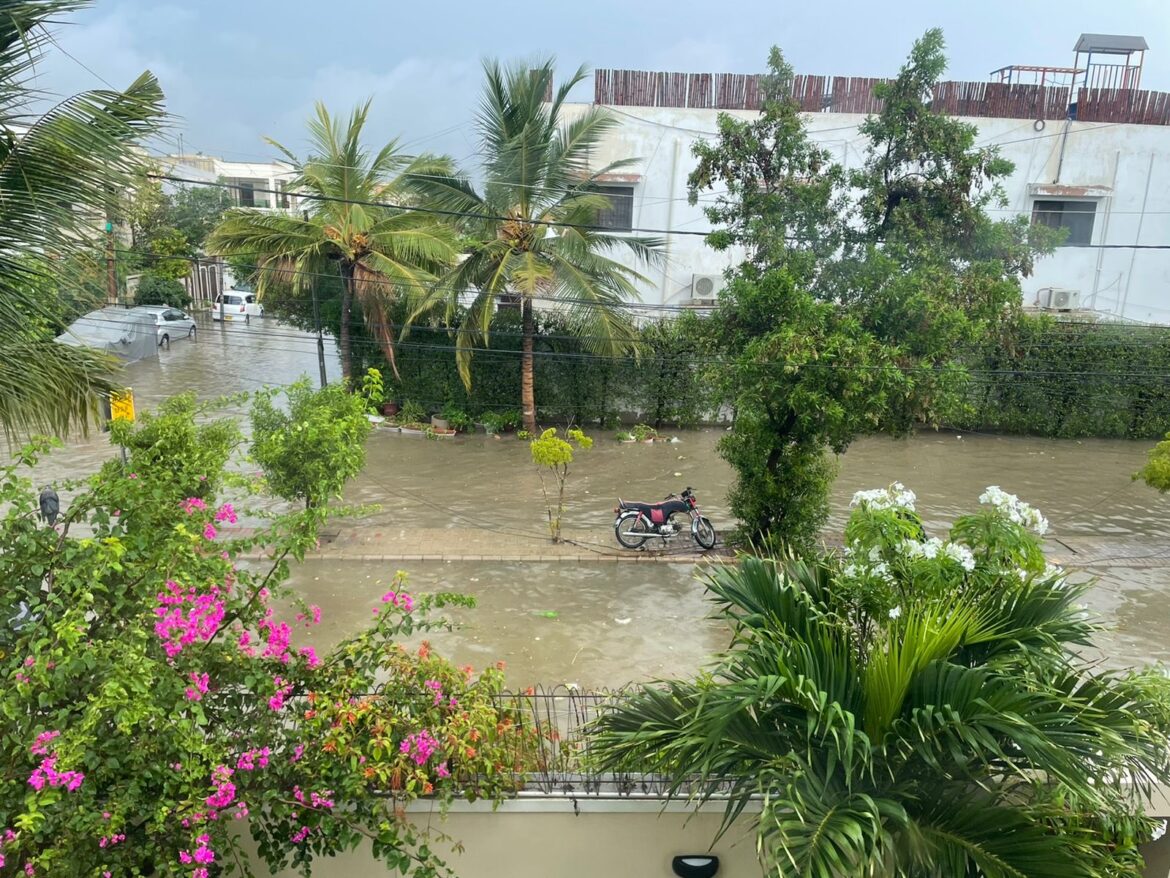
Perhaps most pressing is the flood risk. The meteorological department said the heavy rainfall could trigger flash flooding in streams and nullahs across upper Khyber Pakhtunkhwa and Gilgit-Baltistan, as well as in the hill torrents near Dera Ghazi Khan and in northeastern Balochistan. Urban flooding is considered likely in low-lying pockets of Islamabad, Rawalpindi, Gujranwala, Lahore, Sialkot, Multan and Faisalabad between July 20 and 23, a stretch when several of those cities are expected to be under the heaviest rainfall simultaneously.
Given the scope of the forecast, the weather department urged tourists and travellers to steer clear of vulnerable, flood-prone areas until conditions ease. Farmers were advised to adjust planting and harvesting schedules — and to take precautions to protect livestock — in anticipation of the extended wet spell. Local authorities across the affected regions were asked to stay on alert and take preventive measures in the coming days to head off the kind of infrastructure damage and flooding the department says could accompany the system.
Copyright © 2021 Independent Pakistan | All rights reserved