By Staff Reporter
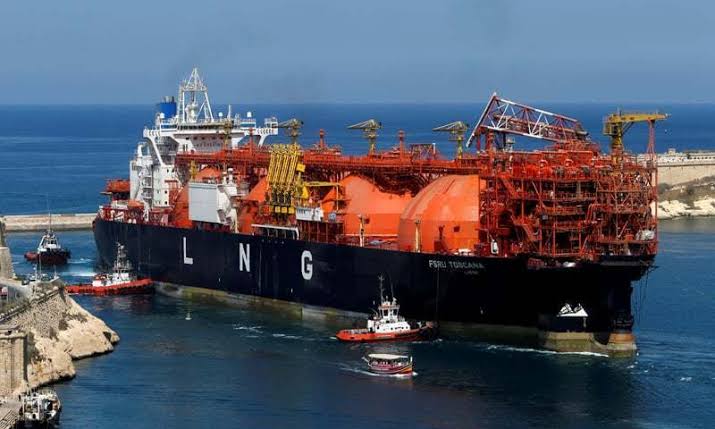
KARACHI: Pakistan is preparing to buy as many as six liquefied natural gas cargoes on the spot market for August delivery, according to people familiar with the matter, a buying spree that would mark the country’s heaviest reliance yet on costly emergency purchases since the US and Iran went to war in February.
The government is close to finalising the plan, which also includes at least one additional spot cargo for delivery this month, the people said, asking not to be identified discussing internal deliberations. State-owned Pakistan LNG Ltd. has already purchased four cargoes for July delivery, the most it has bought in a single month since fighting broke out, as repeated cancellations from Qatar — historically the source of nearly all of Pakistan’s LNG — have forced Islamabad back into a spot market where prices have surged to their highest levels in four years.
The scramble underscores how deeply a nearly five-month-old conflict between the US and Iran has reshaped energy trade for import-dependent nations far from the front lines. Renewed attacks across the Gulf in recent weeks have again choked traffic through the Strait of Hormuz, the narrow waterway that handles roughly a fifth of the world’s LNG exports, and Tehran has signalled to the Houthi movement in Yemen that it should be prepared to shut the Red Sea’s export corridor as well, adding a second flashpoint to global shipping routes.
For Pakistan, the disruption has been existential. Qatari LNG shipments to the country, once running at nearly 800,000 tons in January, had collapsed to less than 50,000 tons by April, according to data compiled by Bloomberg, as tankers destined for Pakistani ports found themselves unable to clear the strait. Islamabad has since patched together supply from an unusually broad set of alternative sellers — the US, Oman, Mozambique, Nigeria and the Republic of Congo among them — but at a steep premium to the fixed-price Qatari contracts that once anchored the country’s gas-fired power sector.
That premium has only widened as the conflict has ground on. Pakistan LNG paid $16.74 per million British thermal units for a cargo from BP Plc for delivery over the June 30-July 4 window, then $17.37 per mmBtu to TotalEnergies SE for July 10-11 delivery, then $18.23 per mmBtu for July 15-16. By Wednesday, a tender for a July 21-22 cargo drew just two bids — $20.70 per mmBtu from PetroChina International, which won, and $21.37 per mmBtu from BP Singapore — making it the costliest cargo Pakistan has purchased since 2022, when spot prices in Asia spiked following Russia’s invasion of Ukraine. The PetroChina price is roughly double what Pakistan pays under its long-term Qatari agreements.
Each of the July purchases followed the same pattern: a scheduled Qatari cargo cancelled, followed by an emergency tender to plug the gap. The July 15-16 shipment, for instance, was procured only after a contracted delivery from Qatar fell through.
The immediate trigger for the heavier buying is twofold. Rising summer temperatures across Pakistan have pushed power demand higher just as solar generation feeding the grid has declined, forcing utilities to lean more heavily on LNG-fired plants to keep pace, said Muhammad Awais Ashraf, research director at AKD Securities. At the same time, the renewed round of attacks in the Gulf has cut off the term cargoes Pakistan would otherwise be counting on.
That Islamabad is now planning six weeks out — rather than simply reacting cargo by cargo, as it has for much of the past five months — suggests officials expect the disruption to Qatari supply to persist well into the third quarter rather than resolve quickly. A plan of that scale would represent a marked escalation from the ad hoc emergency tenders that have characterized Pakistan’s LNG procurement since Hormuz traffic first seized up in the war’s early weeks.
The added cost comes at a difficult moment for Pakistan’s public finances. The country has spent recent years struggling to lock in reliable LNG supply amid volatile global prices, and the current crisis has compounded that difficulty, pushing state gas buyers toward suppliers — and price levels — they had largely avoided since the shortages that followed Russia’s full-scale invasion of Ukraine in 2022.
Copyright © 2021 Independent Pakistan | All rights reserved