By Staff Reporter
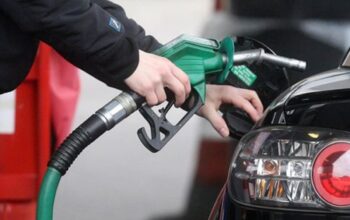
In Karachi, Mohammad Kashif stood at a petrol station and filling his tank at the new price of 458 rupees a liter did not need an economist to explain what was happening to his life. He simply knew that the money he once stretched across rent, food and school fees had suddenly vanished into the petrol pump. Across Pakistan, millions are making the same grim arithmetic.
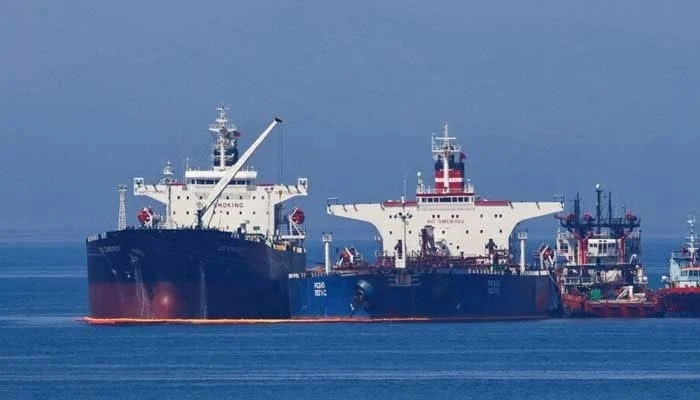
The government’s decision to raise petrol by 43 percent and diesel by 55 percent in a single stroke was not a policy misstep. It was the inevitable consequence of a deeper, long-standing failure: a country that still organises its economy around imported oil in a world that has repeatedly shown how dangerous that dependence can be. The immediate cause is obvious and external. Global oil prices have surged because of the war in the Middle East. Pakistan, which imports nearly all its fuel through the Strait of Hormuz from Saudi Arabia and the United Arab Emirates, had no shield against that shock. When those prices move, Pakistan has little choice but to follow.
The government did not pretend otherwise. Petroleum Minister Ali Pervaiz Malik and Finance Minister Muhammad Aurangzeb stood together at the podium and explained the numbers. For three weeks the government tried to absorb the blow with 129 billion rupees in subsidies to keep prices artificially low. That cushion was gone, it passed the increase along — while offering limited, targeted relief to motorcyclists, small farmers and transporters. Provincial governments added their own patches: free buses in Punjab, cash for bikers in Sindh, frozen tolls and railway fares nationwide. These measures are better than nothing. But they are also a confession of weakness. They treat the symptom while leaving the disease untouched. That disease is structural. Pakistan has spent decades betting its future on fossil fuels it does not produce and cannot control. Every time the Middle East convulses, the pain lands hardest on the people least able to bear it. Inflation, which only recently began to ease after peaking near 40 percent, will now climb again. Food prices will rise. Transport costs will ripple through every sector. The middle class, already fragile, will slip closer to the poverty line. This is not abstract economics. It is the daily reality of a nation that has chosen, again and again, to remain vulnerable.
Prime Minister Shehbaz Sharif’s advisers were right to say the war was not of Pakistan’s making. They were also right to warn that prolonged conflict could make matters far worse. But necessity is not the same as vision. The real failure here is not this week’s price adjustment; it is the decades-long refusal to escape the trap of imported fossil fuels. Pakistan remains hostage to events in the Persian Gulf because it still runs its economy on 20th-century energy logic in a 21st-century world. Every time the Strait of Hormuz trembles, 250 million Pakistanis feel it in their daily budgets. That vulnerability is not inevitable. It is a policy choice that can be unmade.
The government’s defenders will argue, correctly, that it had little choice. The International Monetary Fund had capped fuel subsidies. Pakistan’s fiscal space is narrow. Blanket relief would have exploded the deficit and reignited the very inflation the country has struggled to tame. The decision to move from universal to targeted support, however imperfectly executed, was the adult choice. But responsibility without imagination is not leadership. The real issue is not that prices. No. It is that Pakistan still finds itself in this position at all — that it has not used the breathing room of recent years, or the painful lessons of past shocks, to break the cycle.
The path out of this trap is not mysterious.The ingredients for a different future are already in place. It is already taking shape on rooftops across the country. Pakistan possesses nearly 20,000 megawatts of surplus electricity capacity. Its grid is 40 percent renewable and on course to reach 60 percent by 2030. A bottom-up solar revolution — not decreed from Islamabad but embraced by millions of households and businesses desperate for cheaper, more reliable power — has quietly begun to reduce the country’s exposure to imported energy. Electric trucks are already hauling coal at Thar. A national electric-vehicle policy has set ambitious targets, including 30 percent EV sales by 2030, with subsidies for two- and three-wheelers and sharply lower charging tariffs. Local manufacturing capacity for electric motorcycles and rickshaws has reached two million vehicles a year. These are not futuristic dreams. They are present-day facts. What has been missing is the political will to accelerate them. Instead of pouring scarce public money into temporary fuel subsidies that evaporate into the air, the government should be redirecting resources toward electrifying the vehicles that dominate daily life and hurt ordinary citizens most. Motorcycles and three-wheelers account for the overwhelming share of urban fuel consumption and the greatest vulnerability to price spikes. Targeted credit guarantees, installment financing and capital subsidies for charging infrastructure could unlock private investment at scale. Local-content rules could build genuine domestic supply chains. Every electric two-wheeler taken off petrol is one fewer liter of imported oil, one fewer hit to the rupee, one fewer source of toxic smog in cities where air quality is already among the world’s worst.
The macroeconomic case is just as compelling. Greater demand from EV charging, paired with battery storage, would put idle generation capacity to work, lower average electricity tariffs and help stabilize a grid that risks a dangerous death spiral as solar adopters defect. The social case is stronger still. Every EV loan creates a formal credit history for a family that never had one. Every new charging station is a small business with bank accounts, employees and tax receipts — the very bottom-up formalisation Pakistan has talked about for decades without delivering. This is not green romanticism. It is hard-headed economic strategy.
Critics will object that the transition cannot happen overnight. They are right. But the solar boom has already proved that ordinary Pakistanis do not wait for perfect five-year plans. When the incentives are right, they move faster than any bureaucracy. The same entrepreneurial energy that covered rooftops with panels can power the vehicles that carry people to work, school and market. The sun that already lights millions of homes can also move them. The opposition, for its part, has responded exactly as one might expect — with calls for protests, all-parties conferences and demands to roll back the hikes. That is politics as usual. It is also a missed opportunity. Instead of merely amplifying public anger, political leaders across the spectrum should be pressing the government to treat this crisis as the catalyst it is. Short-term relief is necessary. Long-term dependence is not.
Pakistan has shown resilience before. It has weathered inflation, political turmoil and external shocks that would have broken weaker societies. What it has not yet shown is the courage to turn pain into transformation. The price hikes will hurt. They will test households, strain businesses and test the government’s credibility. But if they finally force a reckoning with the country’s dangerous reliance on imported oil, they will have served a larger purpose. The choice before Pakistan’s leaders is no longer between pain and comfort. It is between repeating the same vulnerability every time the world’s oil markets tremble — or building the energy independence that would make such shocks survivable. The sun is already shining on millions of rooftops. The question is whether Islamabad has the vision to harness it, not just for electricity, but for mobility, for dignity and for a future in which the price at the pump no longer dictates the price of a family’s survival.
Copyright © 2021 Independent Pakistan | All rights reserved