By Staff Reporter
ISLAMABAD: Prime Minister Shehbaz Sharif’s top political adviser on Friday blamed an unprecedented surge in global oil prices — triggered by the escalating US-Israeli conflict with Iran — for the sharpest one-day increase in Pakistan’s petroleum prices in recent memory, insisting the government had exhausted every option to shield consumers before passing on the burden.
The remarks by Rana Sanaullah, the prime minister’s adviser on political affairs, came one day after authorities raised the price of petrol by 43 percent and high-speed diesel by 55 percent, moves that drew immediate condemnation from opposition parties already mobilizing against the government.
In a televised address, Sanaullah described the global price shock as having “no example” in recent history. “This rise is also hitting Pakistan,” he said, “that’s why we increased petrol and diesel prices yesterday.” He noted that the government had already spent Rs129 billion over the previous three weeks in an effort to absorb the impact and prevent the full cost from reaching the public. “However,” he added, “this could not go on forever.”
The decision followed detailed consultations Thursday between Sharif and the country’s political leadership, Sanaullah said. Rather than continue a blanket subsidy that had become unsustainable, the government opted for targeted relief measures. Motorcyclists will receive a Rs100 subsidy per liter on petrol, while farmers — with the harvesting season approaching — will get Rs1,500 per acre. Goods transporters will receive subsidies ranging from Rs70,000 to Rs80,000 depending on vehicle capacity, plus an additional Rs100,000 per transporter, explicitly aimed at preventing increases in freight fares and shielding ordinary consumers from ripple effects.
“The government spent Rs129 billion and didn’t allow the burden to pass on to the public for the past three weeks,” Sanaullah said. “We did this so they won’t increase the fares, that’s how we are supporting the common man and the needy.” He repeatedly emphasised that the price adjustment was not a policy choice but an unavoidable response to external forces. “The prices rose due to the war in the Middle East,” he said. “The government had nothing to do with it. Everybody knows who started the war.”
Sanaullah accused unnamed political opponents of exploiting the situation through “propaganda” and calls for protests, arguing they were ignoring the austerity steps and targeted subsidies already announced. “Those people are not talking about the austerity measures taken by the government and the subsidies it announced; they are pushing their own political agenda.”
He urged the opposition to set aside partisan differences, offer constructive suggestions and even help the government press for de-escalation in the Middle East. “Come and give your suggestions and empower the government to play its role in stopping this war,” he said. If protests were inevitable, Sanaullah added, they should be directed at Israel rather than Pakistan’s elected leadership. “If this war continues for the next three to four months, we may have to face an even worse situation.”
Separately, Defense Minister Khawaja Asif echoed the government line in a post on X, describing the hike as a direct consequence of the “US-Israeli war on Iran” and “not just one country’s decision.” He noted that oil-producing Muslim nations and key transit countries were all feeling the effects of what he termed “Israel’s genocidal frenzy against Muslims.” Pakistan, he said, had faced a “big challenge” in maintaining uninterrupted supply while other countries experienced shortages.
“The government tackled this challenge successfully,” Asif wrote, but a “balanced approach was necessary” to avert a severe fiscal crisis. Development spending and other expenditures had been deferred across federal and provincial levels to help absorb costs, he added. “As soon as the situation improves, people will be provided relief,” he assured.
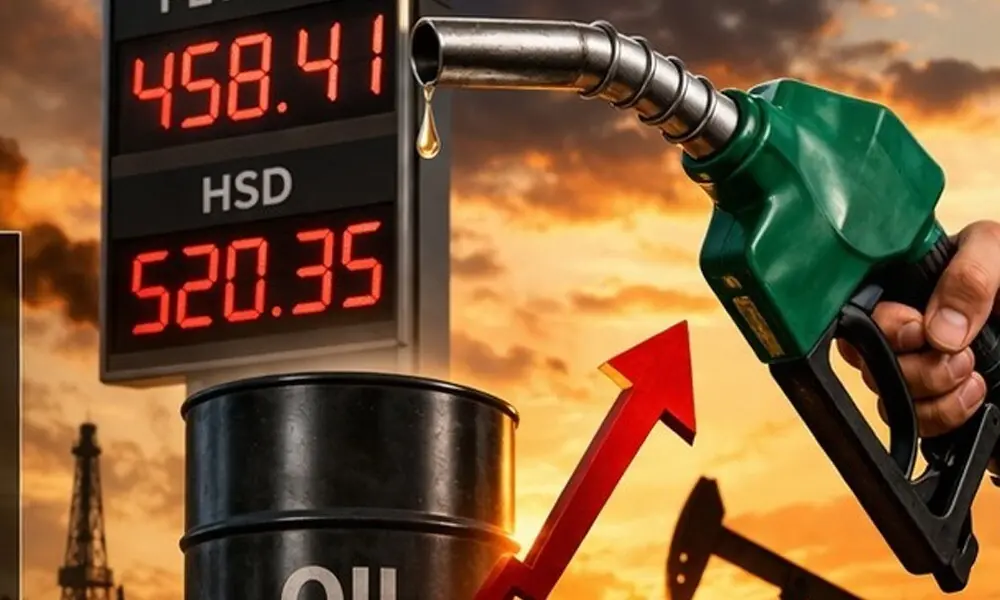
The price increases were formally announced Thursday by Finance Minister Muhammad Aurangzeb and Petroleum Minister Ali Pervaiz Malik. Petrol rose Rs137.23 per liter to Rs458.41, while high-speed diesel increased Rs184.49 per liter to Rs520.35 — figures that reflect both global crude surges and domestic levies, according to government officials.
Opposition Mobilises for Protests
Opposition parties reacted swiftly and sharply. At a press conference in Islamabad, Pakistan Tehreek-e-Insaf (PTI) Chairman Barrister Gohar Khan acknowledged the role of the Middle East war in driving up international prices but argued that Pakistan’s adjustments had gone far beyond those in comparable economies. “The increase in prices of petroleum products in Pakistan had surpassed those in countries such as Vietnam and Nigeria,” he said. Petrol, he added, is a commodity “that had no alternative,” with direct consequences for the poor and for farmers.
Khan criticised the government for failing to brief Parliament on its diplomatic efforts to address the regional crisis and for not curbing hoarding and smuggling of fuel. PTI, he announced, would convene an all-party conference of “like-minded” parties to coordinate a response to the hikes. Standing beside him, PTI leader Taimur Saleem Jhagra was more pointed. “The petrol bomb was dropped earlier … [now the current price hike is] adding fuel to the fire,” he said. He mocked Sharif for having personally announced earlier efforts to hold prices down, only for ministers to deliver the increase. “The prime minister should have come and taken the nation into confidence on the price hike, but he cannot face people,” Jhagra said. The party also alleged that additional customs duties and levies had compounded the pain for consumers.
Jamaat-i-Islami chief Hafiz Naeemur Rehman went further, warning that unless the government immediately rolled back the increases, his party would launch a nationwide protest movement. Speaking at a public convention in Lahore’s Mansoora and a large demonstration on Multan Road, Rehman said the party would surround the residences of all four provincial chief ministers and observe a countrywide strike.
The government, he charged, was collecting more than Rs200 per liter in taxes on petrol — an “exploitative measure” that was draining ordinary citizens. He demanded immediate cuts in the prices of petrol, diesel and electricity.
Rehman accused the ruling elite of using the global crisis as cover while continuing lavish spending on official vehicles, aircraft and perks. “Rulers were using global crises as an excuse to burden the masses,” he said, questioning why relief had not been passed on during earlier periods when international oil prices had fallen.
Sanaullah, in his address, pushed back against such criticism, noting that Pakistan was still managing to keep fuel available to the public — unlike some other countries — precisely because of the government’s efforts. He called on opponents to “appreciate the government’s initiatives and assist it in taking things forward” rather than “misleading people about the government.”
‘How Will Common Man Survive?’
The government however drew instant condemnation, with senior figures from the ruling coalition, opposition economists and ordinary citizens uniting in rare criticism that the hikes will push the poor toward hunger and drag the middle class below the poverty line.
The decision to raise petrol and diesel prices sparked an immediate backlash on social media and in street interviews. Former Finance Minister Miftah Ismail accused the government of duplicity, pointing out it had raised the petroleum levy by Rs55 on petrol while simultaneously lifting the base price by Rs79, for a combined Rs134 jump. “And it keeps saying it doesn’t want to burden the people and wants to lift the burden itself,” he posted on X.
Even voices inside the ruling Pakistan Muslim League-Nawaz joined the chorus. Khawaja Saad Rafique, a prominent PML-N leader, wrote: “The sharp increase in the price of petroleum products has led to the worst wave of inflation. Government constraints are in place, but how will the common man survive???? While fulfilling the IMF, the poor will die, and the middle class will go below the poverty line.”
Asad Umar, another former finance minister, highlighted the regional imbalance. Fuel prices in Pakistan now exceed those in neighboring India by 48 percent for petrol and 92 percent for diesel, he said, blaming an “unwillingness to tax the rich and powerful, and collect most of the tax from the working middle class.”
Columnist Ali Moeen Nawazish warned the damage could prove permanent. “This war will end sooner rather than later, but once prices go up on everything from food, groceries, transport etc…. they are not coming back down even when oil does eventually come down!” he wrote. “This is not a prolonged oil shock… it is a supply issue, which thankfully Pakistan doesn’t even have… because our ships are getting through.”
On the streets, the reaction was raw. In Lahore, resident Mohammad Haris told Reuters the government’s earlier relief measures had been “undone after the outbreak of the Iran war,” adding: “Under pressure, they raised petrol prices, and the poor man has been crushed.” In Karachi, Mohammad Kashif called the increase “an injustice.” “If people have to buy petrol at Rs460, how will they feed their children at home? How will they run their households and cover their expenses? And if they live in rented accommodation, how will they pay the rent? This is an injustice to the public,” he said. “The way people are being fleeced is unacceptable; instead of shifting its burden onto the public, the government should have borne some of it itself.”
Another resident, Kaif Ahmed, described the daily reality for low-income workers: “Someone earning Rs20,000–25,000 a month relies on his bike for work. What will he do now? All his money goes into petrol; he has three children, and there’s hunger at home — his family is going without food.”
Copyright © 2021 Independent Pakistan | All rights reserved