By Staff Reporter
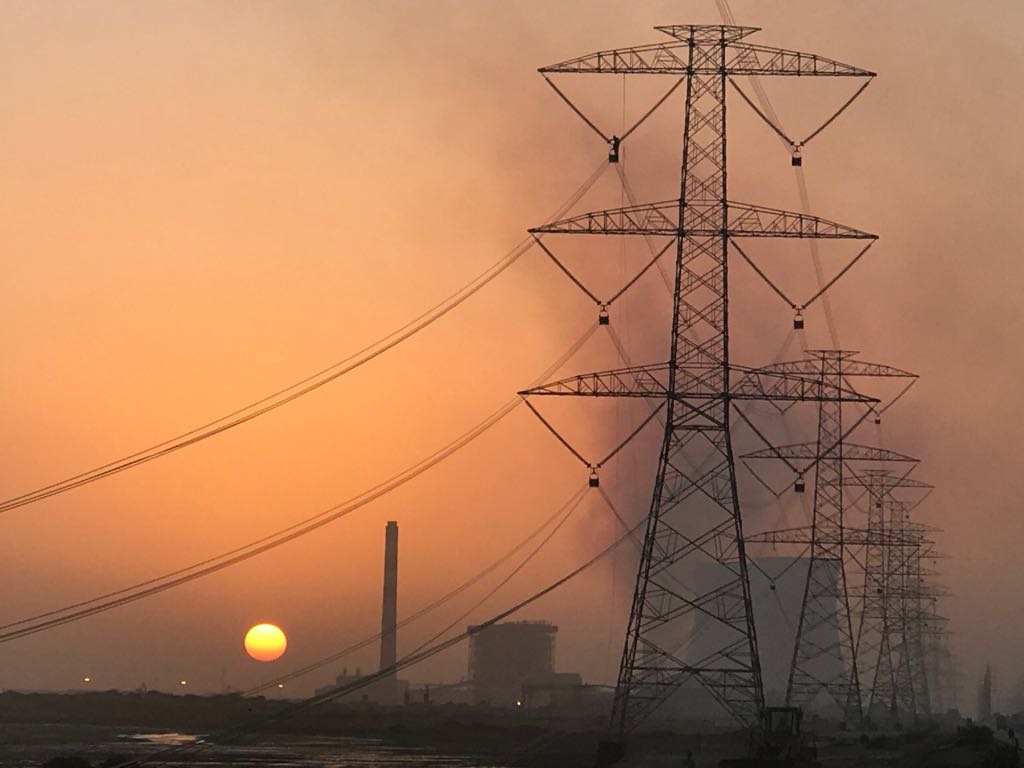
ISLAMABAD: The government will sign a Rs1.225 trillion financing agreement with 18 domestic banks on Wednesday, a critical move to pare down the power sector’s crippling circular debt, which has choked utilities and weighed heavily on the nation’s economy.
The signing, slated for the Prime Minister’s Office in Islamabad, will be overseen virtually by Prime Minister Shehbaz Sharif, who is attending the United Nations General Assembly in New York.
Rihan Akhtar, chief executive officer of the Central Power Purchasing Agency-Guaranteed (CPPA-G), issued formal invitations on behalf of the Ministry of Energy’s Power Division, emphasizing the deal’s significance. “The Prime Minister of Pakistan will grace the ceremony through his esteemed virtual presence,” the invitation read.
The lender consortium includes heavyweights such as Habib Bank Ltd., Meezan Bank Ltd., National Bank of Pakistan, Allied Bank Ltd., United Bank Ltd., Faysal Bank Ltd., Bank AL Habib Ltd., MCB Bank Ltd., Bank Alfalah Ltd., Dubai Islamic Bank Pakistan Ltd., Bank of Punjab, BankIslami Pakistan Ltd., Askari Bank Ltd., Habib Metropolitan Bank Ltd., Al Baraka Bank (Pakistan) Ltd., Bank of Khyber, MCB Islamic Bank Ltd., and Soneri Bank Ltd.
The facility targets the power sector’s circular debt, a tangle of unpaid bills among generators, suppliers, and state entities that’s been trimmed to Rs1.7 trillion from Rs2.5 trillion a year ago, according to official estimates.
Of the total, Rs659 billion will repay loans held by Power Holding Ltd., with the remainder’s use—potentially for independent power producers, petroleum dues, or subsidy adjustments—still undecided. “All required documentation has been finalized for the agreement,” an official told Business Recorder, confirming months of negotiations have concluded.
The deal carries a six-year repayment term at three-month Karachi Interbank Offered Rate minus 9 percentage points—a rate that sparked initial resistance from banks reluctant to lend below the central bank’s 11% policy rate. “Initially, the banks were hesitant to meet the government’s request to lend money at a lower rate than the policy rate, but eventually, 18 commercial banks agreed to do so,” a source familiar with the talks said.
Repayments will be funded via a surcharge on electricity bills. The government has 30 days post-signing to request disbursements, with unspent funds lapsing and a three-month window to draw approved amounts. Delays risk penalties, pressing swift utilization. Islamabad considered a quarterly Debt Service Surcharge of Rs325 million, which would have pushed the facility to Rs1.275 trillion, but opted to retain the existing Rs3.23 per-unit tariff adjustment to avoid further burdening consumers. The decision caps the package at Rs1.225 trillion, though future surcharge hikes remain possible.
The agreement offers breathing room but underscores Pakistan’s reliance on domestic banks to bridge energy-sector gaps. “The government has been borrowing less than the maturity amount of treasury bills during FY25, which has substantially increased the outstanding amount,” a banker said. “This new borrowing could address this accumulation.”
State Bank of Pakistan data show government debt, excluding IMF obligations, rose to Rs78 trillion by June 2025 from Rs69 trillion a year earlier. Including IMF debt, the public tally hit Rs80.5 trillion rupees, up from Rs71.2 trillion, though analysts warn these figures understate total liabilities when guarantees and off-balance-sheet items are factored in.
For banks, the deal is a mixed bag. The consortium, representing a slice of Pakistan’s Rs25 trillion banking assets, secures below-market rates, shaving 3 to 5 percentage points off prior Kibor-plus-2 loans. Yet, their exposure to the power sector, already significant, grows riskier as circular debt persists.
The debt cycle—fueled by subsidies, distribution losses, and delayed producer payments—continues to swell by over Rs400 billion annually without structural fixes. Recent reductions to Rs1.66 trillion by July 2025 reflect tariff hikes and renegotiated power contracts, but distribution company underperformance added Rs47 billion this fiscal year.
Reforms, including revenue-based funding and scrapping guarantees, are in play but slow to materialize. The IMF’s $7 billion program, under scrutiny, ties disbursements to such progress, with power-sector cleanup a key condition.
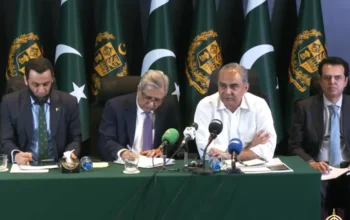
Attendees will include Deputy Prime Minister Ishaq Dar, ministers of power, finance, economic affairs, petroleum, planning, information and broadcasting, and information technology, as well as the prime minister’s privatization advisor, State Bank of Pakistan Governor Jameel Ahmed, and heads of the Task Force on Power, Special Investment Facilitation Council, and National Electric Power Regulatory Authority.
Representatives from the World Bank, Asian Development Bank, and International Monetary Fund’s Islamabad mission are also expected, alongside executives from CPPA-G, Power Holding Ltd., National Power Parks Generating Co., and distribution firms like Lahore, Peshawar, Sindh, Hyderabad, Quetta, and Tribal Areas Electric Supply Companies.
Copyright © 2021 Independent Pakistan | All rights reserved