By Staff Reporter
QUETTA: Nine police officers were killed, and nine more went missing overnight Monday when militants stormed a checkpost guarding a dam construction site in Pakistan’s restive Balochistan province, officials said, touching off an hours-long gun battle, a highway blockade by angry residents, and a security sweep that by Tuesday had located every missing officer alive.
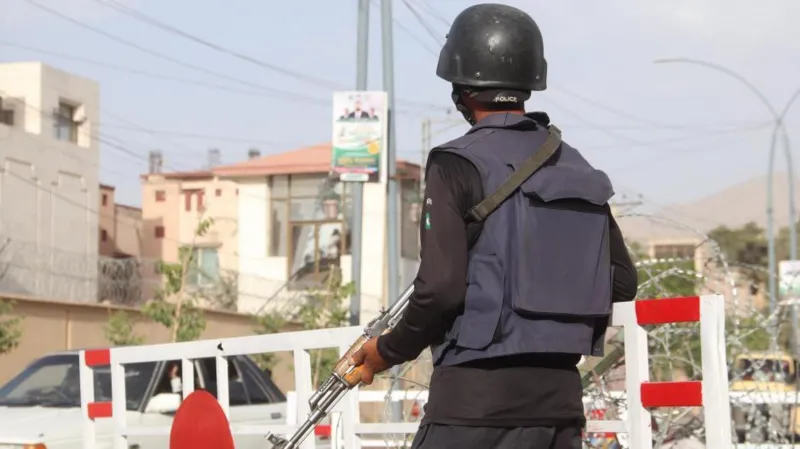
The attack unfolded shortly before midnight at a police post in the Kach Mangi Phase III area of Ziarat district, where officers had been deployed to protect construction crews working on the Mangi Dam, a water project intended to ease chronic shortages in the provincial capital, Quetta. Gunmen opened fire on the position, according to Ziarat Superintendent of Police Abdul Qadoos Dehwar, setting off an exchange that lasted several hours before the attackers breached the post.
By morning, nine officers were confirmed dead, among them the station house officers of the Mangi and Kawas police stations and the head constable in charge of the district’s Anti-Terrorist Force detachment. Their bodies were taken to District Headquarters Hospital in Ziarat for postmortem examination, and the province’s government began releasing their names: SHO Muhammad Hussain of Mangi, SHO Sohbat Khan of Kawas, and Head Constable Saifullah of the Anti-Terrorist Force, along with six constables whose families were being notified.
Nine other officers could not immediately be accounted for, touching off a search-and-recovery effort that stretched through the day. Shahid Rind, an adviser to the Balochistan chief minister who serves as the provincial government’s spokesman, said Tuesday that the operation had located all of them alive. Deputy Superintendent of Police Ghulam Sarwar and eight other officers had made their way on foot through steep, unforgiving terrain to reach the police station in nearby Kach, Rind said. A ninth missing officer, Constable Rizwan, was recovered separately in what Rind described as a rescue operation.
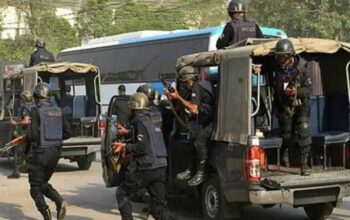
The attack set off a broader security response. Rind said the Frontier Corps, Balochistan Police, the Counter Terrorism Department, the Special Operations Wing and the Anti-Terrorism Force conducted a joint clearance operation in the area following the assault, in which 15 militants were killed. Authorities said the operation also turned up roughly four kilograms of explosive material, along with a detonator, primer cord and ball bearings — components officials said could be assembled into improvised explosive devices.
Rind attributed the attack to Fitna al-Khawarij, the term Pakistani officials use to refer to the outlawed Tehreek-i-Taliban Pakistan, or Pakistani Taliban. No group had claimed responsibility for the assault as of Tuesday evening.
“The terrorists have paid a heavy price for attempting to disrupt peace in Balochistan, and there will be no safe haven for them in the province,” Rind said. He added that intelligence-based operations against militant networks would continue “with greater effectiveness” and that those “challenging the writ of the state” would be pursued.
Word of the attack brought residents into the streets. Relatives of the missing officers, along with local tribesmen and transport workers, blocked the Quetta-Ziarat highway in a sit-in protest that suspended traffic on the connecting Quetta-Zhob route, part of the N-50 national highway linking Balochistan with Khyber Pakhtunkhwa. Passenger buses and freight trucks backed up on both sides of the road before the demonstration was called off later in the day.
The protest in Ziarat came as a separate sit-in continued in Quetta, where residents have for several days occupied the road leading to the airport in response to a different episode of violence, an attack on civilians in the city’s Hanna Urak area that killed four local men and led to the abduction of seven people, including police personnel. Demonstrators there have said they will not disperse without a meeting with Pakistan’s army chief.
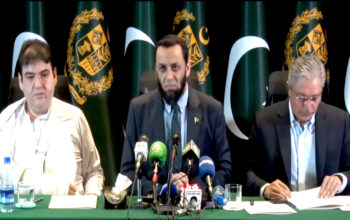
Balochistan Chief Minister Sarfraz Bugti travelled from Quetta to Ziarat on Tuesday, along with provincial Home Minister Ziaullah Langove and police chief Tahir Khan, to meet with the families of the dead and visit the wounded. Bugti presided over a security briefing in which Khan detailed the attack, the clearance operation and the province’s ongoing strategy against militant networks, and he directed that the campaign against the attackers and anyone assisting them be pursued “to its logical conclusion,” according to a statement from his office.
“Salute to the martyrs of the Balochistan Police. Their sacrifices will never go in vain,” Bugti said, calling the security response evidence of the professionalism of the province’s police and paramilitary forces.
The attack drew swift condemnation from Pakistan’s civilian leadership. President Asif Ali Zardari said in a statement that the government would “foil every conspiracy aimed at undermining peace and stability in Balochistan.” Prime Minister Shehbaz Sharif, in a statement issued by his office, said the killings underscored that the attackers were “enemies of Balochistan’s development, peace and the prosperity of its people,” and vowed, according to state broadcaster PTV, that the “blood of the martyrs will be avenged.”
Interior Minister Mohsin Naqvi condemned the assault as the work of “India-sponsored terrorists,” a characterization that reflects the Pakistani government’s longstanding position that New Delhi backs militant activity in Balochistan — an allegation India has repeatedly denied. “Those who sacrificed their lives for peace are the pride of our nation,” Naqvi said, extending condolences to the officers’ families.
The assault is the latest in a string of attacks that have battered Balochistan and neighboring Khyber Pakhtunkhwa, the two provinces bordering Afghanistan, since the Taliban’s return to power in Kabul in 2021. In May, a bombing near a railway track at Chaman Phatak in Quetta killed at least 14 people, including three Frontier Corps personnel. Pakistani forces killed eight militants described by officials as India-backed in separate operations in Balochistan’s Kharan and Mastung districts in late June, according to the military’s Inter-Services Public Relations wing.
Islamabad has responded to the broader campaign of violence with cross-border strikes it calls Operation Ghazab lil-Haq, targeting what it describes as militant hideouts inside Afghanistan, and tensions with Kabul have escalated in recent months amid an exchange of accusations, drone incidents and, according to Pakistani officials, retaliatory airstrikes by Afghan forces against alleged Islamic State positions in Balochistan and Khyber Pakhtunkhwa. Repeated rounds of talks between the two governments have failed to produce an agreement, with Islamabad maintaining that Afghan authorities have not acted against militant groups operating from Afghan soil.
Data compiled by the Pakistan Institute for Conflict and Security Studies show that despite the high-profile violence, the country recorded an overall decline in anti-state attacks and related security incidents in June compared with prior months.
Copyright © 2021 Independent Pakistan | All rights reserved