By Staff Reporter
ISLAMABAD: The Human Rights Commission of Pakistan (HRCP) raised alarm on Wednesday over a court decision banning 27 YouTube channels, a move the government defends as necessary to curb “fake, misleading, and defamatory” content targeting the state and armed forces.
The ruling, which emerged on Tuesday, has intensified a national debate over freedom of expression, with critics, including digital rights advocates and affected content creators, decrying it as an assault on constitutional rights and a sign of deepening government censorship.
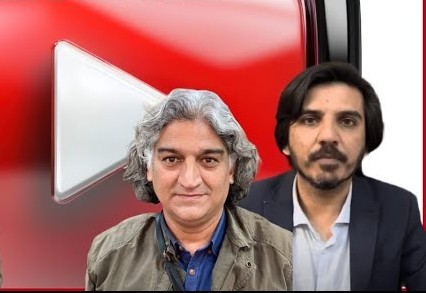
The Islamabad court’s order targets channels operated by a mix of journalists, political commentators, and influencers, both in Pakistan and abroad. Among those affected are accounts linked to the Pakistan Tehreek-e-Insaf (PTI) party, as well as prominent voices like Matiullah Jan, Ahmad Noorani, and Asad Ali Toor. The government alleges these channels crossed legal lines, prompting swift action.
“The wholesale blocking of entire channels, rather than addressing specific instances of unlawful or hateful speech in accordance with due process, conflates dissent with criminal activity,” the HRCP said in a statement posted on X. “The constitutional right to freedom of expression is fundamental not only for individual liberty but also for ensuring government accountability, fostering debate, and enabling the public to access a diversity of viewpoints.” It urged authorities to adopt “precise and proportionate” measures instead of sweeping bans.
The government, however, stands firm. Minister of State for Interior Talal Chaudhry told reporters on Wednesday that the channel owners face criminal action. “The whole world, including Pakistan, has laws regulating cybercrime and cybersecurity. Those laws must be followed,” he said. “You cannot use [your] mobile and social media to spread anarchy.” Chaudhry’s comments signal a broader crackdown, with legal consequences looming for those who defy the court.
YouTube has already warned the 27 creators of potential shutdowns. “If you fail to do so, as per our local law obligations, we may comply with the request without further notice,” the platform said in emails.
Among the targeted creators, Asad Ali Toor, whose channel boasts over 333,000 subscribers, vowed to fight back. “It is not about me. It is about these people who are on the left side of the state,” he told Reuters. “I have dedicated my platform for these underdogs who have no place to go to and raise their voices against state oppression.”
Toor, who said neither the court nor the cybercrime agency allowed him to respond to the allegations, plans legal action. “It is a dictatorial move. It can’t silence me.”
Digital rights advocates echoed his outrage, warning that the ban threatens what little space remains for free speech in Pakistan. With traditional media like newspapers and television increasingly muzzled, social media has become a critical outlet for dissent. Activist Usama Khilji slammed the court’s process, or lack thereof. “What is jarring is the complete lack of legal process,” he said.
The YouTube ban fits a troubling pattern. On March 20, Farhan Mallick, founder of media agency Raftar and a former Samaa TV news director, was arrested in Karachi under the Prevention of Electronic Crimes Act (Peca) and the Pakistan Penal Code for alleged anti-state content on his channel. He was granted bail in April amid multiple charges tied to “anti-state” content and data theft.
In May, the Pakistan Telecommunication Authority lifted a year-long ban on X, blocked since February 2024 after the general elections. The interior ministry had justified that shutdown to the Islamabad High Court, citing X’s failure to curb “misuse of its platform” and invoking national security.
The shift to digital platforms came as the government tightened its grip on traditional media, pushing independent journalists and commentators, including supporters of former Prime Minister Imran Khan, ousted in 2022, toward YouTube.
PTI leader Zulfikar Bukhari framed the bans as part of a larger cover-up. “It’s not only about anchors getting fired or YouTube channels getting banned. It’s what they are not allowing to be told and the human rights abuse they are trying to hide from the world,” he said. “In this day and age you can’t suppress digital media.”
The court order follows a string of regulatory moves bolstering state control. Pakistan has repeatedly blocked platforms like X, Facebook, and TikTok. In January, parliament amended the Electronic Crimes Act, creating a new social media authority with its own investigative arm and tribunals. These bodies can impose prison terms of up to three years and fines of two million rupees for spreading content deemed “false or fake.”
Copyright © 2021 Independent Pakistan | All rights reserved