By Staff Reporter
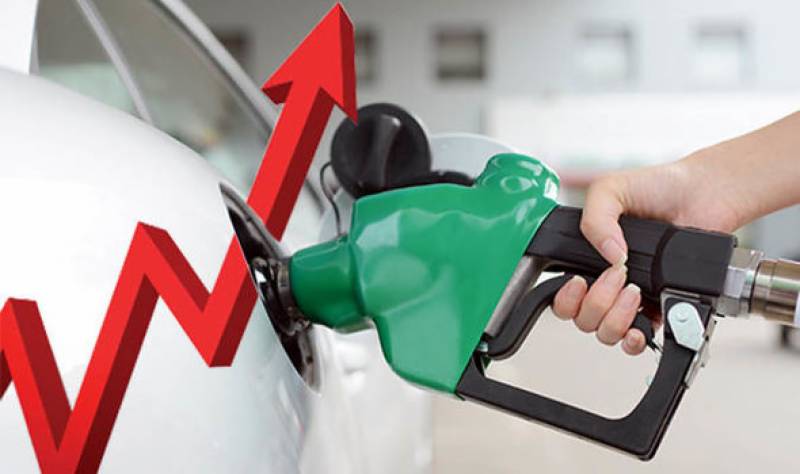
ISLAMABAD: The government raised petrol and diesel prices on Thursday while simultaneously extending fuel subsidies for motorcyclists and the transport sector, aiming to shield vulnerable consumers from the surge in global oil costs triggered by the Middle East crisis.
With the explicit concurrence of the International Monetary Fund, Prime Minister Shehbaz Sharif’s administration lifted the ex-depot price of petrol by Rs6.51 a liter to Rs399.86 and high-speed diesel by Rs19.39 a liter to Rs399.58, effective immediately for the week ending May 8. The increases were quietly notified by the Petroleum Division at midnight, in contrast to the public announcements that accompanied earlier price cuts.
The adjustments come as Pakistan remains on track to meet its petroleum levy target of Rs1.468 trillion for the fiscal year. In a virtual meeting with the IMF on Thursday, officials informed the fund that collections over the first 10 months had already surpassed the 11-month goal. Both sides reaffirmed their commitment to preserving the primary balance target “at all costs,” even if that requires additional cuts to the Public Sector Development Programme, according to people familiar with the discussions.
The government also pledged to maintain payments to independent power producers on the agreed schedule to ensure no disruptions ahead of the IMF executive board meeting on May 8, which is expected to approve the release of more than $1.2 billion under two ongoing programs.
Diesel, which had fallen from a peak of Rs520.35 on April 10 after the petroleum levy was removed, has resumed its upward trajectory. The fuel is viewed as particularly inflationary because of its heavy use in freight transportation. Combined monthly sales of petrol and high-speed diesel run between 700,000 and 800,000 tonnes, dwarfing the roughly 10,000 tonnes of kerosene demand. Although ex-depot prices remain just below Rs400 a liter, retail pump prices — after dealer margins and other charges — have already crossed that psychological threshold.
Separately, Sharif directed a one-month extension of the fuel subsidy for motorcyclists and both public and goods transporters. The move, announced in a statement from the Prime Minister’s Office, is intended to provide continued relief to economically vulnerable segments amid the crisis.
The premier instructed transporters not to raise fares and called on authorities to monitor compliance strictly. “The people will not be left alone under any circumstances,” Sharif said, adding that he hoped the regional situation would improve soon and allow fuel prices to stabilise.
The subsidies form part of a package unveiled earlier this month for bikers, farmers and transporters to offset the impact of rising global oil prices linked to the US-Israel conflict with Iran. Two-wheeler users receive Rs100 a liter, capped at 20 liters a month for three months. Trucks carrying 80-85% of food items get Rs70,000 a month, large transport vehicles Rs80,000 a month, and inter-city public service vehicles Rs100,000 a month.
The four provinces are funding the program by pooling roughly Rs200 billion over three months according to their National Finance Commission shares: Punjab contributing about Rs100 billion, Sindh Rs51-52 billion, Khyber Pakhtunkhwa Rs15 billion, and Balochistan Rs8-9 billion.
The price move and subsidy extension come against a sobering backdrop. A United Nations Development Programme team led by economist Ali Salman briefed the National Assembly’s Standing Committee on Finance and Revenue on Thursday that Pakistan could face an economic cost ranging from $10 billion to $68 billion from the Middle East crisis, depending on its severity and duration.
The committee, chaired by Syed Naveed Qamar, also approved an amendment to the Fiscal Responsibility and Debt Limitation Act 2005 that gives the Ministry of Finance broader powers to hire an unlimited number of directors for its debt management office. Lawmakers questioned the need for additional posts when the positions of director general and two of the three directors remain vacant.
Salman told the panel that the monthly net cost of the crisis currently stands between $800 million and $1.2 billion, implying an annualised impact of $10-14 billion. The breakdown includes extra oil import costs of $300-334 million a month, remittance declines of $250-333 million, export disruptions of $200-400 million, and war-risk premiums of up to $100 million a month.
In a medium-impact scenario lasting three months, the total cost could reach $24-32 billion. In a severe case — assuming oil prices climb to $150 a barrel — the annual impact could hit $50-68 billion. Inflation, which was targeted at 7% before the conflict, could rise to 10-12% in a low-impact scenario and 15-17% in the worst case.
LNG supply disruptions from Qatar have already cut thermal power generation utilisation by about 32%, forcing the government to impose two to three hours of load-shedding rather than switch to more expensive furnace oil. The briefing warned that broader geopolitical tensions could further disrupt oil markets, shipping routes and supply chains, pushing up import bills, widening trade imbalances, straining foreign-exchange reserves and raising logistics costs — all of which threaten industrial output, exports and the livelihoods of daily wage earners.
Copyright © 2021 Independent Pakistan | All rights reserved