By Staff Reporter
Two months after American and Israeli forces first struck Iranian targets, the conflict has settled into a tense and unstable pause. A ceasefire reached on April 7 has been held, with no exchanges of fire since. But the Strait of Hormuz remains closed to most shipping, the United States Navy continues its blockade of Iranian oil ports, and global energy markets are on edge. Oil prices have climbed above $120 a barrel at times, gasoline costs in the United States are rising, and the United Nations secretary-general has warned that a prolonged chokehold on this vital waterway will drag down global growth, fuel inflation, and push tens of millions more people into poverty and hunger.
At home, the Trump administration is attempting a legal end-run around the 1973 War Powers Resolution. A senior official told reporters late Thursday that, for the law, “hostilities” with Iran have “terminated” because of the ceasefire. US War (Defence) Secretary Pete Hegseth made the same claim earlier that day in Senate testimony. The argument would let the White House avoid seeking congressional approval as the 60-day clock, already extended once, runs out on Friday. It is a creative reading of a statute meant to check presidential power, and it has drawn sharp criticism from both parties. Senator Susan Collins, a Republican of Maine, voted Thursday for a measure to end military action absent congressional consent. “That deadline is not a suggestion,” she said. “It is a requirement.”
Legal scholars agree. Katherine Yon Ebright of the Brennan Center for Justice called the administration’s position a significant stretch of previous attempts to skirt the law. Nothing in the War Powers Resolution’s text or history supports pausing the clock during a ceasefire. Earlier US presidents have sometimes argued that limited or intermittent actions fell outside the statute’s reach. This campaign, weeks of airstrikes, missile exchanges, and a sustained naval blockade, does not. The administration’s manoeuvre raises fundamental questions about accountability in a conflict that was never formally authorised by Congress and whose end remains uncertain.
The impasse in the Gulf is more than a legal dispute, though. It is a contest of endurance between two sides that have misread each other’s resolve. Iran has taken heavy blows. Its navy and air defences have been degraded, its economy battered by the loss of sea-borne oil exports. The rial has fallen sharply, inflation is severe, and the war has compounded years of hardship. Iranian officials privately fear social unrest if the pressure does not ease. Yet the regime shows no sign of yielding to American demands that it reopens the strait, surrender its remaining enriched uranium stockpile, or accept ironclad limits on its nuclear program.
Tehran’s leaders have drawn a clear lesson from President Trump’s pattern of behaviour. They have watched the cycle of sweeping threats followed by extensions and last-minute mediations. In early April, Trump warned that every bridge in Iran would be destroyed and every power plant left burning. Deadlines came and went. A Pakistani-brokered ceasefire was announced with hours to spare. An AI-generated image posted on Truth Social depicted the president as an armed enforcer under the slogan “NO MORE MR. NICE GUY.” In a Situation Room meeting, officials were told to prepare for a prolonged blockade while keeping the option of heavier strikes available. From Iran’s vantage point, the message is consistent: rhetoric escalates, deadlines slip, and decisive action is deferred. The regime has concluded that the price of calling one more bluff is lower than the price of capitulation.
That calculation rests on a hard-headed assessment of Iran’s staying power. Despite the blockade, the country is not yet in free fall. It has built up six months of essential imports in anticipation of conflict. Gold reserves remain substantial. Land borders with Turkey, Iraq, and Pakistan continue to carry trade, and Russia has increased shipments of grain and other goods across the Caspian Sea. A better-than-usual harvest is approaching, reducing the immediate need for wheat imports. Supermarket shelves are still stocked, fuel and food staples have not been rationed, and state salaries are being paid. As Sanam Vakil of the Chatham House think tank in London observed, Iran’s leaders are prepared to lean on their “resistance economy,” using internal resources and cross-border trade while relying on the state’s repressive capacity to maintain order.
The regime is betting that the global economy will crack before its own does. Brent crude has nearly doubled from a year ago. Analysts warn that prices could reach $150 a barrel if the strait stays closed into June. American drivers are already paying more at the pump. European nations face fuel protests and rationing. The United Nations has highlighted the risk of broader economic fallout. Iranian officials appear convinced that international pressure will eventually force Washington to accept a face-saving compromise that includes sanctions relief and the ability to resume oil sales. Anything less, they believe, amounts to a slow form of regime change.
President Trump, for his part, continues to project confidence. In interviews this week, he described Iran’s military as “destroyed,” its economy “collapsing,” and its currency “non-existent.” He has insisted that Tehran will never be allowed a nuclear weapon and that gasoline prices will “drop like a rock” once the conflict ends. At the same time, he has kept all options open. Officials say he received a briefing on Thursday on possible new military strikes, including limited ground operations to reopen the strait. A US State Department cable is already circulating among allies, inviting them to join a “Maritime Freedom Construct” once hostilities cease. Trump has made clear he prefers a deal but is prepared to escalate if one does not materialise.
The confusion in Tehran is understandable. Messages flow through Pakistani intermediaries, but Iranian officials tell mediators that quick results are unrealistic. Air defences over the capital engaged small drones and surveillance aircraft late Thursday. The foreign minister has tied any lasting agreement to a halt in Israeli actions in Lebanon. The supreme leader has declared that foreigners have no place in the Strait except at the bottom of its waters. The regime is holding firm, convinced that time—and the world’s economic discomfort—works in its favor.
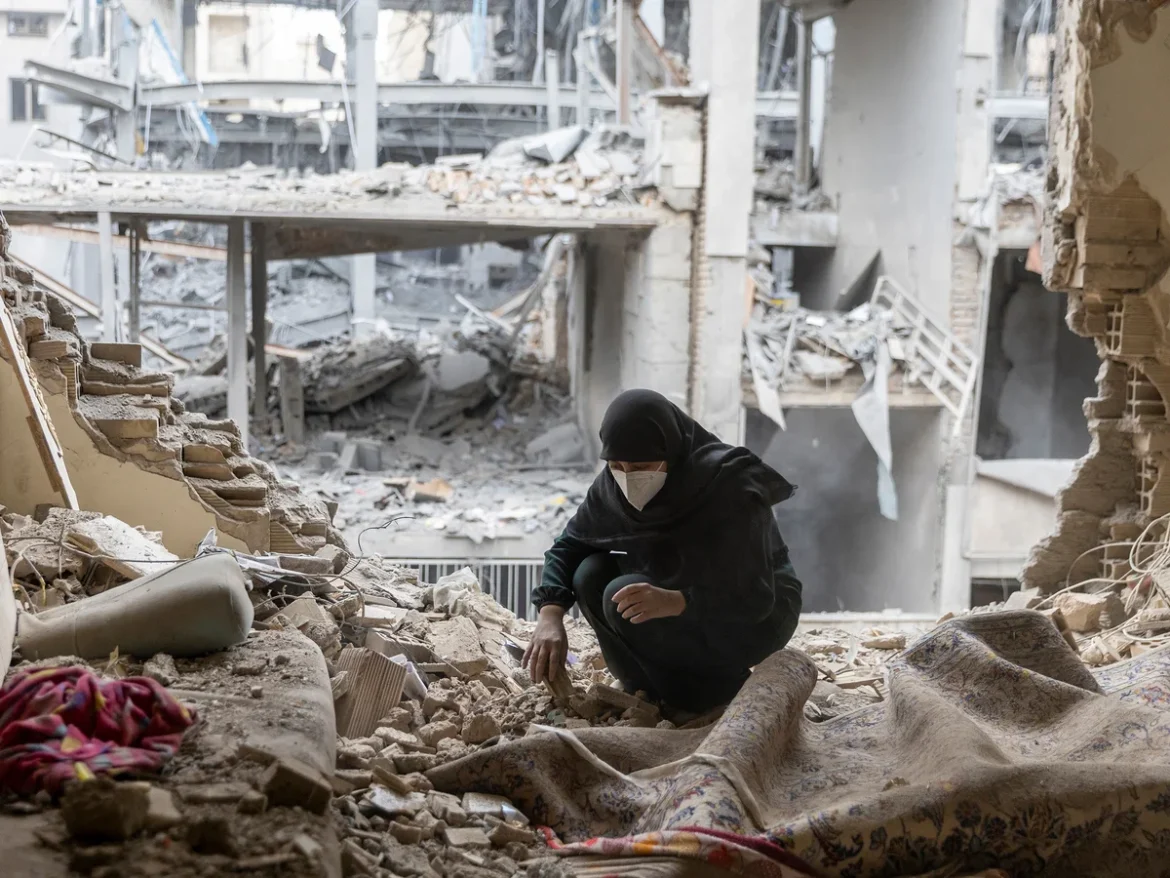
This mutual miscalculation carries enormous risks. Iran’s economy is already projected to contract sharply. Storage capacity for crude is limited; production cuts may become necessary within weeks. Internal damage from the fighting runs into hundreds of billions of dollars and could reach a trillion. And the regime’s deepest wager may be theological as much as strategic. Some in its leadership appear prepared to absorb even greater destruction if it fulfils a long-held narrative of martyrdom and resistance. The constitution of the Islamic Republic has long anticipated a moment of existential confrontation. A devastated country, a provoked enemy, a Shia population sacrificed—these images resonate in certain quarters of Tehran not as catastrophe but as destiny. The human cost of such a course would fall not on the clerics in their bunkers or the Revolutionary Guards commanders in secure facilities, but on 86 million ordinary Iranians. A full-scale return to bombing, every bridge destroyed, every power plant offline, would collapse the country’s electricity grid, halt refineries, disable desalination plants, and shut down hospitals within hours. Dialysis machines would stop. Ventilators would fail. Insulin and vaccines would spoil. Bakeries would lose industrial gas. Refrigerated supply chains would break down, leading to spoilage and disease. In the extreme heat of the south or the winter cold of Tehran, the elderly and the vulnerable would suffer first. Internal mobility would crumble, trapping civilians in a sealed pressure cooker. The same population that endured the bloody suppression of protests in January would face even greater hardship while the regime’s control mechanisms weakened.
President Trump has so far preferred the pressure of the blockade to the horror of unrestricted strikes. He has cast himself as the dealmaker who ends wars. But the siege is not delivering the quick breakthrough he seeks. Oil prices remain high, midterm elections loom, and political pressure is building. The moment approaches when the choice may narrow to losing face or losing patience. The US Congress has both the right and the responsibility to intervene. The War Powers Resolution was written precisely to prevent presidents from drifting into open-ended conflicts without legislative consent. Lawmakers who backed initial action against Iranian aggression should now insist on a formal vote for anything beyond the current ceasefire. Democrats have already pushed for it. A growing number of Republicans recognise the stakes. The administration’s legal interpretation should not stand unchallenged. There remains a narrow path out of this impasse. Iran needs sanctions relief and the ability to sell oil to stabilise its economy. The United States demands verifiable guarantees that Tehran will never acquire a nuclear weapon. A workable agreement would require both sides to compromise: Iran reopening the strait and accepting intrusive international inspections in return for phased sanctions relief and an end to the blockade. Mediators must keep the channels open. European and Asian allies, already feeling the energy shock, have an interest in pressing both capitals toward realism.
The longer this artery of global commerce stays choked, the greater the damage becomes. The longer the legal fictions and diplomatic ambiguities persist, the higher the risk that rhetoric hardens into irreversible action. Neither side can afford to treat the lives of ordinary Iranians—or the stability of the world economy—as expendable in a contest of wills. The United States has a strategic interest in a denuclearised Gulf that does not export chaos or economic pain. That interest is best served not by perpetual siege or apocalyptic escalation, but by determined, sustained diplomacy backed by congressional oversight.
The clock is ticking. The blockade holds. The Strait is closed. But even the most entrenched stalemates can yield to determined negotiation, if both sides decide, before it is too late, that the cost of continuing is greater than the cost of compromise.
Copyright © 2021 Independent Pakistan | All rights reserved