By Staff Reporter
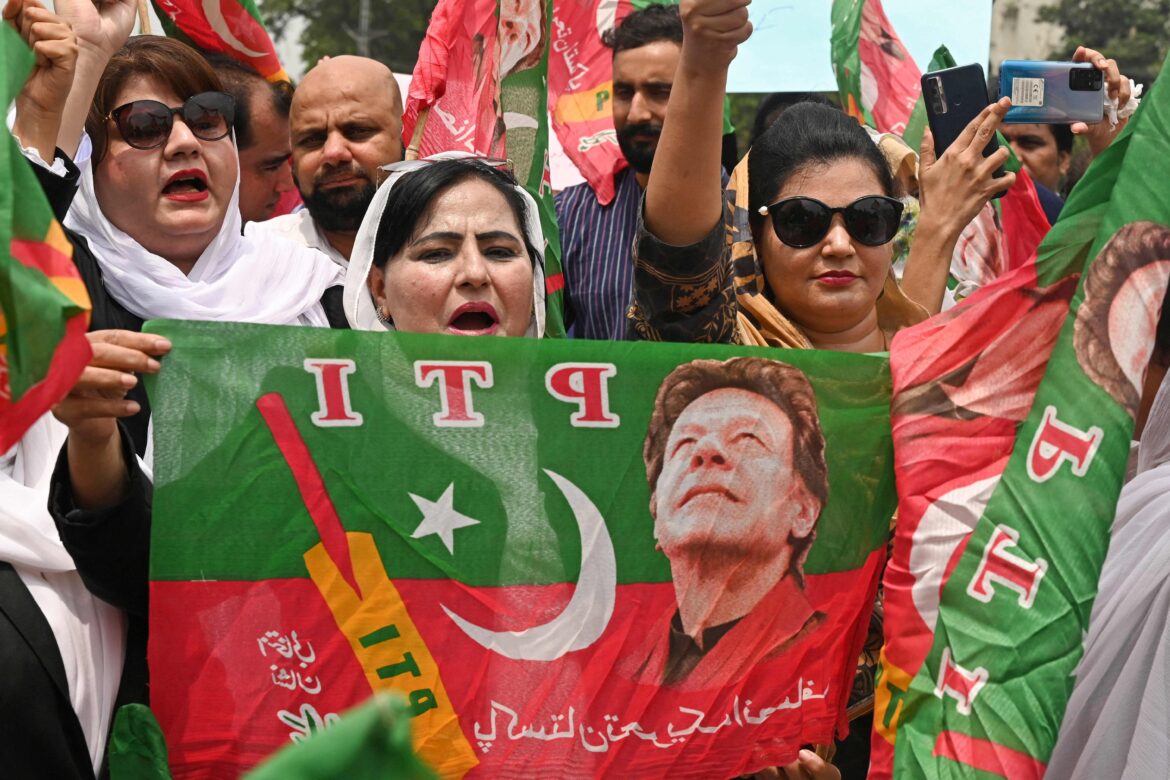
LAHORE: The Pakistan Tehreek-e-Insaf, the opposition party founded by the imprisoned former Prime Minister Imran Khan, announced plans on Thursday to launch a new wave of street protests, even as some of its leaders expressed growing frustration with Khan’s unyielding demand for agitation over negotiations to resolve the country’s deepening political crisis.
The move comes amid a backdrop of stalled talks between the opposition and the government of Prime Minister Shehbaz Sharif, with PTI figures divided on whether to prioritise demonstrations or dialogue. Khan, serving multiple sentences in Adiala Jail, has delegated authority on negotiations to an opposition alliance, but his directives to the party remain clear: no détente while he remains incarcerated.
In Lahore, PTI’s Punjab chief organiser, Aliya Hamza Malik, instructed party members, including ticket-holders, office-bearers, workers and lawyers from the Lahore division, to gather at Liberty Roundabout on Friday to welcome Khyber Pakhtunkhwa Chief Minister Sohail Afridi. She described the event as a “historic moment” to transform the city’s main boulevard into a march demanding Khan’s release.
Malik urged participants to play their role in “restoring constitution, law and democracy in the country,” adding that the province would implement Khan’s directive to launch a “mass protest movement.” Earlier, she said Afridi, along with his cabinet and provincial assembly members, would first stop in Punjab at Bhera, calling on supporters from the Sargodha and Mandi Bahauddin divisions to greet him there.
Afridi, speaking at a jirga in his hometown of Bara on Thursday, affirmed that the PTI would pursue the street movement “with full force” in line with Khan’s orders. He reiterated the party’s opposition to military operations in tribal areas, accusing the federal government of planning an action in the Tirah region of Khyber district without consulting the provincial authorities.
“We have repeatedly informed state institutions about the presence of militants in Tirah but no action came,” Afridi said, adding that the operation was “beyond comprehension” during heavy snowfall. He emphasised that the tribal region “was not a testing ground, but it was home to people who rendered immense sacrifices for the country.”
Afridi linked the issue to broader grievances, noting that his government had convened a Grand Peace Jirga representing all political and religious parties, which issued a unanimous 15-point declaration opposing new military operations. He accused unnamed forces of sabotaging the peace agenda through a “coordinated propaganda campaign” and efforts to create an “anti-governmental environment” under the guise of a terrorism narrative.” Afridi insisted that no federal representative had contacted him about negotiations, underscoring the impasse.
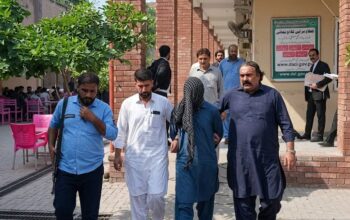
Within the PTI, however, Khan’s dominance is fueling disillusionment among some leaders who favour talks over continued protests. With five senior figures, including former Foreign Minister Shah Mahmood Qureshi, jailed in Kot Lakhpat prison, more party members have advocated dialogue despite resistance from Khan loyalists.
The push gained momentum after a letter from the Kot Lakhpat detainees elicited a “positive response” from the prime minister and others. Even the Tehreek Tahafuz Ayeen-i-Pakistan alliance, led by Mahmood Khan Achakzai, has signalled willingness to engage. But Khan’s stance ties the party’s hands, according to insiders.
Akhunzada Hussain, a spokesperson for the alliance, demanded access to Khan as a confidence-building measure, adding that the group was open to talks without halting mobilisation for a planned Feb. 8 protest. He called on the government to notify Achakzai and Raja Nasir Abbas as opposition leaders in parliament and emphasised appeals to Nawaz Sharif, the PML-N chief, on shared issues. “We are not addressing Prime Minister Shehbaz Sharif, rather his elder brother, and explaining to him the common points,” Hussain said.
Malik also placed the onus on the government to foster a conducive environment. “We are not making any illegitimate demand,” she said, demanding adherence to the jail manual and an end to arrests of party workers. “When the establishment could talk to Nawaz Sharif while he was in jail, then why can’t they do it with Khan in Adiala?”
Former PTI leader Fawad Chaudhry, who previously formed a National Dialogue Committee, urged confidence-building steps like releasing the Kot Lakhpat leaders on parole. “The country’s political landscape is in a stalemate position,” he said. “The government should take a step forward, while the PTI needs to step back to create space and environment for a meaningful dialogue.”
On Thursday, opposition figures reiterated their readiness for talks. Tehreek Tahafuz Ayeen-i-Pakistan Vice Chairman Mustafa Nawaz Khokhar stressed restoring the 1973 Constitution and addressing controversies in the 2018 and 2024 elections, proposing committees from both sides.
Senior PTI leader Asad Qaiser highlighted economic strains and the need for transparent elections, presenting an agenda focused on constitutional supremacy and rule of law without preconditions. “The opposition would first assess the government’s seriousness,” he said. “It was ultimately the government’s responsibility to show flexibility.”
Government responses were sceptical. State Minister Bilal Azhar Kayani noted past failed talks, including after the Jaffar Express attack, and questioned Khan’s reliability. “Not even Khan’s sister could guarantee his stance,” he said, warning that new remarks from the PTI founder could derail progress.
The dialogue prospect surfaced on Wednesday when Prime Minister Sharif offered talks, insisting on legitimate demands without “blackmailing.” PTI’s Sheikh Waqas Akram rejected it as a “double game,” urging no preconditions. Alliance leaders, meeting under Achakzai, affirmed readiness for discussions on elections, parliamentary strength, rule of law and human rights.
Copyright © 2021 Independent Pakistan | All rights reserved