By Staff Reporter
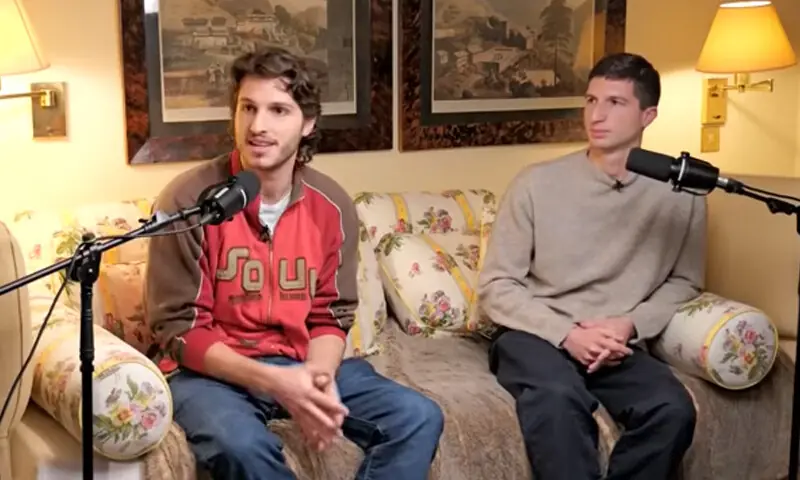
KARACHI: The sons of Imran Khan, the imprisoned former prime minister, said they had applied for visas and were preparing to travel to Pakistan in January to visit their father, even as they voiced deepening alarm over what they described as his deteriorating conditions in a “death cell” at Adiala jail.
The comments from Kasim Khan and his brother Suleiman came in an interview with Yalda Hakim on Sky News, broadcast early Wednesday, as tensions escalated around the Rawalpindi prison where Khan has been held for more than two years on charges his supporters call politically motivated.
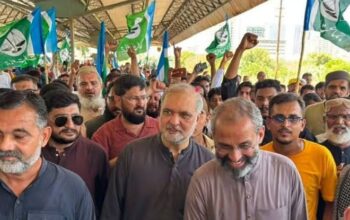
The interview coincided with Pakistani authorities dispersing a sit-in protest by Khan’s sisters outside the jail, using water cannons that his Pakistan Tehreek-e-Insaf party claimed were laced with chemicals. The women had been demanding access to meet him after weeks of blocked visits, despite court orders permitting them.
Family members and party officials have repeatedly raised concerns about Khan’s treatment, warnings echoed by a United Nations special rapporteur who said the conditions could amount to inhuman or degrading treatment.
In the interview, Hakim asked the brothers, who live in London, if they had sought permission from the Pakistani government to see their father, noting earlier warnings against traveling there. She pointed out that Defence Minister Khawaja Asif had publicly stated they were welcome and could visit him. “We are now planning to because they said it openly,” Kasim replied. “So — unless they go against their word — we should be hopefully going in January. We have applied for our visas. […] It hasn’t come through yet. We are expecting it to come through, so we are planning a trip in January.”
Pressed on what they would say to Khan if they met him, and whether they might urge him to negotiate a deal for release, Kasim emphasised his father’s commitment to his political cause. “What you have to understand is it’s his life. It’s literally his passion and his goal,” he said. “He calls it his life’s purpose to help rid Pakistan of corruption. And so if he just took a deal and came over to us and lived in England, I know there would be this burning desire and this aching that he has left his country for dead. And he would be depressed, to be honest. I know he would. This is his goal, and as much as we’d love to have our father watching all of our cricket matches or football matches over here, he has a purpose which is far greater. So, you can only respect it.”
Kasim added that he wanted to discuss ways to secure his father’s freedom. “I want to know how we can get him out, how we can help because the main point is we feel so helpless at this point,” he said. “I mean, there’s so much to catch up on.”
He noted that in past conversations, Khan avoided discussing his imprisonment. “He’s like, ‘Oh, you know, don’t worry about me. How’s everything?’” Kasim said, recalling how his father inquired about their grandmother, Lady Annabel Goldsmith, who died in October. “We haven’t spoken to him since she died only a couple of months ago, and I would love to speak to him about that,” he added. “He called her his mother after his own mother had passed, and their relationship was so close. So, I’d love to speak to him about that.”
On the prospect of Khan’s release, the brothers expressed pessimism. “The conditions are getting worse,” Kasim said. “The people in power are becoming more entrenched. So, it’s very hard to see a way out and a lot of the people we speak to […] are seeming less and less confident every time we speak to them. So, we’re now worried we might never see him again.” Despite the defence minister’s assurance, Kasim voiced scepticism.
Suleiman stressed that their father was unlikely to compromise. “He’s not the sort of person who’s going to make any compromises or cut a deal,” he said. “So yeah, at the moment, that looks like the only easy route out, but I think international pressure is always an effective way of forcing change in these situations.”
Describing the jail conditions, Kasim called them “awful. Like, they are not bad, they are awful.” Suleiman elaborated: “There are barely any lights, sometimes the electricity is cut off, there’s dirty water […] completely substandard conditions that don’t meet international laws for any sort of prisoner.”
The brothers recounted the stress of encountering social media rumours about Khan’s death. “I went straight to my family group chat because that’s the only reliable source that we have on the ground in Pakistan,” Suleiman said, calling it “incredibly stressful.” Kasim found it “jarring,” saying it disrupted their daily lives, given their sense of helplessness.
They discussed a recent meeting in early December when one sister, Uzma, was allowed access after prolonged restrictions. She reported Khan was well but furious about his conditions. Suleiman said Khan had dictated a post on his X account criticising military leadership, which prompted a sharp response from Lt. Gen. Ahmed Sharif Chaudhry, the director general of Inter-Services Public Relations, and led to further isolation.
To the international community, Suleiman urged upholding human rights standards. “At minimum, just to make sure that the standards of international human rights are being upheld, and right now they’re clearly being violated,” he said. “We just want to ensure that basic human rights for our father are being respected.” He called for independent monitoring of the conditions.
Kasim emphasised enforcing court orders on visitation, respecting the rule of law, and allowing access to Khan’s personal physician. On recent constitutional amendments granting immunity to the army chief, Kasim said Khan would likely view them as unsurprising steps toward “a military dictatorship in everything but name.” He added: “I think he probably knows about this already. And part of the reason he’s being silenced, isolated is because they know that he’s inevitably not going to stand for this.”
The brothers plan advocacy efforts, including trips to Brussels or Geneva in January to meet politicians and officials. Kasim acknowledged they had anticipated such involvement, given the dangers of Pakistani politics. “Yes, probably, realistically, because we spent, he especially, my brother spent a lot of time asking him not to go into politics when there were kind of these dangerous characters killing people consistently,” he said.
He contrasted Khan’s treatment with that of other imprisoned politicians: “This is just completely different. They’re not all tortured in solitary confinement cells and staying there for upwards of two years.”
When Hakim asked what authorities feared, both replied, “Popularity.” Kasim explained: “He’s the most popular person in the country by a landslide. So the moment he’s out, there’s no chance they’ll hold on to power. So they’re desperately clinging on to it however they can.”
In a separate segment, Mosharraf Zaidi, Prime Minister Shehbaz Sharif’s spokesperson for foreign media, defended the government’s handling. He said Khan had been incarcerated for about 860 days and had received 870 “interviews,” far exceeding the weekly allowance over 112 weeks. Zaidi detailed 137 meetings with sisters: 45 with Aleema, 45 with Uzma, and 43 with Noreen, plus two more for Aleema since tabulation. “This doesn’t sound like solitary confinement to me,” he said, adding 451 meetings with lawyers and access for Khan’s physician.
He attributed a three-and-a-half-week suspension of meetings to security issues from politicised interactions. On the brothers’ lack of contact, he noted Khan’s last phone call was in September and said there was “no sanction” preventing them from seeing or speaking to him. Citing prison rule 265, which bars political discussions, Zaidi pointed to 575 posts from Khan’s X account since his jailing.
Confronted with his own 2023 and 2024 posts calling Khan’s arrest “disgraceful,” Zaidi stood by them at the time but cited subsequent events, including conflicts with India, attacks from Iran and Afghanistan, as altering the security context.
Asked if Khan posed a threat, he replied, “Absolutely.” On the UN rapporteur’s report, Zaidi suggested it stemmed from “bad information” and noted critics “had not visited Pakistan.” When Hakim requested a visa and an interview with Khan, he offered one with the prime minister instead, saying prison rules precluded allowing Sky News to violate laws. “I think people want rule of law, but they want it very specifically in circumstances that allow Imran Khan to enjoy total freedom at a time of incarceration,” he said. “The whole purpose of being a convicted criminal is that you’re in jail and you lose your freedom.”
Copyright © 2021 Independent Pakistan | All rights reserved