By Staff Reporter
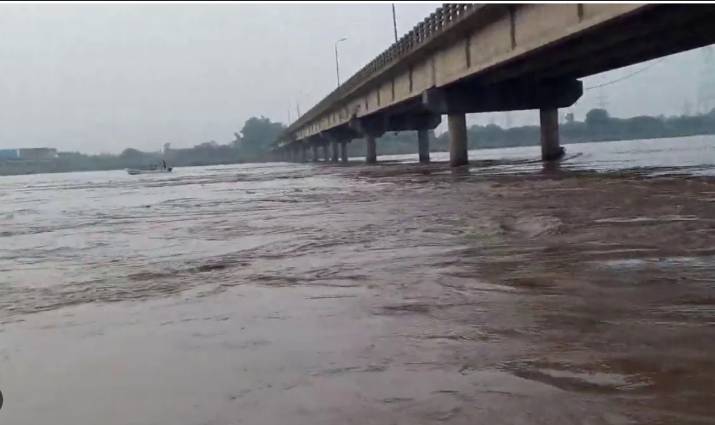
ISLAMABAD: India has alerted Pakistan to a potential major flood in the Tawi River near Jammu, a local television channel reported on Monday, marking the first significant communication under the Indus Waters Treaty since New Delhi suspended the long-standing pact in the aftermath of a deadly April attack in occupied Kashmir and a brief but intense war between the nuclear-armed neighbours in May.
The warning was conveyed by the Indian High Commission in Islamabad on Sunday morning.
“The High Commission of India to Pakistan presents its compliments to the Ministry of Foreign Affairs, Government of the Islamic Republic of Pakistan, Islamabad and has the honor to convey the following flood data. River and site Name: Tawi, Jammu. Date/Time: 24th August 2025, 10.00 Hrs, flood data: high flood,” said a letter from the Indian High Commission in Pakistan.
Pakistani authorities subsequently issued public alerts based on the information from India. The exchange represents a rare instance of cooperation amid deeply strained relations over the disputed Kashmir region and shared water resources, even as India maintains its suspension of the 1960 treaty.
That accord, brokered by the World Bank, has endured through three previous wars and numerous diplomatic crises but now faces unprecedented uncertainty. The nuclear-armed neighbors have long disagreed over the use of water from rivers that originate in India and flow into Pakistan’s Indus River basin, a vital artery for the downstream nation’s agriculture and hydropower.
The treaty allocates the waters of the Indus and its tributaries, granting India control over three eastern rivers, the Sutlej, Beas and Ravi, while assigning Pakistan the bulk of three western rivers, the Indus, Jhelum and Chenab. It includes no provision for unilateral suspension or termination and outlines clear mechanisms for resolving disputes.
Pakistan relies heavily on the system for irrigating 80 percent of its farmland, and officials here have expressed alarm that India’s upstream dams and barrages could unfairly divert flows, a charge New Delhi rejects. The two sides have clashed over several projects on the Indus and its tributaries for years, with Pakistan seeking interventions from neutral experts and arbitration courts in cases like India’s Kishanganga and Ratle hydroelectric developments. India, in turn, has accused Pakistan of prolonging the complaint process and has called for treaty modifications to avoid such delays.
Tensions escalated sharply after an April attack that killed 26 people in the Pahalgam area of occupied Kashmir. India blames Pakistan for orchestrating the militant strike, an accusation Islamabad denies, calling for an international probe. Citing the incident, India announced it would hold the treaty in abeyance until Pakistan “credibly and irrevocably abjures its support for cross-border terrorism.” That decision preceded India’s military action against Pakistan in May, the heaviest engagement between the rivals in decades, which ended with a US-brokered ceasefire.
Reuters reported on May 16 that Delhi was considering projects that could reduce water flows into Pakistan from rivers allocated to it under the treaty. Islamabad has warned that any such diversion would constitute “an act of war.” Indian officials have said the suspension allows New Delhi to withhold crucial data on water releases from barrages and dams, as well as flood warnings, and relieves it of obligations to maintain minimum flows during dry seasons.
While the move is not expected to immediately disrupt supplies, India lacks sufficient storage capacity for major diversions, water levels at a key Pakistani intake point dropped by as much as 90 percent in early May during maintenance on Indian projects. The uncertainty has raised fears of broader impacts on Pakistan’s agriculture, already strained by climate change.
Pakistan maintains that the treaty is a binding international agreement with no allowance for unilateral suspension. In June, Islamabad hailed a ruling from the Permanent Court of Arbitration in The Hague as a major victory. The court’s supplemental award affirmed its jurisdiction over disputes involving the Kishanganga and Ratle projects, stating that India’s actions could not undermine the authority of the court or neutral experts.
Following the ruling, Pakistan urged India to resume normal operations under the treaty and honor its obligations fully. Officials here reiterated their commitment to resolving disputes through the accord’s framework and called for renewed diplomatic engagement. India has not publicly commented on the flood warning or the broader treaty status.
The latest Indian warning came as Pakistan reels from deadly monsoon rains, with nearly 800 people killed since June 26 due to heavy showers, flash floods and landslides.
Copyright © 2021 Independent Pakistan | All rights reserved