By Staff Reporter
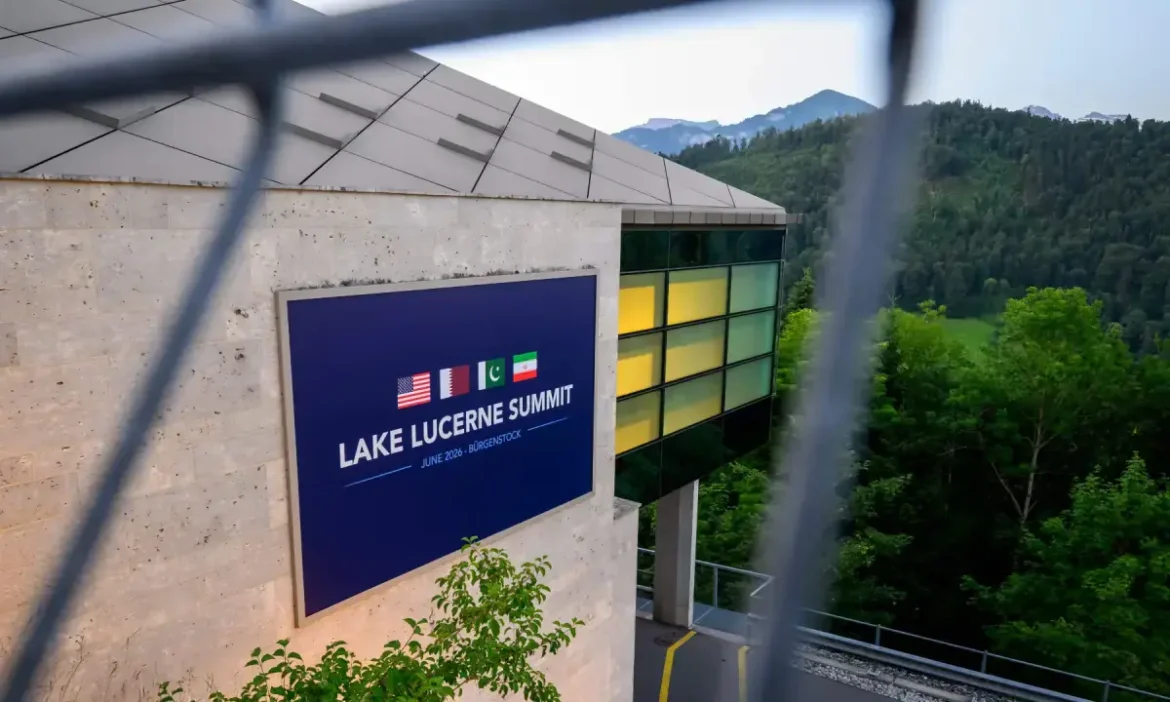
ISLAMABAD: US Vice President JD Vance reached Switzerland’s mountain redoubt before dawn on Sunday, stepping off a government aircraft at Emmen Air Base outside Lucerne at 5:59 a.m. local time to open what he described as the first formal round of negotiations since the United States and Iran signed an interim peace agreement last week — and to confront, almost immediately, the twin crises threatening to unravel it.
Within hours of landing, Vance was facing questions that had no clean answers. Iran’s Islamic Revolutionary Guard Corps had declared the Strait of Hormuz closed on Saturday, citing Israeli violations of a Lebanon ceasefire that both Washington and Tehran had held up as a condition of the broader deal. Meanwhile, Israeli and Hezbollah forces were trading fire across southern Lebanon and the Bekaa Valley, leaving 20 people dead in Lebanon on Saturday alone and raising urgent doubts about whether the fragile architecture of the agreement — signed remotely on June 17 by President Trump and Iranian President Masoud Pezeshkian — could survive its first week.
U.S. Central Command pushed back firmly on Iran’s Hormuz announcement, reporting that 55 merchant ships had transited the strait Saturday carrying more than 17 million barrels of oil to global markets. Vance, speaking with Fox News before departing Washington, said he had seen no evidence that the waterway was shut. “Millions of barrels of oil have moved through the strait in recent days,” he told reporters at Joint Base Andrews. “The ceasefire will hold.”
But the competing claims — Tehran insisting the strait is closed, Washington insisting it is open — underscored just how wide a gap the delegations gathering at the Bürgenstock resort would have to bridge, even before the nuclear discussions formally begin.
A High-Stakes Gathering
The talks represent the first direct US-Iran negotiations since the April summit in Islamabad, which laid the groundwork for the June 17 memorandum of understanding. Under that framework, the two countries agreed to a 60-day ceasefire while technical teams negotiate the details of a nuclear deal and a broader regional settlement. The agreement immediately allows Iran to sell its oil freely and unlocks a path to billions in frozen assets — concessions that have drawn sharp criticism from Republican hard-liners in Washington, who have compared the arrangement unfavorably to the Obama-era nuclear accord that Trump spent years dismantling.
The Iranian delegation — travelling aboard a plane bearing the inscription “Minab-168,” a commemoration of the 168 children killed when US forces struck a school in the city of Minab — arrived in Zurich on Saturday, according to Iranian state broadcaster IRIB. The team is led by Mohammad Bagher Ghalibaf, the speaker of Iran’s parliament, and includes Foreign Minister Abbas Araghchi, Deputy Secretary of the Supreme National Security Council Ali Bagheri, Central Bank Governor Abdolnaser Hemmati, Foreign Ministry spokesman Esmaeil Baghaei, and representatives from the energy sector.
White House special envoy Steve Witkoff and Jared Kushner, the president’s son-in-law, had already arrived in Switzerland on Saturday morning, getting a head start on the technical groundwork ahead of Vance. Vance’s own arrival was delayed by two days after fighting in Lebanon escalated on Friday, and Iranian officials initially cancelled their plans to attend. He landed accompanied by the second lady Usha Vance.
Pakistani Prime Minister Shehbaz Sharif and army chief Field Marshal Syed Asim Munir also flew in Sunday, along with a Qatari delegation, to serve as mediators — a role Pakistan has cultivated since hosting earlier rounds of US-Iran talks that ultimately produced the Islamabad memorandum. On the sidelines, Sharif was expected to hold bilateral meetings with delegations from Iran, Qatar, Switzerland, and the United States.
The director of the International Atomic Energy Agency is also expected to participate in the sessions.
The Hormuz Dispute
At the center of Sunday’s tensions was the Revolutionary Guard’s announcement on Saturday that it had closed the Strait of Hormuz — through which roughly a fifth of the world’s traded oil and natural gas passes — in retaliation for what Tehran described as Israeli “crimes” in Lebanon that violated American commitments embedded in the interim deal.
Mohammad Mokhber, an adviser to Supreme Leader Ayatollah Mojtaba Khamenei, accused Washington on the social media platform X of failing to implement the first of 14 points in the interim agreement, which calls for a ceasefire “on all fronts,” including Lebanon. As long as the deal remained only on paper, Mokhber wrote, the flow of Middle East energy would remain halted.
Iranian Foreign Ministry spokesman Baghaei said Tehran would use the Switzerland sessions to press for fulfillment of those commitments, pointing to what he described as a pattern of the other side failing to honour its obligations.
Trump, for his part, escalated with a social media post of his own Saturday, threatening to levy American tolls on the strait if no final deal is reached within the 60-day window — charging for what he called “services rendered as the Guardian Angel to the countries of the Middle East.” He said no such toll would apply during the ceasefire period itself.
The interim deal, as written, allows commercial vessels to pass freely through the Strait of Hormuz for 60 days but does not preclude future fees imposed by Iran. Trump’s counter-threat added yet another layer of financial and logistical uncertainty to an already volatile negotiation.
Lebanon as Complication
A halt to fighting in Lebanon was explicitly written into the conditions for launching the nuclear and security talks, making the ongoing combat there not merely a humanitarian crisis but a structural problem for the diplomacy itself.
Lebanese Civil Defence said 20 people were killed in Israeli strikes on Saturday, hours after a truce had taken effect. Lebanon’s health ministry put the overall death toll from Israeli attacks since March 2 at 4,057, including medics, women, and children. Israeli authorities said at least 32 soldiers and four civilians have been killed in fighting with Hezbollah. An Israeli military official said Hezbollah fired more than 50 projectiles at Israeli forces in southern Lebanon overnight Saturday; Lebanon’s state news agency reported Israeli warplanes and drones struck targets across southern Lebanon and the Bekaa Valley in response.
Hezbollah said it would not allow Israel “freedom of movement” in Lebanon and refused to halt its attacks unless Israel commits to withdrawing from the Lebanese territory it occupies. Israel, which has not signed the US-Iran agreement, said it was committed to the ceasefire in principle but would keep its forces in place and continue acting against any threat.
An Israeli military statement said Prime Minister Benjamin Netanyahu had instructed the military to hold fire in Lebanon, though it made clear there would be no withdrawal from captured areas. Both Israel and Hezbollah announced Saturday that they had recommitted to the ceasefire — though Vance acknowledged the announcement offered no guarantee, noting that a similar recommitment had collapsed within hours on Friday.
The political backdrop in Israel added further complication. A poll conducted by Hebrew University and shared with Reuters found that 92 percent of Israelis believe Iran benefited more from the joint Israeli-American military campaign than Israel did, and only 8 percent believe Israel emerged victorious. Nearly 90 percent said the goals of the war were not met, and more than 70 percent said they did not believe Netanyahu’s claims of major achievements.
The Road Ahead
Vance said the first round of talks is intended to establish the architecture for what comes next rather than resolve the hardest questions immediately. “I think we’re going to hopefully make progress on the nuclear issue, make progress on the Lebanon ceasefire issue,” he told reporters. “Those are the two big things.” He said technical experts would remain in Switzerland after the high-level sessions to continue working through the details, while he himself planned to stay “a day or two.”
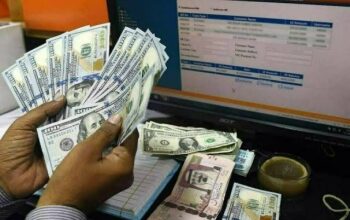
According to two regional sources with direct knowledge of the talks, speaking to Axios, Washington’s opening ask is an Iranian invitation for United Nations inspectors to visit nuclear sites bombed by U.S. and Israeli forces — the last such inspection having taken place in June 2025, before the war. In exchange, the sources said, the United States is prepared to release some of Iran’s frozen funds, beginning with a $6 billion account held in Qatar that Iran could use for humanitarian purchases.
Iran’s oil minister, Mohsen Paknejad, offered a glimpse on Sunday of what Tehran sees as the prize waiting at the end of a successful negotiation. Speaking to the ministry’s news outlet Shana, Paknejad said Iran’s oil sector would serve as the primary testing ground for any final peace agreement — and that, if Western parties honored the deal’s spirit, Iran was ready to offer the global economy hundreds of investment projects and partnership contracts.
Copyright © 2021 Independent Pakistan | All rights reserved