By Staff Reporter
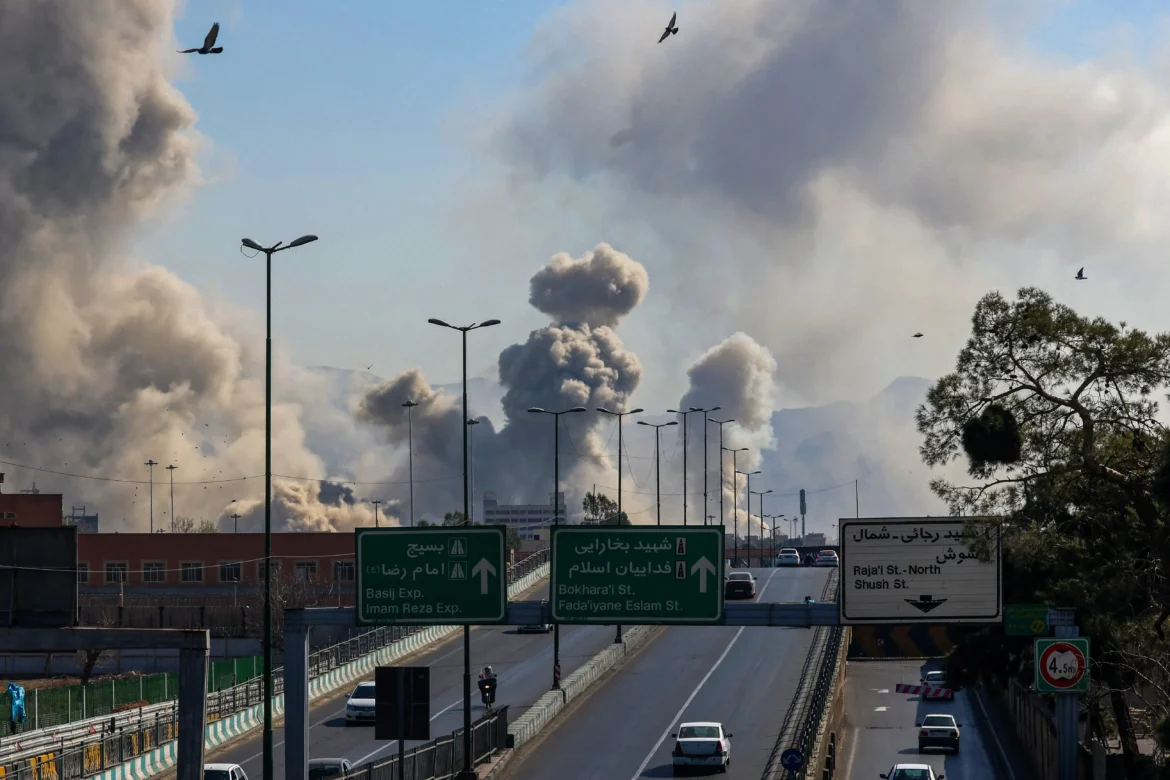
The Islamic Republic is not trying to win this war. It is trying to survive it by making everyone else lose. That distinction explains why, even as American and Israeli strikes have shattered its nuclear sites, missile factories and the leadership circle around Ayatollah Ali Khamenei, Iran keeps expanding the fight. Its missiles and drones are no longer aimed only at Israel or American bases; they are hitting oil terminals in Saudi Arabia, Qatar and the United Arab Emirates, probing the Strait of Hormuz and forcing Persian Gulf air defences to burn through interceptors at a rate Tehran knows its enemies cannot sustain forever. The strategy is brutally simple and brutally effective: raise the global price of oil, spike inflation, inflict American casualties and exhaust the patience of a president who has never liked long wars.
Vali Nasr of Johns Hopkins calls it “a test of wills and stamina.” Ali Vaez of the International Crisis Group puts it more starkly: Iran will “spread the pain as much as it can, regardless of the cost to itself and burned relations with its neighbours,” because for the clerical regime, survival itself is victory. This is not bravado. It is the only rational choice left to a country facing qualitatively superior militaries and a president who has already killed its supreme leader — something no previous American leader dared attempt.
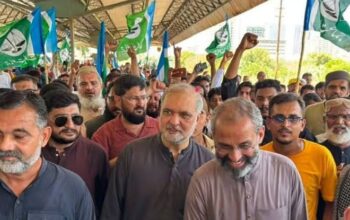
The human and strategic cost is now rippling outward in ways the White House clearly underestimated. And nowhere is that cost landing more heavily, or more dangerously, than in nuclear-armed Pakistan. Pakistan did not ask to be part of this war. For months, its diplomats had worked quietly to prevent it. Deputy Prime Minister Ishaq Dar revealed in Parliament this week that Iran had already signalled it would forgo nuclear weapons and that Pakistan stood ready to host direct talks in Islamabad. Prime Minister Shehbaz Sharif and Army Chief Gen. Asim Munir had engaged at the highest levels with both sides. Those efforts were brushed aside. When the first strikes killed Ayatollah Khamenei and members of his family, Pakistan’s carefully constructed diplomatic bridge collapsed overnight. The domestic consequences were immediate and bloody. At least 26 people died in protests that erupted across Karachi, Islamabad and the remote Gilgit-Baltistan region. Shia clerics — whose community forms the second-largest outside Iran and roughly one-fifth of Pakistan’s 240 million people — declared days of mourning and warned of more unrest. For Pakistan’s Shias, Khamenei was not merely a foreign leader; he had become, in the words of one cleric, “like our pope,” a symbol of resistance and identity forged in the shadow of Gen. Zia ul-Haq’s Sunni Islamization drive and decades of sectarian attacks. Sunnis and Shias marched together in grief. That unity is rare in Pakistan, and it is now fused with fury at Washington.
At the same moment, Islamabad finds itself bound by a mutual defence pact signed last year with Saudi Arabia — an agreement that treats an attack on one as an attack on both. When Iranian retaliation hit Saudi targets, Dar had to remind Tehran of that obligation in urgent back-channel talks. Iran asked for, and received, Pakistani-brokered assurances that Saudi soil would not become a launchpad. The result, for now, is that Iranian strikes on Saudi Arabia have been minimal compared with those on other Gulf states. Pakistan’s leverage bought breathing room for Riyadh — and bought Islamabad a little time before its own balancing act collapses. This is the impossible position Pakistan now occupies. It cannot afford to alienate Washington, which has finally lifted it off the diplomatic blacklist and given it a seat on President Trump’s “Board of Peace” for Palestinian issues. It cannot abandon Riyadh, whose financial support remains critical. Yet every day the war continues, public opinion at home grows more inflamed. Protesters have already stormed the American consulate in Karachi. Senior Shia leaders are demanding investigations and criminal cases against U.S. diplomats. The government’s response has been a model of calculated restraint — condemning the assassination of Khamenei as a violation of international law without naming the United States — but that restraint is fraying.
Geography makes the danger even more acute. Pakistan shares a long, porous border with Iran. Tehran has already struck Kurdish positions inside Iraq and is reportedly encouraging unrest among its own Baluchi and Kurdish minorities. Any serious fragmentation inside Iran — the “civil war and chaos” scenario that analysts now treat as possible if not probable — would send refugees, weapons and militant groups streaming across Pakistan’s frontier. Islamabad is already fighting its worst border clashes in years with the Afghan Taliban. A second active front with a collapsing Iran is the nightmare no Pakistani general wants to contemplate.
The economic shock is no longer theoretical and equally unforgiving. It is hitting Pakistani households. Islamabad raised petrol and diesel prices by Rs55 ($0.20) per litre each, the direct result of global oil markets’ convulsions since the war began. Top ministers stood together at a joint news conference to announce the increase, acknowledging that the war had forced their hand despite Pakistan entering the crisis with “comfortable energy reserves” built through earlier planning. The ministers were blunt about the bind. “The decision we have made by changing the levy a little bit is that we are going ahead with increasing the price of both fuels.” The government is scrambling for alternatives: new arrangements with Saudi Aramco and deploying Pakistan National Shipping Corporation vessels to secure crude imports. But these are stopgaps. Every additional week of Iranian pressure on the Strait of Hormuz — the very chokepoint Tehran has already shown it can threaten — deepens the wound in an economy still crawling out of repeated balance-of-payments crises. The modest stabilisation Islamabad had begun to achieve through warmer ties with Washington is now eroding in real time, at the pump.
The four possible endings for Iran sketched by regional experts carry radically different implications for Pakistan. A swift transition to a democratic government under Reza Pahlavi is the least likely and, from Islamabad’s perspective, perhaps the least desirable; it would upend the regional balance in unpredictable ways. A “Maduro model” — a chastened but surviving clerical regime that trades nuclear ambitions for survival — would allow Pakistan to resume its mediation role and stabilise energy flows. The most probable outcome, many analysts believe, is that the regime weathers the storm, installs a hardline successor and hunkers down, more paranoid and more isolated. That would mean prolonged disruption of Gulf energy markets and continued low-level Iranian retaliation — exactly the slow bleed Pakistan can least afford.
The worst-case scenario — civil war, separatist fragmentation and the 440 kilograms of highly enriched uranium becoming a prize fought over by factions — would be catastrophic for Islamabad. Ethnic Baluchi groups already operate on both sides of the border. Kurdish coalitions have formed and are reportedly receiving quiet American encouragement. Pakistan’s own Baluchistan province is restive. A fractured Iran would export instability directly into Pakistan’s most vulnerable regions. President Trump has spoken of wanting a deal with Iran, invoking the Venezuela precedent in which he removed the leader but left much of the system intact. He may yet find an off-ramp. But the off-ramp for Washington is not the same as an off-ramp for the region. Iran’s strategy of endurance is designed to create complications precisely like the one now gripping Pakistan: a nuclear-armed state of 240 million people forced to choose between domestic tranquillity and alliance obligations, between economic survival and strategic loyalty.
Pakistan is not a peripheral player in this drama. It is becoming one of its central victims. Its diplomats are still trying to keep channels open, still reminding both Washington and Tehran of the larger stakes. But the longer the war drags on — and Iran’s leaders have explicitly prepared for a long war — the more likely it becomes that Pakistan’s fragile equilibrium cracks. Iran’s leaders are fighting for survival by raising the global stakes. Iran’s strategy of endurance is designed precisely to create such complications by making the cost of compromise higher than the cost of continued war. Pakistan, trying desperately to stay out of the fight, may end up paying some of the highest costs, and, caught in the middle, is living proof that the battlefield has already expanded far beyond Iran’s borders.
The United States and Israel set out to degrade Iran’s power and perhaps even change its regime. They have succeeded in the first and may yet achieve the second. What they may not have calculated is how the pain Iran is determined to spread will land on the one country in the region that can least absorb it without risking internal explosion or external entanglement. That is a cost the architects of this war never put on their ledger. They should have. In the end, Tehran’s survival strategy may not save the Islamic Republic. But it is already testing the cohesion of Pakistan — and through Pakistan, the stability of South Asia itself.
Copyright © 2021 Independent Pakistan | All rights reserved