By Staff Reporter
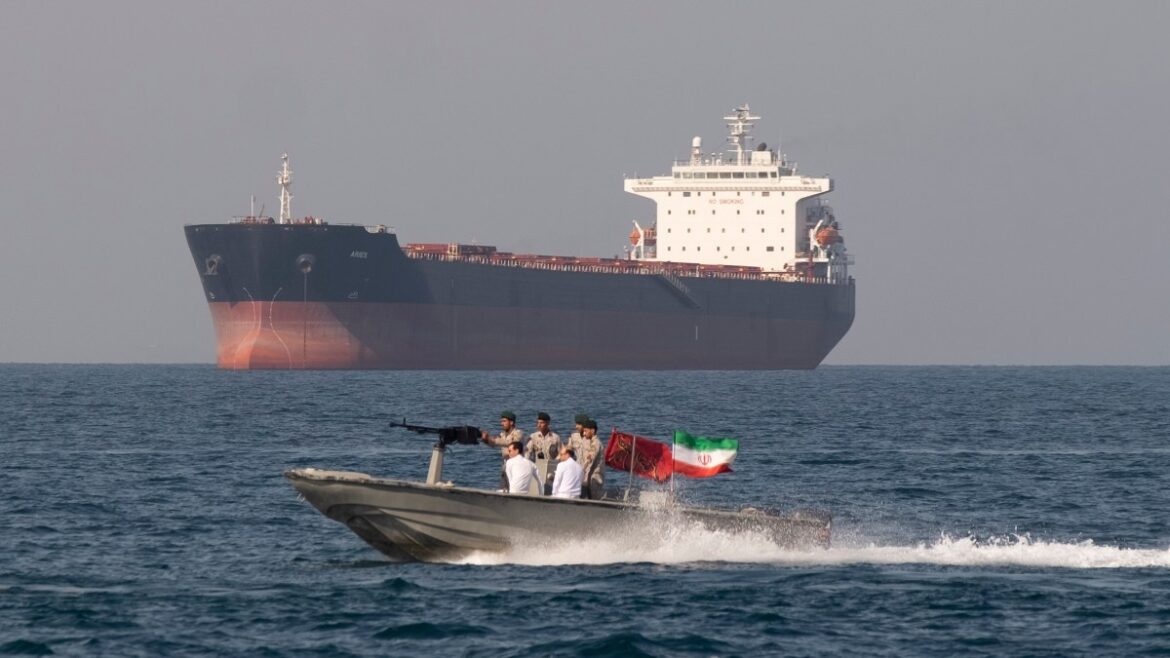
ISLAMABAD: Iran said on Monday that its forces had turned back a US warship attempting to enter the Strait of Hormuz, with state-affiliated media reporting that two missiles struck the vessel near the southern Iranian port of Jask.
A senior Iranian official told Reuters that Tehran had fired a warning shot and that it remained unclear whether the ship sustained damage. US Central Command immediately denied the claims, stating that “no US Navy ships have been struck.” The Iranian assertions came hours after President Donald Trump announced the start of “Project Freedom,” a US-led initiative to escort commercial vessels out of the Persian Gulf, where hundreds of ships and as many as 20,000 seafarers have been stranded since the US-Israeli war on Iran began in late February.
US Central Command said two American-flagged merchant ships successfully transited the strait on Monday under the protection of Navy guided-missile destroyers, describing the operation as part of a broader effort to restore commercial traffic while continuing a naval blockade of Iranian ports.
The conflicting accounts underscored the precariousness of a ceasefire that has held, with only occasional violations, since early April. Oil prices jumped more than 5 percent on renewed fears that the waterway — through which roughly one-fifth of global oil and natural gas shipments normally pass — could remain closed indefinitely. Shipping executives said military convoys alone would not be enough to resume normal operations, citing persistent risks from mines and Iranian threats.
Iran’s navy said its actions was a “swift and decisive warning” to prevent “American-Zionist” warships from entering the strait. Iran’s unified military command, in a statement issued by Maj. Gen. Ali Abdollahi, warned that any foreign armed forces — “especially the aggressive US Army” — approaching the strait would be attacked. Commercial ships and oil tankers were ordered to coordinate all movements with Iranian authorities. “We have repeatedly said the security of the Strait of Hormuz is in our hands and that the safe passage of vessels needs to be coordinated with the armed forces,” Abdollahi said.
Central Command said its forces, including 15,000 military personnel, more than 100 land- and sea-based aircraft, warships and drones, would support Trump’s plan while enforcing the blockade that has already forced at least 49 commercial vessels to turn back since mid-April. Adm. Brad Cooper, the Central Command commander, said the mission is “essential to regional security and the global economy.”
Trump, in a Truth Social post Sunday, said the United States would “guide their Ships safely out of these restricted Waterways, so that they can freely and ably get on with their business.” He warned that any interference “will, unfortunately, have to be dealt with forcefully.” Administration officials have not detailed which nations’ vessels would receive assistance or how the escorts would operate. One report indicated the plan may not involve direct US Navy convoys for every commercial ship.
The United Arab Emirates accused Iran of attacking an empty ADNOC crude-oil tanker with two drones as it tried to navigate the strait; no injuries were reported. Separately, the US-led Joint Maritime Information Center advised ships to route closer to Omani waters in an “enhanced security area,” warning that usual paths remained hazardous because of unsurveyed mines.
In a rare positive development, Pakistan said it had handed over 22 crew members from the Iranian container ship Touska, which U.S. forces seized last month as part of the blockade. Islamabad, which has sought to mediate between Washington and Tehran, called the release a “confidence-building measure.” Fifteen of the crew were transferred at the Gabd-Rimdan border crossing in Balochistan, Pakistani officials said; the status of the remaining seven was not immediately clear.
The latest flare-up occurred as the two sides continue indirect diplomacy. Iranian state media reported on Sunday that Washington had responded, via Pakistani channels, to a 14-point Iranian proposal for ending the war. Tehran said it was reviewing the reply but emphasised that its priority is a comprehensive end to hostilities — including Israel’s operations in Lebanon — before addressing its nuclear program. A senior Iranian official said nuclear talks would come later. The Trump administration, by contrast, has demanded that Iran relinquish its stockpile of more than 400 kilograms of highly enriched uranium, which US officials say could be used for a nuclear weapon. Iran insists its nuclear activities are peaceful and has offered limited curbs in exchange for sanctions relief, similar to terms it accepted in the 2015 nuclear deal that Trump abandoned during his first term.
Foreign Ministry spokesman Esmail Baghaei told reporters on Monday that “changing demands made diplomacy difficult” and that Tehran would discuss “nothing except for the full end to the war at this stage.” Inside Iran, the government has maintained a near-total internet shutdown for more than 10 weeks, affecting more than 90 million people, citing security needs. State-backed motorcades and rallies continue in major cities, often guarded by armored vehicles. Authorities have heavily promoted the “Jan Fadaa” campaign — meaning “one who sacrifices” — which they claim has registered more than 31 million volunteers ready to give their lives in defence of the country.
The war has already exacted a heavy economic toll. Iran’s closure of the strait has deprived it of oil revenue while driving up global fuel prices. Shipping groups, including Germany’s Hapag-Lloyd, said their risk assessments had not changed and that normal transit remained impossible. Jakob Larsen, head of security for the Baltic and International Maritime Council, said the US effort lacked formal industry guidance and carried “a risk of hostilities breaking out again.”
Trump has faced domestic pressure to break Iran’s grip on the waterway ahead of November’s midterm elections, as rising gasoline prices threaten voter support for Republicans. US officials hope the continued blockade will compel Tehran to make concessions on its nuclear program and other issues. Iranian officials, however, have signaled they will not negotiate under duress.
Copyright © 2021 Independent Pakistan | All rights reserved