By Staff Reporter
ISLAMABAD: Iran’s armed forces warned Monday that “no port in the region will be safe” if the United States proceeds with its planned naval blockade of Iranian ports and coastal waters, declaring the impending operation an “illegal act” that “amounts to piracy” and vowing that security in the Persian Gulf and Gulf of Oman will be “for everyone or for no one.”
The sharp response, issued hours after President Donald Trump ordered the blockade to begin at 10 a.m. Eastern time (1400 GMT), set the stage for a direct maritime showdown even as the two-week-old ceasefire that halted open fighting remains technically in force. With the operation now a few hours away, commercial shipping through the Strait of Hormuz has already frozen, tankers have reversed course, and global oil prices have spiked more than 8 percent.
The unified command of Iran’s military and Revolutionary Guards, quoted by state broadcaster IRIB, said the US imposition of restrictions on vessels in international waters violates maritime law and threatens to upend the fragile truce struck only two weeks ago. “Security in the Persian Gulf and the Sea of Oman is either for everyone or for NO ONE,” the statement declared. “NO PORT in the region will be safe.”
The Iranian warning came as the collapse of weekend negotiations in Islamabad — the highest-level direct talks between Washington and Tehran since the 1979 Islamic Revolution — left both sides trading maximalist positions on Iran’s nuclear program and control of the strategic waterway. Vice President JD Vance, who led the American delegation alongside special envoy Steve Witkoff and Jared Kushner, departed the Pakistani capital early Sunday after more than 21 hours of discussions, describing Washington’s final proposal as its “final and best offer.”
No agreement was reached on who would regulate shipping lanes through the Strait of Hormuz — the chokepoint that once carried roughly one-fifth of the world’s oil — or whether Iran would retain any right to enrich uranium for a civilian nuclear program. Iranian parliamentary speaker Mohammad Bagher Ghalibaf, who headed Tehran’s team, said his side had put forward “constructive initiatives” but that the Americans “were unable to gain the trust of the Iranian delegation.” Foreign Ministry spokesman Abbas Araghchi later blamed the impasse on “maximalism, shifting goalposts, and a blockade,” insisting the two sides had been “just inches away” from a deal. Pakistan, which hosted and mediated the sessions, scrambled to keep the diplomatic track alive. Foreign Minister Ishaq Dar said Islamabad would “continue to play its role to facilitate engagement and dialogue in the days to come” and urged both sides to honour the ceasefire.
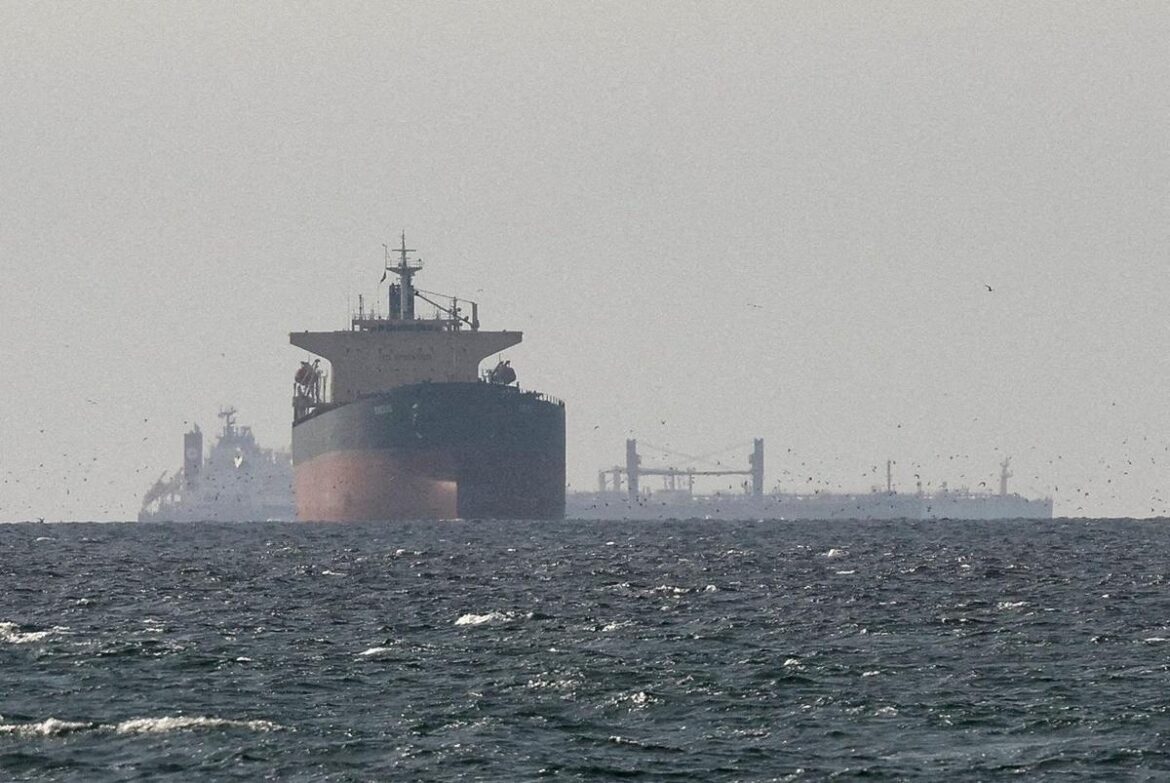
As the blockade deadline approaches, the economic fallout is already rippling worldwide. West Texas Intermediate futures climbed above $104 a barrel Monday, while Brent crude topped $101.86 — a sharp reversal from last week’s easing after the ceasefire was announced. Shipping trackers showed vessels preemptively turning back: a Malta-flagged very large crude carrier, the Agios Fanourios I, reversed after attempting to enter the Gulf for Iraqi oil, while others anchored near the Gulf of Oman. Even Pakistan-flagged tankers operating under limited safe-passage deals were among the few still moving.
Before fighting erupted Feb. 28 — triggered by US and Israeli strikes on Iran followed by Iranian retaliation against Gulf targets and Israeli cities — the strait was a vital artery for global energy. That flow has since slowed to a trickle, disrupting supply chains for fuel, fertilizer, apparel and semiconductors. International Energy Agency chief Fatih Birol last week called the disruption “the worst energy shock the world has ever seen,” surpassing the 1970s oil crises and the Ukraine war’s economic impact. Energy historian Daniel Yergin described its scale as unprecedented.
The U.S. Central Command has said the blockade will be enforced “impartially against vessels of all nations entering or departing Iranian ports and coastal areas, including all Iranian ports on the Arabian Gulf and Gulf of Oman.” American forces will not impede ships transiting the strait to or from non-Iranian ports, the statement added. Trump, in a Truth Social post Sunday night, framed the operation as a step to clear mines and ensure Iran cannot profit from controlling the waterway, warning that any Iranian fire on US or peaceful vessels would be met with overwhelming force.
Copyright © 2021 Independent Pakistan | All rights reserved