By Staff Reporter
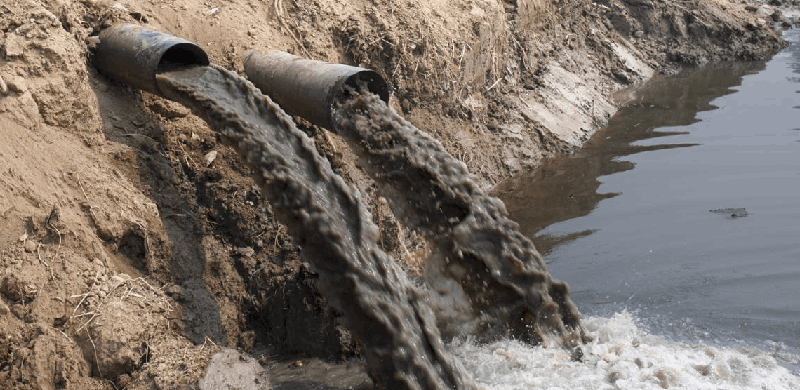
ISLAMABAD: Pakistan’s water regulator has directed the provincial governments to stop untreated wastewater from flowing into rivers and natural streams, citing a steady and documented deterioration in the quality of water that sustains the nation’s largest irrigation network.
In a letter to the chief secretaries of the four provinces, Indus River System Authority Chairman Amjad Saeed described the problem as “alarming,” pointing to recent studies and field reports that show rising pollution, salinity and foul odors throughout the Indus Basin Irrigation System, known as IBIS. The authority, which oversees the distribution of surface water among the provinces, said it had sent its own inspection teams into the field and requested detailed reports from provincial irrigation departments.
“Recent studies and reports have highlighted an alarming deterioration of water quality in Pakistan’s rivers due to the discharge of untreated wastewater,” Saeed wrote in the letter. The Indus Basin is home to the world’s largest contiguous irrigation system. Nearly 90 percent of Pakistan’s irrigated agriculture — and by extension much of its food production and food security — depends on the vast network of canals that draw from the Indus River and its tributaries. Under the Indus River System Act of 1992 and the Water Apportionment Accord of 1991, the authority is responsible for regulating and distributing those surface water resources in line with interprovincial agreements.
Saeed’s letter singled out several rivers and water bodies for particular concern. The Ravi and Sutlej rivers are now severely polluted, officials said. In the lower reaches of the Indus itself, salinity levels rise steadily from upstream to downstream, especially during periods of low flow. Water in Manchar Lake, one of the largest freshwater bodies in Sindh province, has become unfit for drinking or irrigation because of high salinity. In Khyber Pakhtunkhwa, degradation in the Kabul and Swat rivers and other waterways has begun to raise public-health alarms.
Field teams reported visible signs of contamination at major barrages, including foaming and foul odors at Sukkur and Kotri on the Indus and at the Aral Head Regulator that controls flows into Manchar Lake. Laboratory analyses cited by the authority showed that total dissolved solids increase both from upstream to downstream and from the wet season to the dry season. Concentrations of chloride and the sodium absorption ratio — a measure of water suitability for irrigation — were markedly higher in the lower Indus. Dissolved oxygen levels, an indicator of the water’s ability to support aquatic life, were noticeably lower during the dry season.
The issue was discussed at a recent meeting of the Indus River System Authority, which includes representatives of the federal government, the provinces and other stakeholders. Participants expressed “grave concern” over the condition of the rivers and canals, according to the letter. The authority decided to issue formal advisories to the Pakistan Environmental Protection Agency and the provincial governments, while noting and appreciating corrective steps some provinces have already taken.
Saeed instructed the provinces and the environmental protection agency to direct their departments to take immediate remedial measures, ensuring that wastewater is properly treated before it enters any river or natural stream. He reminded them that the authority’s mandate is to protect the integrity of the entire Indus system. “Coordinated federal and provincial efforts are essential to protect the integrity of the IBIS and to safeguard the constitutional right of citizens to clean and sustainable water resources,” the chairman emphasised.
The letter marks one of the most direct interventions by the federal water regulator on water-quality issues in recent years. The authority’s request places fresh pressure on them to enforce existing environmental regulations along hundreds of miles of canals and rivers that millions of Pakistanis rely on for drinking water, irrigation and daily life.
Copyright © 2021 Independent Pakistan | All rights reserved