By Staff Reporter
ISLAMABAD: A sessions court in the capital sentenced 23-year-old Umar Hayat to death on Tuesday for the murder of 17-year-old TikTok influencer Sana Yousaf, who was shot dead in her Islamabad home nearly a year ago in a case that drew widespread condemnation and renewed debate about violence against women in the country.
Additional District and Sessions Judge Muhammad Afzal Majoka convicted Hayat of intentional murder under Section 302(b) of the Pakistan Penal Code. The death sentence requires confirmation by the Islamabad High Court under Section 374 of the Code of Criminal Procedure. The judge also ordered Hayat to pay 2.5 million rupees in compensation to Yousaf’s legal heirs, with an additional six months of simple imprisonment if the payment is not made.
Hayat received concurrent sentences for other offenses: 10 years of rigorous imprisonment and a 200,000-rupee fine for robbery under Section 392; another 10 years and a 200,000-rupee fine for defamation under Section 499; and one year of rigorous imprisonment with a 100,000-rupee fine for dishonestly receiving stolen property under Section 411. The court credited him with time already spent in custody under Section 382-B of the Code of Criminal Procedure.
The verdict came a day after Hayat retracted his earlier confession, telling the court he had been falsely implicated because of public pressure on social media. Both he and Yousaf were active TikTok users, and he claimed he had never quarreled with her, never sought to meet her and had no contact with her at the time of the killing.
Yousaf was shot dead in her family’s home on June 2, 2025. Hayat, the son of a retired government official and a TikToker himself, was arrested within 20 hours in Faisalabad, about 200 miles away, Islamabad Inspector General Syed Ali Nasir Rizvi said at the time. Police described the case as one of “repeated rejections.”
In a confession recorded before a magistrate in July 2025 under Section 164 of the Code of Criminal Procedure, Hayat had described developing a one-sided obsession with Yousaf after online interactions. According to that statement, he drove from Jaranwala to Islamabad on May 28 to wish her a happy birthday. When she did not meet him, he grew convinced she was avoiding him. On the day of the murder, he returned in a rented Toyota Fortuner carrying a 30-bore pistol, intending to confront her. He detailed his escape plan and where he disposed of the weapon.
Hayat was indicted on Sept. 20 and pleaded not guilty. His trial lasted more than eight months. Last month, the Islamabad High Court rejected his petition to transfer the case from Judge Majoka’s court. In late February, another high court judge dismissed his challenge to the recording of a witness statement in the absence of the accused and his lawyer, ruling that Hayat’s video-link appearance satisfied legal requirements.
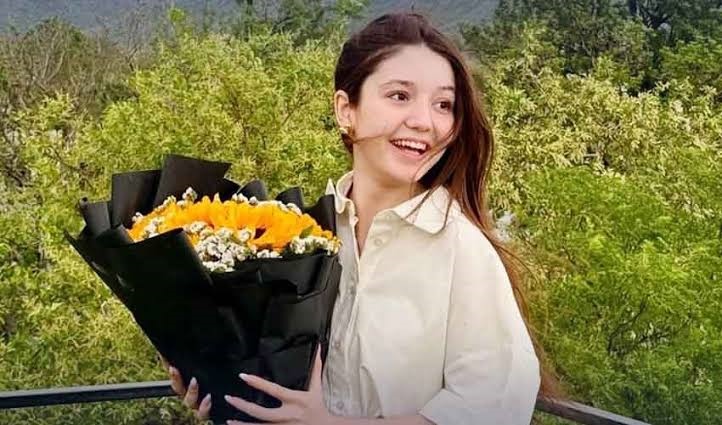
Yousaf, who had turned 17 just days before her death, had built a following of more than 1 million across social media platforms. She posted videos of favorite cafés, skincare routines, traditional outfits, lip-sync clips and beauty-product promotions — content that resonated in a country where TikTok’s short-video format has given many young women both an audience and a rare source of income. Fewer than a quarter of Pakistani women participate in the formal economy, and open discussion of relationship issues, which Yousaf sometimes touched on, remains largely taboo.
Her killing triggered nationwide protests and calls for justice, with many Pakistanis viewing the case as emblematic of the risks women face when they reject advances or gain public visibility online. Violence against women is widespread in the conservative society, according to human rights groups, and attacks on women who rebuff suitors are not uncommon.
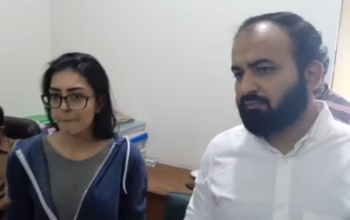
Speaking to reporters outside the courtroom after the verdict, Yousaf’s mother, Farzana, said the family had been served justice. She thanked her lawyers, the police for their cooperation, the judge and the news media, which she said had supported the family “from the beginning.” “The culprit has been handed the right punishment,” she said. Her father, Yousaf Hassan, described the 11-month wait for the verdict. “We had been waiting for today for the past 11 months,” he said, “and the judiciary has given its verdict in the spirit of justice.” “This verdict is not just for me as an individual; it is for the entire society. This is a lesson for all such criminals in society that if they commit such an act, they can get such a result.” Hassan called the outcome “justice for all girls.”
One of the family’s lawyers praised Judge Majoka’s patience, saying the defense had directed personal attacks at the judge and used tactics to prolong and complicate the proceedings. Prosecutors presented 27 witnesses, medical evidence showing fatal gunshot wounds to Yousaf’s heart and lungs, call records, chat screenshots and the recovery of the victim’s mobile phone, which helped link Hayat to the crime. Surveillance footage captured the assailant leaving the house with the phone, according to the investigation.
In his statement on Monday under Section 342 of the Code of Criminal Procedure, Hayat repeatedly declined to answer questions until his lawyer arrived. He later denied all allegations, claimed he was in Faisalabad at the time of the murder and alleged investigative flaws, including problems with the identification parade and the handling of CCTV evidence. He asserted that his original confession had been extracted under pressure.
The case echoed earlier high-profile killings of women who had gained prominence on social media. In 2016, model and internet star Qandeel Baloch was murdered by her brother after her online fame sparked controversy. In 2021, Noor Mukadam was beheaded after rejecting a marriage proposal; her killer was sentenced to death last year. TikTok remains hugely popular in Pakistan, in part because its format does not require high literacy levels, yet it has also exposed young female users to harassment and threats.
Hayat’s lawyers have indicated they will challenge the verdict in higher courts. Under Pakistan’s legal system, the death sentence cannot be carried out until the appeals process is exhausted.
Copyright © 2021 Independent Pakistan | All rights reserved