By Staff Reporter
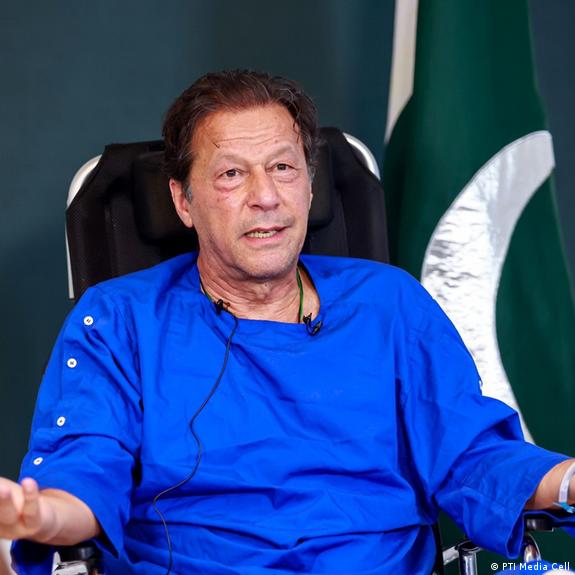
ISLAMABAD: Prison officials told the Supreme Court of Pakistan on Monday that former prime minister Imran Khan’s eyesight has improved dramatically since he began treatment for a vision-threatening condition earlier this year, even as internal medical records attached to the same filing revealed the jailed opposition leader has reported uncontrolled blood pressure, heart palpitations, and mounting anxiety tied to his prolonged isolation.
The dual findings, laid out in a report from the superintendent of Adiala jail, landed a day before the country’s highest court was scheduled to take up Khan’s petition seeking transfer to a private Islamabad hospital — and immediately reignited a monthslong standoff between the former premier’s party and the government over the conditions of his confinement.
Khan, the founder of the Pakistan Tehreek-e-Insaf party, has been imprisoned since August 2023 on a series of charges his supporters call politically motivated. He was diagnosed in late January with right central retinal vein occlusion, a condition that can cause vision loss, and has since been transported repeatedly to the Pakistan Institute of Medical Sciences for treatment.
According to the jail’s filing, Khan was seen by Dr. Muhammad Arif Khan, the head of ophthalmology at the institute, and Dr. Nadeem Qureshi, a vitreo-retinal surgeon at Alshifa Trust Eye Hospital in Rawalpindi. “Consequently, significant improvement of his eye has been noticed, and his vision returned to almost normal,” the report stated, adding that the outcome demonstrated the jail administration had “left no stone unturned” in securing top-tier care.
But annexures attached to that same report told a more complicated story. During an Aug. 1 examination, Khan complained of fluctuating blood pressure, palpitations, headaches, and restlessness, which he attributed to infrequent contact with his wife, family, and colleagues, as well as the absence of newspapers and television in his cell. The examining physician recommended a CT coronary angiography and warned that the 74-year-old, described as having a “stressful attitude,” faced elevated risk of complications.
A follow-up medical board review on Aug. 10 reached similar conclusions after Khan reported “heaviness in head” and continued palpitations. That board recommended an hour of daily walking, relaxation of prison conditions, and regular access to magazines, newspapers, books, and television, along with more frequent contact with his wife or another immediate family member to help manage his anxiety and blood pressure.
The filing also detailed the extent of restrictions on Khan’s contact with the outside world, noting that he and his wife, Bushra Bibi, who is also in custody, have met weekly every Tuesday — 84 sessions in total since his imprisonment began. Jail officials wrote that “their health and well-being are and have been of paramount importance to the jail administration,” and said medical officers check on Khan three times daily, monitoring his blood pressure, heart rate, and oxygen levels.
Separately, the report accused Khan’s lead counsel, Salman Akram Raja, of violating prison rules and a prior court order by discussing case details in media interviews after visiting his client, in what the filing described as a breach of an undertaking Raja gave following a contempt proceeding resolved by the Islamabad High Court in March 2025. The jail asked the Supreme Court to dismiss Khan’s appeal as lacking merit.
A three-judge Supreme Court bench led by Justice Shahid Wahid, along with Justices Naeem Akhtar Afghan and Ishtiaq Ibrahim, is scheduled to hear the case Tuesday.
PTI calls report a vindication of its concerns
Khan’s party seized on the medical findings almost immediately. At a news conference in Islamabad, PTI chairman Barrister Gohar Ali Khan said the report confirmed what the party had argued for months — that Khan’s blood pressure was elevated and that his isolation was taking a toll.
“We have been emphasizing that Khan sahib should have access to health facilities as per the rules and jail’s standard operating procedures,” Gohar told reporters, adding that three separate rulings from the Islamabad High Court had affirmed Khan’s right to meet with his family, doctors, and lawyers. Despite those rulings, he said, roughly 300 days had passed since any such meeting occurred, and the party had no way to independently verify Khan’s condition. Gohar noted the jail’s own filing had now acknowledged Khan’s blood pressure had risen and that he was on medication for it, information he said had not previously reached the party through any independent source.
Gohar also renewed a specific demand for family access, saying Khan’s sister Aleema Khan and his other siblings had a right to see him. He rejected any suggestion that such visits needed to stay private, arguing that nothing in the rules prevents family members from speaking to the media afterward. “There is nowhere written that they cannot speak outside after meeting him,” Gohar said, urging authorities to “stop this game of cat and mouse” and restore access that he said had been blocked since October. “We have repeatedly said that we do not politicise the health of the PTI founder,” he added, noting that the filing did acknowledge one avenue of contact had continued: Khan’s counsel, Barrister Salman Safdar, had met with him twice this year, on Feb. 10 and April 4.
Khyber Pakhtunkhwa Chief Minister Sohail Afridi, who said he planned to hold a detailed consultation with Khan’s personal physicians and announce the party’s next steps afterward, called the report “highly concerning” and said Khan’s health had visibly declined since his arrest. “Neither his family nor his physicians or lawyers have met Imran Khan sahib since December 2,” Afridi said, describing the former prime minister as “super fit” before his incarceration and someone who had never previously had a blood-pressure problem.
Afridi contrasted the jail’s numbers with what he described as consistently normal readings from Khan’s own physicians. “Whenever Imran’s personal doctors checked his blood pressure, it was normal, but today’s official report said it was high,” he said, citing a reading of 140 over 100 in the filing and asking, “If the official report says Imran Khan’s blood pressure was 140/100, then what would it actually be?” He also dismissed any suggestion that Khan’s platelets had been artificially lowered to manufacture the appearance of a health crisis, calling the concerns genuine. He said the party was not seeking special treatment but basic justice, and appealed directly to the court to grant Khan’s family access to him.
“If the judiciary does not deliver justice, the people will take justice into their own hands,” Afridi warned, while also emphasizing that party leaders, institutions, and the courts alike bore responsibility for ensuring the public received accurate information about Khan’s condition.
Gohar said the party had petitioned the high court 25 times and the Supreme Court 15 times over issues related to Khan’s detention, calling access to his family, doctors, and lawyers a fundamental legal right. He also pushed back on the jail’s contempt allegation against Raja, arguing that the prison rule in question “only bars political statements inside the prison and not outside.”
PTI Central Information Secretary Sheikh Waqas Akram said in a separate statement that the report painted an “alarming picture” of Khan’s condition and questioned why the government had not acted on the medical board’s Aug. 10 recommendations if, as jail authorities claimed, Khan was already receiving adequate care. “If these facilities are already being provided, as claimed by the jail authorities, there is no explanation as to why the medical board found it necessary to recommend them,” Akram said. He reiterated PTI’s demand that Khan be moved immediately to Shifa International Hospital for a full examination under the supervision of his personal physicians, Dr. Asim Yousaf and Dr. Faisal Sultan.
Former National Assembly speaker Asad Qaiser drew a comparison to the treatment of former prime minister Nawaz Sharif, who was transferred to a hospital with full facilities when he fell ill in custody under a previous PTI-led government. “We are witnessing the worst violation of fundamental human rights,” Qaiser said, arguing that even the standard provisions of Pakistan’s prison manual — applied to convicted terrorists and murderers — were being withheld from a former head of government.
Senate debate turns heated over sub judice concerns
The dispute spilled into Pakistan’s Senate on Monday, where Leader of the Opposition Allama Raja Nasir Abbas raised Khan’s health on a point of order, prompting a sharp exchange between opposition and treasury benches. Law Minister Azam Nazeer Tarar initially cautioned that the matter should not be debated because it remained before the courts, but Special Assistant to the Prime Minister on Political Affairs Rana Sanaullah said he was prepared to respond, and the Senate chairperson allowed the discussion to proceed.
Abbas argued that Khan’s treatment amounted to excessive punishment. “Even a Pharaoh should not be punished without a crime,” he said, calling for medical care for both Khan and his wife and proposing that a parliamentary delegation be permitted to visit the jail to assess conditions firsthand.
Sanaullah rejected the opposition’s characterization, telling the Senate that responsibility for Khan’s medical care rested jointly with jail authorities and the courts overseeing his case, and that any negligence would carry legal consequences for those responsible. He said Khan had received treatment from some of Pakistan’s top specialists, including doctors from Al-Shifa, and that a physician of Khan’s own choosing had been incorporated into his medical team. Sanaullah added that Khan himself had expressed satisfaction with his treatment in a report previously filed with the Supreme Court, and that meetings and medical matters continued to proceed under court-prescribed procedures.
Tarar noted that all cases against Khan remained pending before the courts and that a comprehensive report from Khan’s counsel, Barrister Salman Safdar, had already been submitted, with the Supreme Court having issued prior orders on his treatment. Minister of State for Interior Talal Chaudhry was more pointed, telling the chamber that PTI had repeatedly claimed Khan’s life was in danger even as 84 meetings between Khan and his wife had taken place. “Now the sympathy card is left,” Chaudhry said.
The Supreme Court is expected to take up Khan’s appeal, along with the competing accounts of his medical condition, when proceedings resume Tuesday.
Copyright © 2021 Independent Pakistan | All rights reserved