By Staff Reporter
LAHORE: The Punjab government has lifted an 18-year ban on the historic Basant festival, paving the way for a three-day celebration of kites, colors and spring in Lahore starting Feb. 6, 2026, under strict new regulations aimed at preventing the deadly accidents that led to the prohibition.
The decision marks a cautious revival of one of Punjab’s most cherished cultural traditions, which was halted in 2007 amid rising fatalities from sharp kite strings that ensnared motorcyclists and pedestrians, as well as injuries from celebratory gunfire. “The Basant festival will be held in Lahore from Feb 6 to 8, 2026,” Punjab Information Minister Azma Bokhari said on Wednesday. The festival would be “completely safe, regulated, and strictly monitored,” she added.
In a post on X, Punjab Senior Minister Marriyum Aurangzeb announced the approval by Chief Minister Maryam Nawaz, calling it a return of “our beloved Heritage Basant Festival on February 6th, 7th and 8th, celebrated across Lahore after 25 years, a tradition rooted in history and admired worldwide.”
The move comes after the provincial government last week issued the Punjab Kite Flying Ordinance, 2025, which has been submitted to the Punjab Assembly for enactment. The ordinance empowers police officers of sub-inspector rank or higher to make arrests and conduct searches without warrants based on credible information.
Bokhari emphasised the safeguards, saying, “Strict conditions have been imposed to prevent any potential loss of life during the three-day Basant festival.” Under the new rules, anyone making or selling kites must register, and each kite must bear a QR code linked to the seller’s identity. Kite flying will require permission from deputy commissioners, and kites can only be bought from registered vendors.
Children under 18 are barred from flying kites, with guardians held responsible for violations. Fines for minors start at Rs50,000 for a first offence and rise to Rs100,000 for a second. Adults face harsher penalties: three to five years in prison and fines up to Rs2 million. “The Basant Ordinance 2025 will be fully enforced and implemented. Every kite string and seller registered, QR coded and monitored,” Aurangzeb said in her X post. “Basant belongs to the people, its success is our collective responsibility.”
To address the longstanding danger to motorcyclists, Aurangzeb said a citywide campaign to install safety antennas on all motorbikes would begin Thursday. “Every motorbike in Lahore will have an antenna for safety before and during Basant,” she wrote, adding, “Safety is CM Punjab’s priority. Let every kite soar and every ride be safe together, we’ll make Lahore happy historic and secure!” “Spring returns to the city of heritage and festivals. Lahore’s skies will speak in colour again, reclaiming our glory for the world,” Aurangzeb added.
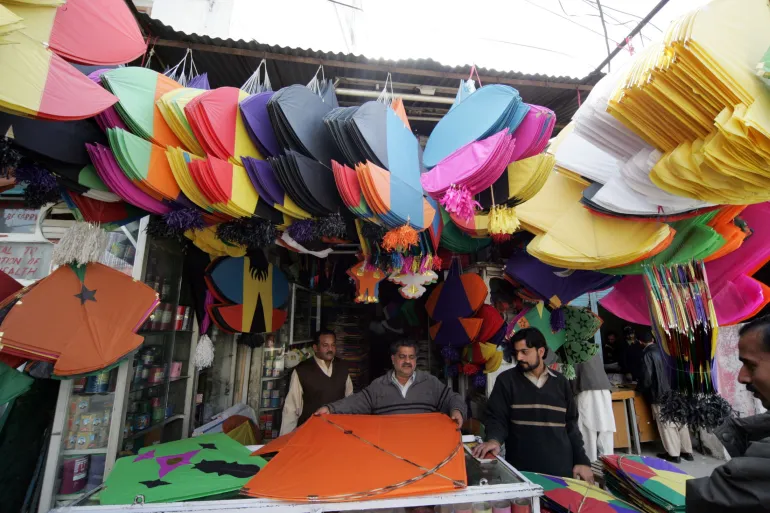
Basant, tied to Basant Panchami, the fifth day of the lunar month, celebrates the arrival of spring, future crop prosperity and good luck. The festival’s association with kite flying dates to the 19th century, when Maharaja Ranjit Singh held an annual Basant fair and made it a regular feature. Over time, it became centered in Lahore, the regional hub, though it has traditionally been observed across Punjab, including in Indian Punjab, and eventually spread nationwide.
The ban stemmed from a surge in deaths and injuries beginning around 2005, when dozens were killed or maimed by metal or chemically coated strings that acted like razors, often slashing throats of riders and passersby, including children. Courts and successive provincial administrations upheld the restrictions for years, turning the festival’s revival into one of Punjab’s most politically charged cultural issues.
Officials say the ordinance not only revives the event in a controlled manner but also formalises the informal economy around Basant, which encompasses kite manufacturing, string production, dyes, paper supply, bamboo cutting, wholesalers and thousands of seasonal vendors. For decades, this supply chain operated without licensing, safety standards or tax registration, yielding little revenue for the government. By mandating registration and QR-coded products, authorities aim to broaden the tax base, enforce safer production and stabilise business for cottage industries dependent on the season.
Copyright © 2021 Independent Pakistan | All rights reserved