By Staff Reporter
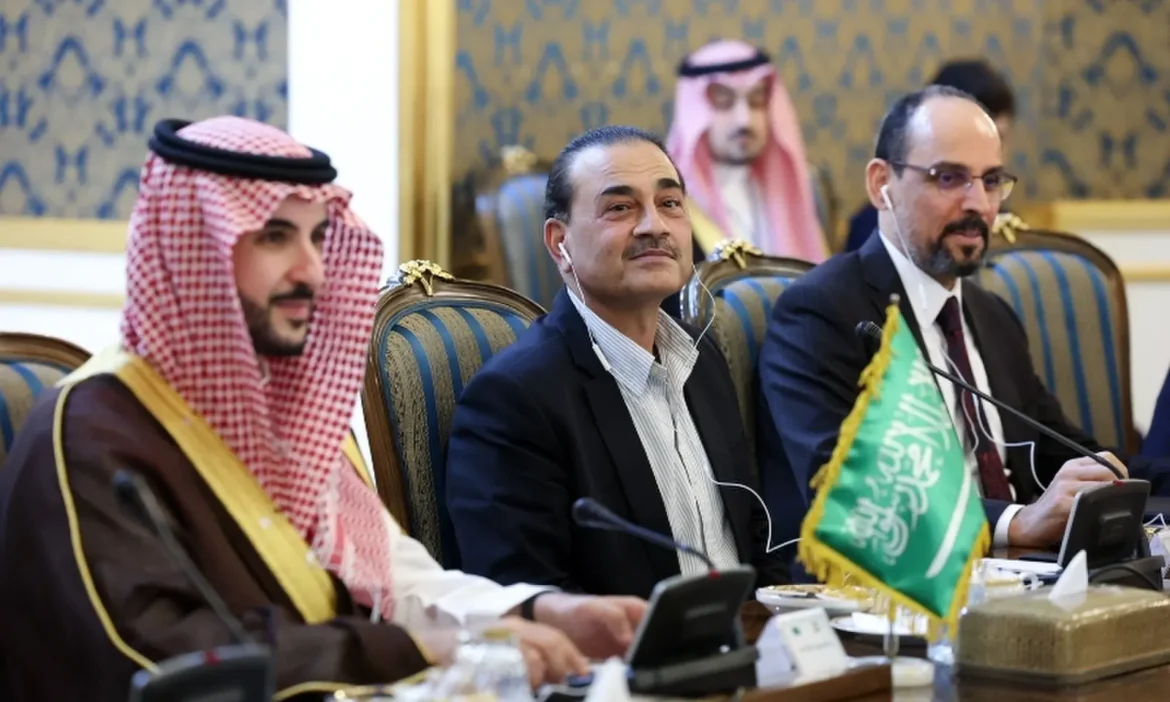
ISLAMABAD: Pakistan’s army chief, Field Marshal Asim Munir, joined Saudi Arabia’s defence minister and Turkey’s intelligence chief in Tehran on Monday for talks with Iran’s leadership, the first time Iran has met all three members of a new regional defence pact since Houthi attacks pulled the kingdom deeper into the Middle East war.
Iranian state media said the meeting, held at Pakistan’s suggestion, was to cover “regional security and stability”, the consequences of the US-Israeli attacks on Iran, and the situation in Palestine and Lebanon. Footage released by the IRIB broadcaster showed Field Marshal Munir and Pakistan’s interior minister, Mohsin Naqvi, seated with President Masoud Pezeshkian, foreign minister Abbas Araghchi and Mohsen Rezaei, secretary of the Supreme National Security Council. Saudi Arabia’s delegation was led by defence minister Prince Khalid bin Salman, and Turkey’s by its intelligence chief, Ibrahim Kalin.
Iran’s IRNA news agency reported that the three delegation heads held lengthy discussions with Rezaei before they were due to meet Pezeshkian, who was leaving for Russia on Monday night. No outcome had been announced at the time of filing the report. Pakistan’s military confirmed earlier in the day that Field Marshal Munir was in Tehran, describing the trip only as an official visit.
The gathering grew out of the field marshal’s own trip to the Iranian capital last week. Iran’s foreign ministry spokesperson Esmaeil Baqaei said the idea was raised then and that Tehran had looked on it “favourably”. Iranian media reported that Field Marshal Munir was told there would be no talks with Washington until Iran’s demands were met. Iranian leaders also said the US must take the first steps to rebuild trust, and that acceptance of Tehran’s seven-point proposal could provide a starting point for renewed negotiations.
Baqaei told reporters the agenda would cover the “most pressing issues threatening our region”, among them Israel’s expansionist policies and developments in Palestine and Lebanon, with the consequences of the US-Israeli attacks the “top priority”. He described the meeting as a possible prelude to what Tehran calls endogenous security, meaning regional security built by the countries of the region themselves, an idea he said Iran has pressed for decades. The past two years, and the past eight months in particular, had shown that lasting security depended on “building trust and cooperation among the countries in the region”, he said. Ali Bagheri Kani, deputy secretary of the security council, told state television the four-country format could prove an effective step towards such a framework.
Rayed Krimly, Saudi Arabia’s deputy minister for public diplomacy, confirmed the delegation’s trip in a post on X. He said it formed part of efforts by members of the Makkah Defence Alliance to de-escalate the crisis and promote dialogue, in support of mediation led by Qatar and Pakistan. Qatari mediators were themselves in Tehran on Sunday for talks with Iranian officials, Reuters reported.
The Makkah Joint Defence Agreement was signed on 7 August by Saudi Crown Prince Mohammed bin Salman, Turkish president Recep Tayyip Erdogan and Pakistani prime minister Shehbaz Sharif. It treats an armed attack on one member as an attack on all, and its first article commits the parties to use “all necessary means” against threats to one another’s territorial integrity, according to a text released to media. Pakistan approved the pact last week. Turkey’s government submitted it to parliament for ratification on 20 October, and lawmakers must separately authorise any deployment of troops abroad. Turkish foreign minister Hakan Fidan has said the agreement is not an offensive one.
The Houthis, Yemen’s Iran-aligned rebels, have stepped up their attacks on Saudi Arabia in recent weeks, and the kingdom intercepted another wave of missiles and drones on Sunday. The group declared a naval blockade against Saudi Arabia in July, and attacks on the East-West pipeline in September forced Riyadh to shut a route that had helped it bypass the disrupted Strait of Hormuz. The International Energy Agency said Saudi crude supply had fallen to its lowest in more than three decades. Ministers from the pact countries held an emergency meeting in Riyadh earlier this month and agreed to ensure the “rapid deployment” of military forces and capabilities in the kingdom.
The wider war began in late February, when the US and Israel launched surprise strikes on Iran in the middle of negotiations over its nuclear programme. An April ceasefire ended the initial bombardment, but the two sides have kept contesting the Strait of Hormuz, through which about a fifth of the world’s oil and liquefied natural gas used to pass. Iran claims control of the waterway and regularly targets vessels that try to cross without its authorisation, while the US has imposed a naval counter-blockade on Iranian ports. Pakistan and Qatar helped broker an interim agreement in June, but it unravelled within weeks when fighting between Iran and the US resumed, and diplomacy has stalled since.
Donald Trump said on Friday that the US may carry out another military operation against Iran, although earlier this month he said Washington would not launch new attacks before the midterm elections on 3 November. Iran’s leaders have said a renewed US campaign would be met with a stronger response than before. Iranian security officials told Reuters that Tehran has drawn up detailed plans to hit Gulf undersea cables if the US and Israel attack again, and a US intelligence memo this week warned that Iranian plots against American personnel had reached “advanced stages”. Washington has also pulled non-emergency staff and families out of Saudi Arabia. Both sides are said to have drawn up plans to restart the wider war, possibly after the midterms. The conflict, now nearly eight months old, has weighed on Trump’s approval ratings.
Copyright © 2021 Independent Pakistan | All rights reserved