By Staff Reporter
ISLAMABAD: Pakistan has rejected Afghan Taliban allegations that its strikes inside Afghanistan have killed civilians, insisting its military action has been proportionate and aimed only at militants and the bases that support them.
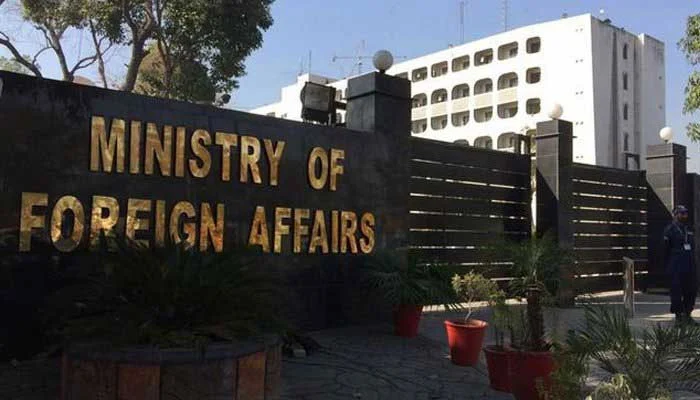
The Foreign Office in Islamabad, in a statement posted on X on Monday, described the claims as “baseless and unsubstantiated” and said Pakistan’s conduct had “reflected restraint”.
It was responding to a recent CNN interview in which a spokesperson for the Taliban’s foreign ministry said 1,119 Afghan civilians had been killed or injured in Pakistani strikes since late 2021.
Disinformation, the Foreign Office said, would neither hide the threat posed by terrorist networks operating from Afghan territory nor relieve the Taliban of their duty to stop that territory being used to plan attacks on Pakistan. It said such attacks had caused more than 3,500 casualties in 2026 alone.
Pakistan’s actions, it said, were an exercise of its right to self-defence, taken under the principle of necessity and as a last resort. They were “directed only and exclusively against terrorists and their logistical support bases in Afghanistan” and followed the principles of distinction and precaution, it said.
“No responsible state can remain passive when its civilians and security forces are repeatedly targeted,” the statement said. It added that the scale of the action reflected restraint given the frequency and severity of attacks on Pakistan, and that Islamabad “rejects any insinuations otherwise”.
The Foreign Office accused the Taliban of sheltering the Tehreek-e-Taliban Pakistan (TTP), the separatist Balochistan Liberation Army (BLA) and their affiliates, citing UN monitoring mechanisms. It also named two groups, Fitna al-Khawarij and Fitna al-Hindustan, which are labels Islamabad uses for the TTP and for Baloch militants it says are backed by India.
Thousands of Pakistanis had been killed in attacks planned, financed and carried out from Afghan soil with the Taliban’s alleged facilitation, it said. It urged the international community to hold the Taliban to account for failing to meet their obligations under UN Security Council resolutions, and reserved Pakistan’s right to take “all necessary measures” to defend its sovereignty and citizens.
The TTP is a separate organisation from the Afghan Taliban but closely allied with it. A UN Security Council monitoring report covering 16 December to 9 June concluded that the Taliban’s continued support for the TTP had contributed to a rise in the frequency and lethality of attacks in Pakistan, although it noted Kabul had taken some initial steps to restrain the group.
The two countries have been in open conflict since fighting began in October 2025. It sharpened in late February, when Pakistani airstrikes were followed by an Afghan border offensive and Pakistan launched Operation Ghazab Lil Haq. Islamabad later declared itself in “open war”. A short ceasefire was agreed before Eid on 18 March at the request of Turkiye, Saudi Arabia and Qatar. In April, at talks in Urumqi, China, Pakistan demanded that Kabul formally declare the TTP a terrorist organisation, dismantle its infrastructure and provide verifiable proof. Pakistani sources say its position has since hardened.
Fighting flared again in September, when Pakistan carried out airstrikes in the border region after attacks in Khyber Pakhtunkhwa. Drones launched from across the border followed, which Islamabad said it shot down, and two further rounds of Pakistani airstrikes. Information minister Attaullah Tarar said Pakistan struck 10 locations in Afghanistan with “precision” aerial and drone strikes, calling them a response to a “deliberate and unlawful incursion”.
This month, border clashes have been reported in Kurram in Khyber Pakhtunkhwa and in Afghanistan’s Paktia province. Talks in Moscow on 5 October ended without a joint statement because of disagreements between Pakistan and the Taliban. Chinese foreign minister Wang Yi said on 15 October that the Taliban needed to act against terrorist groups on Afghan soil.
At the weekend, Pakistan’s information ministry rejected claims by Zalmay Khalilzad, a former US envoy, that Islamabad was arming Afghans to fight the Taliban. It also dismissed the Taliban’s argument that they lacked the “capabilities” to fuel insecurity elsewhere, and accused Kabul of resorting to “diversionary allegations”. The Taliban government spokesman, Zabihullah Mujahid, had said on Friday that Kabul was not responsible for insecurity in Pakistan.
Parliamentary affairs minister Tariq Fazal Chaudhry has warned of further action if Afghan territory continues to be used for attacks. On Sunday, Pakistan’s military said two soldiers and six TTP militants were killed in an operation in Dera Ismail Khan in the north-west.
Violence inside Pakistan has risen sharply. The Islamabad-based Centre for Research and Security Studies recorded 385 violent incidents between July and September, leaving 1,415 people dead, its sharpest rise in nearly five years. Pakistan’s military said in July that 819 Pakistanis, including soldiers, police and civilians, had been killed since January.
Copyright © 2021 Independent Pakistan | All rights reserved