By Staff Reporter
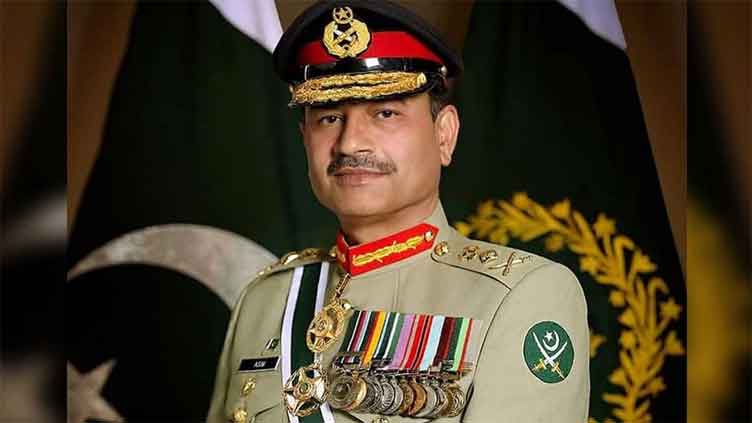
ISLAMABAD, The Ministry of Defence on Friday officially notified the appointment of Chief of Army Staff Field Marshal Asim Munir as the country’s first chief of defense forces, consolidating operational, administrative and strategic authority over the armed services in a single office and completing the most sweeping military restructuring since the 1970s.
The notification came a day after President Asif Ali Zardari approved the move on the advice of Prime Minister Shehbaz Sharif. It elevates Field Marshal Munir to concurrently hold the new role for a five-year tenure. “In exercise of the powers conferred under Article 243 of the Constitution of the Islamic Republic of Pakistan, 1973, read with Section 8A of the Pakistan Army Act, the president on the advice of the prime minister, is pleased to appoint Field Marshal Asim Munir (NI) M as the chief of army staff, concurrently the chief of defence forces for a tenure of five years,” the notification said.
A separate notification extended the tenure of Air Chief Marshal Zaheer Ahmed Babar as chief of the air staff for two years, effective March 19, 2026, upon the completion of his current five-year term. That would keep him in office until March 2028.“In exercise of the powers conferred by Article 243 of the Constitution of the Islamic Republic of Pakistan, 1973, read with Section 10B of the Pakistan Air Force Act, 1953, the president on the advice of the prime minister is pleased to extend the appointment of Air Chief Marshal Zaheer Ahmed Babar (NI) M, as chief of the air staff for a tenure of two years with effect from March 19, 2026,” the notification said.
The overhaul follows the 27th Amendment to the Constitution, which revised Article 243 to mandate that the chief of army staff also serve as chief of defence forces. The amendment abolished the office of chairman of the joint chiefs of staff committee, a tri-service coordination body established in 1976, and transferred its functions to the new position. The changes follow amendments to the Pakistan Army Act of 1952, enacted after the constitutional overhaul. Sub-section (i) of Article 8A states that “for the first appointment of the chief of the army staff concurrently the chief of the defence forces […], the tenure under this section shall commence from the date of notification of the said office.”
It adds that upon issuance of the notification, the “existing tenure of the incumbent chief of the army staff shall be deemed to have recommenced from the date of such notification.” Under sub-section (iii), the “terms and conditions” of the combined role are to be determined by the president on the prime minister’s advice. Last year’s changes to the act extended service chiefs’ tenures from three to five years and allowed reappointments or extensions up to five years, potentially enabling Field Marshal Munir to remain in his position until December 2030.
Field Marshal Munir was appointed army chief on Nov. 29, 2022, becoming the 17th to assume command of the Pakistan Army. In November 2024, the government extended tenures for all three service chiefs to five years, while keeping the chairman of the joint chiefs of staff committee at three years.
Prime Minister Sharif congratulated Field Marshal Munir in a post on X, describing the appointment as “historic.” “As the sentinel of our nation’s security, his leadership has been pivotal in guiding our brave armed forces to a decisive victory in the battle for truth,” he said. “The people of Pakistan will always remember his bold and courageous leadership in wartime, that unified the armed forces, galvanised the entire nation and secured a historic victory for our homeland.”
He also praised Air Chief Marshal Babar: “Under his exemplary command, the Pakistan Air Force destroyed seven enemy aircraft and sophisticated missile defence systems with unmatched professionalism and reinforced Pakistan’s air superiority,” an apparent reference to the May conflict with India. “All national institutions stand united for the defence, development, and prosperity of Pakistan,” the prime minister added. “Together we will make our country’s defence truly invincible.”
The notification followed a period of uncertainty after the post of chairman of the joint chiefs of staff committee was abolished on Nov. 27 with the retirement of Gen. Sahir Shamshad Mirza. No notification came immediately on Nov. 29, the end of Field Marshal Munir’s original three-year term as army chief before last year’s amendments, prompting questions about potential negotiations over senior military postings.
Political observers suggested the delay might have involved discussions on the new commander of the National Strategic Command, the vice chief of the army staff or a future head of the Inter-Services Intelligence agency. The army clarified that no vice chief was being appointed, and under the amended laws, such roles are now based on the chief of defense forces’ recommendations.
Officials say the new structure will define command relationships among the chief of defence forces, the service chiefs and a newly established strategic command, with the federal government empowered to outline the role’s functions, including multi-domain integration and enhanced coordination across the army, navy and air force. The changes aim to streamline authority amid ongoing security challenges.
Copyright © 2021 Independent Pakistan | All rights reserved