By Staff Reporter
ISLAMABAD: The military said Afghan forces opened fire on Pakistani border posts last Friday to create diversions that allow terrorists to infiltrate the country, escalating tensions between the two neighbours amid a surge in cross-border violence and stalled diplomatic talks.
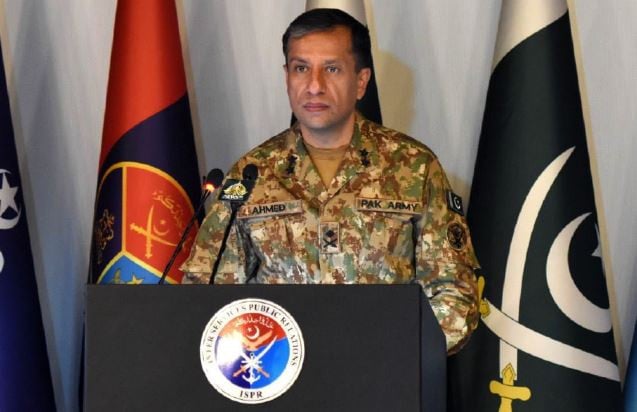
Lt. Gen. Ahmed Sharif Chaudhry, the director general of the military’s public relations arm, made the pointed allegations during a briefing with journalists on Nov. 25, according to a video released by the Inter-Services Public Relations office. The comments come as Pakistan grapples with a sharp rise in terrorist attacks, particularly in its restive border regions, and follows the breakdown of dialogue with the Afghan Taliban earlier this month. “Borders are always mutually guarded. Both countries [guard] them. Now, on the other side is such a country whose posts first engage your posts through fire, and an exchange begins. And then they have them (terrorists) pass from the gaps in between,” General Chaudhry said.
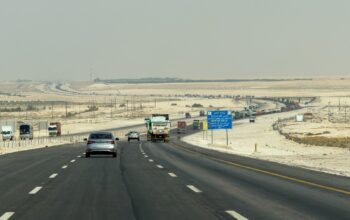
The general highlighted the challenges of securing the rugged, 1,600-mile frontier, which has long been a flashpoint for smuggling, militancy and tribal disputes. He noted that governance is scant in terrorism-prone areas along the border, covering “hardly five to 10 percent” of the terrain. “Go to Tirah, Khyber; you will not find any governance. Neither will you find any courts, nor any departments that deal with law enforcement and writ of the government,” he said.
General Chaudhry drew attention to the unique demographic realities of the region, where 29 tribes straddle the border, with populations divided between Pakistan and Afghanistan. “There are 29 tribes here that are divided, whose population is here (Pakistan) and there (Afghanistan) as well. Right on the border. How will you control the movement there?” he asked.
Addressing criticisms that Pakistani forces have failed to stem infiltration despite their presence, the general displayed images of border fences, including those in snow-covered highlands, and explained that military posts are spaced 15 to 25 kilometers apart. He dismissed calls to “hermetically seal” the border as unrealistic, comparing it to the United States’ struggles with its boundary with Mexico. “What you call a fence has no value in military terms if it is not covered by observation of fire, because someone can hold and cut that obstacle to bridge it,” he said.
Establishing posts every two to five kilometers, along with drone surveillance, would entail “huge cost,” he added. “You will have to invest in the infrastructure, as well as manpower.” The briefing also delved into what General Chaudhry described as a “terror-crime nexus,” where cells of the banned Tehreek-i-Taliban Pakistan, operate on Pakistani soil to support illicit activities. He said coordinated attacks on army and Frontier Corps deployments mirror the tactics used for terrorist crossings, enabling smugglers to slip through. “[They] attack the posts and have smugglers’ vehicles pass from below.”
Shifting responsibility beyond the military, the general questioned why provincial authorities have not curbed the proliferation of non-customs-paid vehicles, estimated at 400,000 to 450,000, which he linked to terrorist operations. “If there are 0.40-0.45 million non-custom-paid vehicles moving in your province, then why do you not stop them? Who is to stop them […] why are they not stopping it, why are they not checking it, whose responsibility is this?” he asked. “The non-customs paid vehicles are part of this political-terror-crime nexus, are being used in the vehicle-borne IEDs and by these terrorists in their movement.”
On the diplomatic front, General Chaudhry asserted that Pakistan had presented irrefutable evidence of TTP operations from Afghan soil during recent talks, which the Afghan side could not refute. “We presented them with all kinds of evidence, and they could not deny that evidence. It was absolutely clear to the mediators, as well as to the Afghans there,” he said.
Pakistan remains open to a “third-party agreement” for verifiable anti-terrorism measures, he added, and urged Kabul to repatriate Pakistani citizens in Afghanistan, akin to Islamabad’s ongoing deportation of Afghan migrants. This year alone, 971,604 individuals have been repatriated, including 239,574 in November, compared with 366,704 in 2024. “Who are these guests who have rocket launchers and Klashnikovs when they come to Pakistan? They have M4s, M16s. What kind of guests have you hosted?” the general asked, referring to militants sheltered in Afghanistan. “These terrorists have become a threat to the entire world.”
Citing a report from the United States’ Special Inspector General for Afghanistan Reconstruction, he noted that more than $7.2 billion in American military equipment was abandoned during the 2021 withdrawal, some of which has fallen into militant hands.
General Chaudhry criticised the Afghan Taliban for failing to transition into a functioning state since seizing power, accusing them of patronizing groups like the TTP, Al Qaeda, Daesh and others. “We say that you need to act now like a state. […] They had said that ‘we will not allow our soil to be used for terrorism,’” he said, recalling promises in the 2020 Doha agreement. “Our problem is not with the Afghans. Our problem is with the Afghan Taliban regime.”
Pakistan has intensified counterterrorism operations and since Nov. 4, 4,910 intelligence-based operations have been conducted — 233 per day — resulting in 206 terrorists killed. From January onward, 67,023 such operations have occurred nationwide, with over 53,000 in Balochistan, more than 12,800 in Khyber Pakhtunkhwa and about 850 elsewhere. The country has seen 4,729 terrorist incidents this year, including 3,357 in Khyber Pakhtunkhwa, 1,346 in Balochistan and 26 in other areas.
Copyright © 2021 Independent Pakistan | All rights reserved