By Staff Reporter
ISLAMABAD: Pakistan’s oil and gas regulator is soliciting expert and public feedback on a proposed four-year payback period for a $432 million government-to-government investment in a pipeline project with Azerbaijan, even as two key federal ministries have flagged concerns over the dollar-denominated returns and potential cost implications.
The Oil and Gas Regulatory Authority (Ogra) has set a public hearing for March 2 and is calling for comments from stakeholders and the public on whether the accelerated recovery timeline is justified, and if the initiative could alter regional transportation expenses relative to current road-based hauling.
The project, structured to rely predominantly on local resources while delivering returns in dollars to recoup the full outlay within four years, has drawn objections from the Ministry of Finance, which argued for a longer horizon to mitigate early tariff hikes.
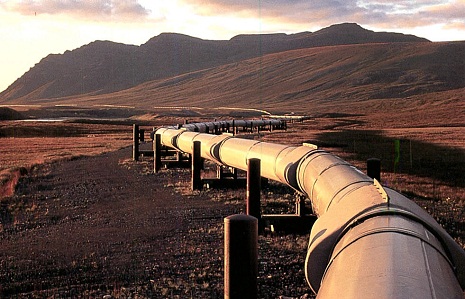
Details of the pipeline include a 20-inch, 256-kilometer segment from Faisalabad to Thallian near Islamabad (Section I), designed to transport about 7 million tonnes per annum (MTPA) of petroleum products, with scalability to 10 MTPA. This would connect to a 12-inch, 172-kilometer line to Tarujabba near Peshawar (Section II) handling 5 MTPA, and an 8-inch, 9-kilometer spur from Thallian to Faqirabad (Section III). Cost breakdowns peg Section I at $320 million, Section II at $94 million, and Section III at $17.5 million, with an overall project lifespan of 30 years.
Ogra is also probing whether the projected throughput volumes are reasonable, if the sectional capacities can sustain the targeted flows over the long term, and whether the planned storage—60,000 tonnes each at Faisalabad and Thallian, plus 50,000 tonnes at Tarujabba—aligns with anticipated volumes.
The Economic Coordination Committee (ECC) of the cabinet cleared a $300 million cost estimate five months ago, despite reservations from ministries over guaranteed dollar returns for petroleum transport. The Machike-Thallian-Tarujabba white oil pipeline is slated for development on a bilateral basis involving Azerbaijan’s state-owned SOCAR, Pakistan’s Frontier Works Organisation (FWO), and Pakistan State Oil via a joint project company. Framed as a “strategic investment” from Azerbaijan, the effort has been championed by the FWO using domestic resources, with completion eyed current year to bolster ties in friendship, trade, and investment.
Power Minister Awais Leghari warned against dollar-guaranteed returns, urging lessons from past dealings with independent power producers (IPPs). “All aspects of the investment proposal should be checked thoroughly for cost and internal rate of return (IRR), keeping in view the instance of independent power producers,” he said, per official meeting minutes. SOCAR imposed a “ship or pay” clause, mirroring “take or pay” terms in IPP power agreements, mandating full capacity payments (around 7-8 MTPA) regardless of actual product movement.
The Finance Ministry questioned the swift payback and stipulated that dollarized returns apply solely to foreign investment, not if they fall through. It contended that protections for overseas capital shouldn’t extend to local funds, advocating a seven-year payback to curb initial tariff burdens. Finance officials further pushed for rationalising interest rate assumptions, a more balanced weighted average cost of capital (WACC), and shifting technical oversight on inland freight equalisation margins and default transport modes from Ogra to the Petroleum Division, given sector-specific nuances. The Petroleum Division countered that such tweaks would render the project unappealing to investors.
Ultimately, the ECC dismissed the Finance Ministry’s calls for payout moderation and liability caps, as well as Leghari’s cautions, viewing the venture as a gateway to broader investments. “The project would open new vistas for future investment and hence, must be seen in a larger strategic perspective and be understood as an investment opportunity,” the official record states.
The ECC did incorporate one safeguard: dollarized returns hinge on actual foreign inflows. The FWO initially sought a 14.6% IRR and 25% equity IRR. Currently, road transport accounts for roughly 70% of petrol and diesel movement in Pakistan, with 28% via an existing Karachi-to-Machike pipeline and 2% by rail. A revised framework includes guaranteed transport volumes, enabling Ogra to set a dollar-based tariff assuming peak pipeline use as the “default mode.” Oil marketing companies must pledge minimum annual volumes, with shortfalls offset against their inland freight equalisation margins.
Copyright © 2021 Independent Pakistan | All rights reserved