By Staff Reporter
ISLAMABAD: Negotiations between Pakistan and the Afghan Taliban aimed at curbing cross-border terrorism unravelled in Istanbul after four days of fitful discussions, with Pakistani officials declaring the latest round a failure and pledging to take “all possible measures” to shield their citizens from terror attacks.
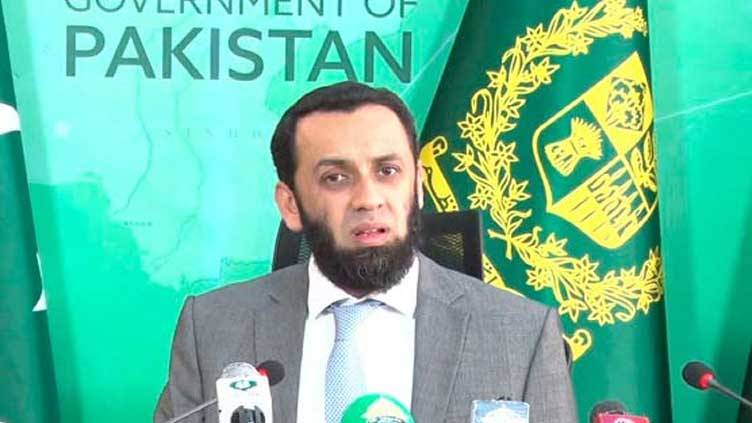
Minister for Information and Broadcasting Attaullah Tarar announced the breakdown early on Wednesday in a statement on the social media platform X, saying the talks “failed to bring about any workable solution.” The impasse came despite a temporary ceasefire forged last month in Doha, Qatar, where the two sides had committed to reconvene in Istanbul to devise “mechanisms for lasting peace and stability.”
The collapse capped a tense sequence of events along the volatile Pakistan-Afghanistan border. Days of clashes had given way to Pakistani airstrikes on camps belonging to the Gul Bahadur group in Afghanistan, prompting the initial dialogue in Doha. Last week, delegations from Islamabad and Kabul arrived in the Turkish capital for what was billed as the second round of substantive talks, hosted by Turkey and mediated by Qatar.
Tarar laid the blame squarely on the Afghan Taliban regime, accusing it of providing “unabated support to anti-Pakistan terrorists” despite repeated entreaties to honour commitments under the 2020 Doha Agreement, promises made to both Pakistan and the international community to prevent its territory from being used as a launchpad for militancy. “Pakistan had repeatedly engaged with the Afghan Taliban regarding ‘persistent cross-border terrorism’ by Indian-abetted Fitna al Khwarij and Indian proxy Fitna al Hindustan,” Tarar wrote, employing official Pakistani terminology that brands the banned Tehreek-i-Taliban Pakistan, as “Fitna al Khawarij” and Balochistan-based militants as “Fitna al Hindustan” to underscore alleged Indian involvement in destabilising the country.
He described Pakistan’s overtures as futile. “Since the Taliban regime bears no responsibility towards the people of Afghanistan and thrives on a war economy, it desires to drag and mire the Afghan people into a needless war,” Tarar said. Pakistan, he emphasised, had long championed peace in Afghanistan, hosting “countless rounds of talks and parleys” at great cost. “Unfortunately, they have always remained indifferent to Pakistan’s losses. Sadly, after sustaining such huge losses of men and material for four long years, Pakistan’s patience has run its course.”
The talks in Istanbul, held at the behest of Qatar and Turkey “to give peace a chance,” centered on a single demand: that the Taliban take “credible and decisive action” against terrorist groups using Afghan soil as a “training-cum-logistics base and jump off point for terrorist activities in Pakistan.”
Tarar praised the mediators for their role in persuading Kabul “to desist from the use of terror proxies as leverage against Pakistan.” Yet he said the Afghan delegation repeatedly strayed from the core issue. “Over the last four days of dialogue, the Afghan Taliban delegation repeatedly agreed to Pakistan’s logical and legitimate demand for credible and decisive action against [militant] organisations and terrorists.” “Sufficient and irrefutable evidence was provided by Pakistan, which was acknowledged by the Afghan Taliban and the hosts, however, regrettably, the Afghan side gave no assurance,” the minister said.
“The Afghan side kept deviating from the core issue, evading the key point upon which the dialogue process was initiated. Instead of accepting any responsibility, the Afghan Taliban resorted to blame game, deflection and ruses.”
Hours before Tarar’s statement, Defence Minister Khawaja Asif offered a firsthand account of the negotiations’ tortuous path. Speaking to a local television channel, he revealed that an agreement had teetered on the brink “four or five times”, only for Afghan negotiators to receive fresh instructions from Kabul and renege. “Whenever we got close to an agreement, either in the last four days or last week , when negotiators reported to Kabul, then there was intervention and the agreement was withdrawn,” Asif said. “I believe that the negotiations were sabotaged. We had an agreement, but then they called Kabul and backpedaled from the deal.”
Asif alleged that India had “penetrated” the Kabul regime and was orchestrating a proxy war. “I would compliment their delegation, but the people in Kabul pulling the strings and staging the puppet show are being controlled by Delhi,” he said. “India is compensating for its defeat on their western border through Kabul. The junta there has elements that have visited India and visited their temples. India wants to engage in a low-intensity war with Pakistan. To achieve this, they are using Kabul.”
Responding to Afghan threats of reprisals — including warnings of attacks on Islamabad should hostilities escalate, Asif issued a stark retort: “If Afghanistan even looks at Islamabad, we will gouge their eyes out.” “They can employ the use of terrorists and they already are. Over the past four years, they have been using terrorists,” he added. “There should be no doubt that Kabul is responsible for the terrorism in Pakistan. Kabul is a tool for Delhi. If they want to, God forbid, attack Islamabad, we will give a befitting response. A response 50 times stronger.”
The talks had nearly derailed entirely on Tuesday amid what officials called “unbridgeable differences.” A Pakistani security source told reporters that discussions collapsed over the Taliban’s “lack of commitment and seriousness to address terrorism-related issues, as well as their refusal to provide any written guarantees.”
Afghan officials, for their part, described the outcome as “inconclusive,” accusing the Pakistani side of “improper conduct” and issuing “demands that are unacceptable to Afghanistan.” Intense diplomacy by Turkish and Qatari mediators quickly revived the process. By midday, negotiators had returned for what one official termed a “final attempt” at a limited deal. “The negotiations in Istanbul have resumed at the insistence of the host country and the other mediator,” a Pakistani official confirmed. Yet progress stalled repeatedly.
Diplomatic sources described the Afghan delegation’s position shifting under new guidance from Kabul, compounded by internal Taliban fissures among factions in Kandahar, Kabul and Khost. “If the Kandahar group agrees at some point, the differences of the Kabul group come to the fore,” one source briefed on the talks said. The Afghans also introduced a fresh condition: that Pakistan block American drones from traversing its airspace into Afghanistan, an ironic ask, observers noted, given that many such flights originate in Qatar.
Despite the frustration, Tarar expressed gratitude to Qatar, Turkey and other friendly states for their exertions “to bring about a peaceful solution to the problem of terrorism, for the prosperity and security of the two countries and the region at large.” For Pakistan, the imperative is clear. “The security of its people is of paramount importance to Pakistan,” Tarar affirmed. “We will continue to take all possible measures necessary to protect our people from the menace of terrorism and assure them that the government of Pakistan will continue to employ all the resources which are required in this regard to decimate the terrorists, their sanctuaries, their abetters and supporters.”
Copyright © 2021 Independent Pakistan | All rights reserved