By Staff Reporter
ISLAMABAD: Pakistan and Bangladesh took a step toward easing their historically strained ties on Wednesday, agreeing in principle to allow visa-free entry for holders of diplomatic and official passports.
The move, announced during a visit by Pakistan’s Interior Minister Mohsin Naqvi to Dhaka, was paired with a commitment to deepen security cooperation, signaling a thaw in relations long marked by tension.
The two nations, once united as a single country, split in 1971 after a brutal civil war that birthed Bangladesh. For decades, their relationship remained distant, particularly under Bangladesh’s former leader Sheikh Hasina, who aligned closely with India and kept Pakistan at a remove. That dynamic shifted last August when a popular uprising ousted Hasina, driving her into exile in New Delhi. Since then, Islamabad and Dhaka have moved steadily toward reconciliation, with trade and diplomatic engagement on the rise.
In May, Bangladesh’s High Commissioner to Pakistan, Iqbal Hussain Khan, underscored this shift, announcing an easing of visa restrictions for business travelers to encourage economic growth across the region. Wednesday’s development builds on that momentum, extending cooperation into the realms of diplomacy and security.
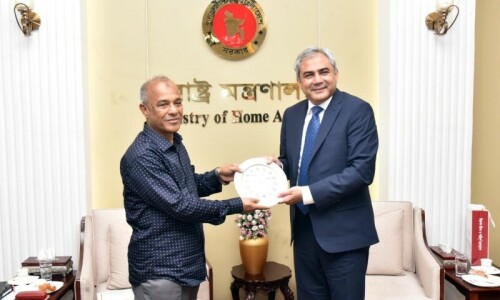
Naqvi’s arrival in Dhaka was marked by a ceremonial guard of honor, setting the stage for substantive talks with Bangladesh’s Home Minister, retired Lieutenant General Jahangir Alam Chowdhury. The two leaders held wide-ranging discussions on bilateral issues, zeroing in on ways to strengthen internal security and law enforcement collaboration.
“Significant progress on visa-free entry for diplomatic and official passports was made during the meeting,” Pakistan’s Interior Ministry said in a statement. “Pakistan and Bangladesh have made a principled decision to provide visa-free entry facility for diplomatic and official passports.”
Both sides expressed a strong desire to deepen collaboration in counter-terrorism, combating drug trafficking, and preventing human smuggling, issues that have long plagued the region. To that end, the ministers explored plans to exchange training programs between their police academies, aiming to enhance professional skills and technical know-how.
Chowdhury praised Naqvi’s offer of support in police training and hailed the visit as a turning point. “I wholeheartedly welcome my brother upon his arrival in Dhaka,” he said. “Your visit is of great importance for the promotion of Pakistan-Bangladesh relations.” He described the discussions as an “important milestone” in advancing ties between the two countries.
To ensure follow-through, the ministers agreed to establish a joint committee, with Pakistan’s Interior Secretary Khurram Agha tasked with leading coordination efforts on the Pakistani side. The committee will oversee the implementation of the decisions reached and explore additional opportunities for partnership.
The warming relationship is set to deepen further with a planned visit by a high-level Bangladeshi delegation to Islamabad. The delegation will study Pakistan’s Safe City Project, a technology-driven initiative to enhance urban security, and tour the National Police Academy, laying the groundwork for closer law enforcement ties.
Copyright © 2021 Independent Pakistan | All rights reserved