By Staff Reporter
ISLAMABAD: Standing before the National Assembly on Monday, Prime Minister Shehbaz Sharif offered what amounted to an unusually candid accounting of how close the world had come, again and again, to watching the fragile peace between the United States and Iran slip away entirely.
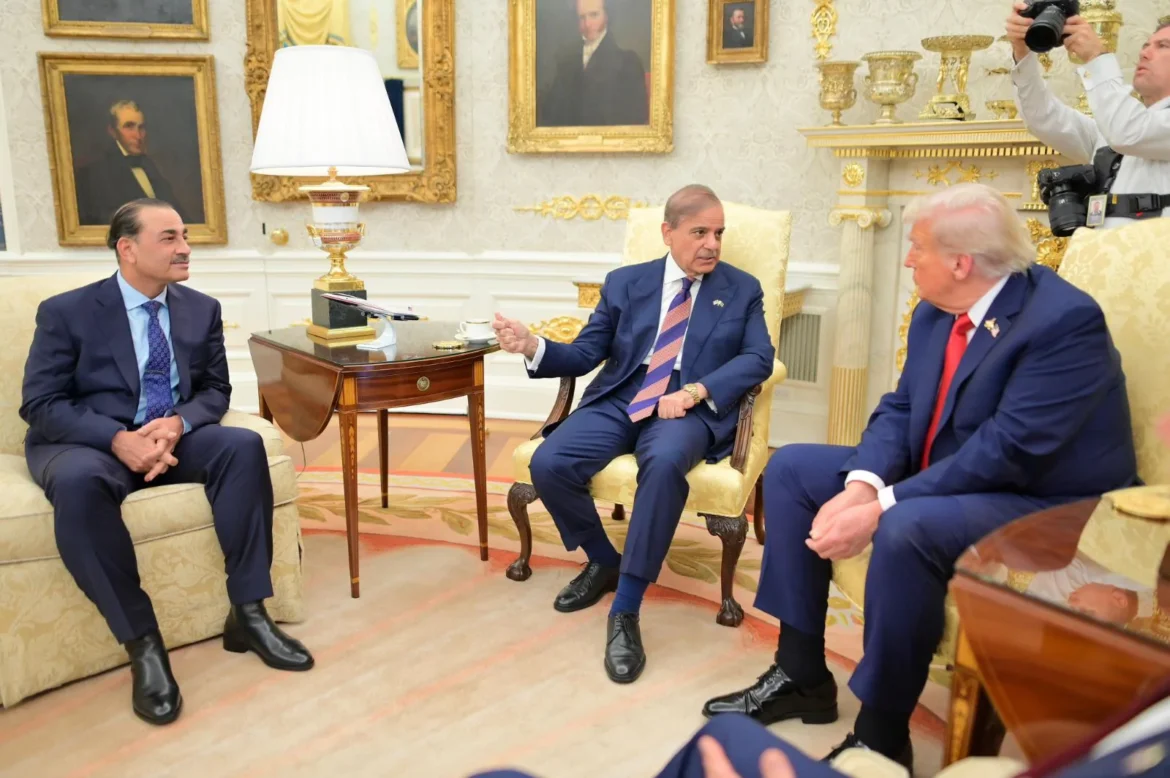
There were moments in the final hours of negotiations, Sharif told lawmakers, when it genuinely appeared that the talks would collapse. Each time, he said, it was Field Marshal Syed Asim Munir, Pakistan’s powerful army chief, who pulled them back from the edge.
“Throughout this period, he was awake all day and night,” Sharif said of Munir. “He sacrificed day and night to extinguish the flames of war.”
The disclosure offered the clearest public window yet into the behind-the-scenes choreography of a historic agreement — a memorandum of understanding that the United States and Iran signed on Monday, committing both countries to an immediate and permanent end to nearly four months of war and setting the stage for a formal signing ceremony in Geneva on Friday.
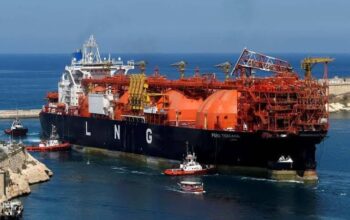
The war began on Feb. 28, when the United States and Israel launched coordinated strikes against Iran, saying the attacks were aimed at dismantling Tehran’s nuclear program. Iran responded by targeting Israel and American military installations across the Middle East and, in a move that quickly proved its most potent weapon, effectively closing the Strait of Hormuz — the narrow chokepoint through which roughly one-fifth of the world’s oil and gas supplies must pass. The closure drove fuel prices sharply higher across the globe, stoked inflation in the United States to 4 percent ahead of midterm elections, and rattled energy markets worldwide.
President Trump confirmed the agreement Monday on his Truth Social platform. “The Deal with the Islamic Republic of Iran is now complete,” he wrote. Speaking in France alongside President Emmanuel Macron, Trump said the Strait of Hormuz was already partially cleared and would reopen “completely” by Friday. He also announced he had authorized lifting the naval blockade his administration had imposed around Iran’s ports following an initial ceasefire in April — a blockade that had cut off billions of dollars in Iranian oil revenues and further battered an economy already ravaged by the war.
A senior American official, speaking to reporters on condition of anonymity, confirmed that the memorandum of understanding had been signed by Trump, Vice President JD Vance, and Iranian parliament speaker Mohammad Bagher Qalibaf. “You will see a significant increase in traffic in the Strait of Hormuz, actually starting already, and that will ramp up slowly over time,” the official said. “We probably won’t return to normal in two weeks, but we will see a significant increase in strait traffic.”
The announcement set off an immediate reaction in financial markets — oil prices fell sharply, and stock markets surged — reflecting the scale of the relief that the agreement, even one whose terms remain largely confidential, represented.
A Framework, Not Yet a Final Agreement
For all the fanfare attending Monday’s announcement, what has actually been agreed upon remains largely opaque, and significant obstacles lie ahead.
The memorandum, brokered primarily by Pakistan, begins with the simultaneous lifting of Iran’s blockade of the Strait of Hormuz and the American naval blockade around Iranian ports, according to Pakistani officials who spoke with The Associated Press on condition of anonymity. The two sides are then to enter a 60-day negotiating period to address Iran’s nuclear program and the potential easing of international sanctions — a timeline that can be extended if there is progress.
In practical terms, the arrangement would leave the two countries roughly where they stood before the war began: adversaries, with deep mutual suspicion, facing one another across a negotiating table that has been set, and reset, many times before. The war, which has killed thousands of people — the vast majority of them in Iran and Lebanon — and sent shockwaves through the global economy, will have lasted more than 100 days before the Geneva ceremony even takes place.
The deal’s most consequential unresolved question may be Iran’s stockpile of highly enriched uranium, believed by analysts to have been partially buried by American strikes earlier in the war. Trump has insisted the uranium must be removed and destroyed. Iranian Foreign Minister Seyed Abbas Araghchi said last week that the only acceptable solution was to dilute the stockpile inside Iran — a position that Washington has resisted. Whether the memorandum commits Tehran to either approach is not known; the text is being kept confidential.
Iran’s deputy foreign minister, Kazem Gharibabadi, confirmed the agreement on state television on Monday but made clear that Tehran would not begin implementing it until the formal signing in Geneva on Friday. He said the deal followed more than 14 hours of negotiations in Tehran involving a representative from Qatar, one of several regional mediators.
What is also conspicuously absent from the known terms of the agreement, according to Iran’s Mehr News Agency, are any commitments regarding Iran’s missile arsenal or its support for allied armed groups — including Hezbollah in Lebanon, the Houthis in Yemen, and Shiite militias in Iraq. The Trump administration had said at the outset of the war that its goals included obliterating Iran’s missile capabilities and severing its ties to those proxies. There is no indication, at least in what has been publicly disclosed, that the agreement addresses either.
Lebanon: The Fault Line
The most immediate threat to the deal may come not from Tehran or Washington, but from Lebanon, where fighting between Israel and Hezbollah has continued throughout the war and where an Israeli strike on southern Beirut, carried out Sunday night — hours before the agreement was announced — triggered furious condemnation from Tehran.
Iranian parliament speaker Qalibaf questioned publicly on Sunday whether Washington had either “the will or the ability” to enforce its commitments. Despite the sharp language, Iranian President Masoud Pezeshkian signaled that diplomacy remained on track — and within hours, the deal was done.
Iran has insisted that any final agreement include a ceasefire in Lebanon. The deal announced on Monday is described as ending hostilities “on all fronts, including in Lebanon,” but Israel and Hezbollah are not parties to it. Israel’s defence minister, Israel Katz, said Monday that Israel would not withdraw from the large swath of southern Lebanon it has seized over the past months. Hezbollah issued a statement praising the deal while vowing continued resistance to Israel “until full withdrawal is achieved.” The contradiction between those positions is one that the memorandum, as currently understood, does not resolve.
Pakistan’s Long Road
For Pakistan, Monday’s announcement represented the culmination of a diplomatic campaign that began almost as soon as the war did — one that unfolded largely out of public view, through a combination of shuttle diplomacy, quiet persistence, and what one former Pakistani diplomat described as “a never-give-up approach.”
Pakistan hosted the first round of direct talks between the United States and Iran in April in Islamabad — the highest-level direct engagement between Washington and Tehran since 1979. Those talks, attended by Vice President Vance, ended without an agreement. For weeks afterward, face-to-face negotiations did not resume; at one point, Trump suggested the two sides could speak by phone if they needed to communicate.
Pakistani officials, meanwhile, continued shuttling between Washington and Tehran, carrying proposals and messages between the two governments. In May, Munir traveled to Tehran for a second time, accompanied by Interior Minister Mohsin Naqvi. Iranian Foreign Minister Araghchi made multiple visits to Islamabad during the same period, meeting separately with both Munir and Sharif. During one trip, Araghchi said Tehran intended to engage with Pakistan’s mediators “until a result is achieved.”
The path was neither steady nor, by most accounts, predictable. A ceasefire brokered by Pakistan on April 8 held only narrowly, after Munir made a flurry of calls to American officials in the hours before a Trump deadline to strike Iran expired. Trump subsequently extended the ceasefire indefinitely, Pakistani officials said, upon the personal request of Munir and Sharif.
Pakistan and China had signed a joint five-point peace plan in late March, and Beijing’s involvement — driven in part by its dependence on oil and gas that transits the Strait of Hormuz — lent additional weight to the mediation effort.
By Saturday, Pakistani Deputy Prime Minister and Foreign Minister Ishaq Dar was in contact with counterparts in Saudi Arabia, Turkey, and Egypt as talks entered their final phase. Saudi Foreign Minister Faisal bin Farhan Al Saud specifically acknowledged Pakistan’s “consistent and sustained efforts in support of mediation and dialogue throughout the process.”
And yet even then, according to Sharif’s account to parliament, the outcome was not assured. An Israeli strike on Beirut on Sunday night appeared to threaten the entire enterprise. The precise mechanics of how the agreement survived that moment remained unclear on Monday; Pakistani officials declined to discuss them.
What is known is that Sharif posted on X shortly after the danger passed, announcing the tentative deal. Trump confirmed it within minutes.
‘An Extraordinary Role’
The negotiations were conducted under Iran’s new supreme leader, Mojtaba Khamenei, who assumed the position after his father, Ayatollah Ali Khamenei, was killed on Feb. 28 — the first day of the American and Israeli strikes. Sharif on Monday praised the younger Khamenei for demonstrating “immense wisdom, prudence and patience under extremely difficult circumstances.”
He also thanked Saudi Crown Prince Mohammed bin Salman and Turkish President Recep Tayyip Erdogan for their roles in easing regional tensions, and paid tribute to Qatar — whose representative spent more than 14 hours in Tehran negotiating — for its sustained involvement.
But the most extended praise Sharif offered was reserved for Munir, who has emerged from the episode as a central figure in what Pakistan is presenting as a singular diplomatic achievement.
“Field Marshal Syed Asim Munir played an extraordinary role for this purpose,” Sharif told parliament. “The entire nation, including me, pays tribute to him.”
Jauhar Saleem, a former Pakistani diplomat, said the arc of the country’s mediation pointed to something more fundamental than tactical maneuvering.
“It’s not a question of what changed between April and June,” Saleem said. “It’s rather an example of a never-give-up approach in diplomacy where an honest broker respected by both sides can eventually help overcome an overwhelming trust deficit.”
Pakistan’s leverage, he said, rested not on economic or military power but on credibility — a trusted intermediary that neither side had reason to distrust.
Netanyahu, Sidelined
One figure notably absent from Monday’s celebrations was Israeli Prime Minister Benjamin Netanyahu, who had boasted at the war’s outset of unprecedented coordination between Israel and the United States. Since then, Trump and Netanyahu have grown increasingly estranged, with the president eager to end a war that polls suggest is deeply unpopular with the American public, and Netanyahu pressing for more ambitious goals.
Netanyahu was largely excluded from the ceasefire negotiations, and has faced mounting criticism of the emerging deal from both opposition leaders and members of his own governing coalition. He faces reelection in Israel this fall, and his standing has weakened considerably since the war began.
The deal’s fate, meanwhile, will depend on what emerges from 60 days of negotiations over Iran’s nuclear program, its frozen assets — estimated at $24 billion, to be released in phases — and the still-unresolved question of Lebanon. Iranian officials said they intend to seek ratification of any final agreement through the United Nations Security Council.
In Geneva on Friday, at a ceremony hosted by Pakistan, the two sides will formalize what has been agreed. What happens in the 60 days after that may determine whether this week’s announcement is remembered as the beginning of a durable peace — or simply the latest pause in a conflict that has already killed thousands and redrawn the map of the Middle East.
Copyright © 2021 Independent Pakistan | All rights reserved