By Staff Reporter
ISLAMABAD: The flags at the United Nations were barely dry on the announcement when the congratulations began flooding in — from Wellington and Tokyo, from Ottawa and Berlin, from Riyadh and Rome. By Monday evening, it was clear that the preliminary agreement between Washington and Tehran to end more than three months of war had touched something in the international community that even the most seasoned diplomats had not dared expect: genuine relief.
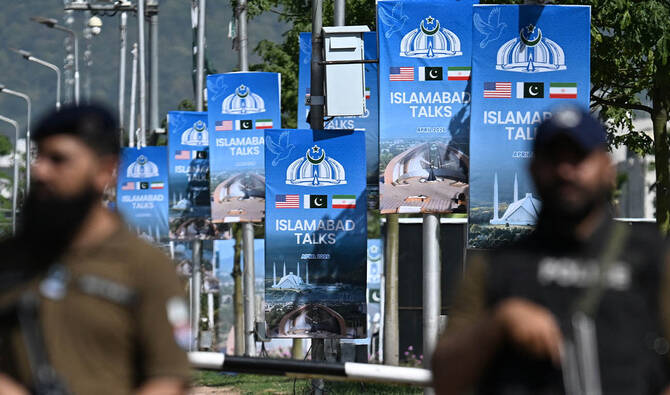
At the center of the acclaim was not, as some might have predicted, a European capital or a traditional great power. It was Islamabad.
Pakistan’s mediatory role — alongside Qatar, Saudi Arabia, Turkey, and Egypt — drew effusive and remarkably specific praise from governments across five continents, as world leaders welcomed what United Nations Secretary General António Guterres called “a critical step towards the peaceful settlement of the conflict.”
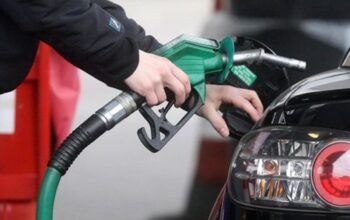
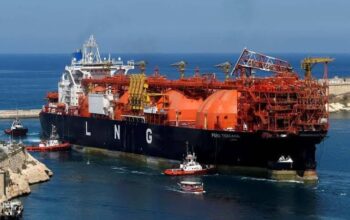
The deal, first announced publicly by Prime Minister Shehbaz Sharif, provides for an immediate and permanent ceasefire, the reopening of the Strait of Hormuz — the narrow chokepoint through which roughly a fifth of the world’s oil flows — and a framework for further negotiations on Iran’s nuclear program. The conflict, which began more than three months ago, has broadly crippled the global economy, disrupting energy markets and supply chains from the Persian Gulf to the Pacific.
Guterres, in remarks distributed by his office, extended particular thanks to Pakistan, Qatar, Egypt, Saudi Arabia, Turkey, and other regional countries “for the constructive role played in supporting the negotiations that led to the peace deal.” The secretary general said he hoped the memorandum would translate swiftly into concrete action.
The breadth of the praise was striking. British Prime Minister Keir Starmer called the agreement “a hugely important step forward in ending the war, ensuring regional stability and reopening the Strait of Hormuz,” singling out President Trump and the mediators from Pakistan, Qatar, and elsewhere. Jane Marriott, the UK’s high commissioner to Pakistan, put a warmer, more personal stamp on London’s gratitude, writing on social media: “Bahot shukriya Pakistan!” — Urdu for “Many thanks.”
Turkish President Recep Tayyip Erdoğan described the accord as “an important development for establishing peace and tranquility in our region” and specifically thanked Pakistan for what he called its exceptional mediation efforts. Qatar’s Ministry of Foreign Affairs extended its thanks to “our brothers in the Islamic Republic of Pakistan” and credited Islamabad with creating conditions for the memorandum, including on freedom of navigation in the strait.
German Chancellor Friedrich Merz congratulated both President Trump and the Iranian side on what he called a diplomatic breakthrough. “This can pave the way towards a reinvigorated global economy and a more secure Middle East,” Merz said, adding that determined implementation would be essential.
French President Emmanuel Macron, never one to be upstaged on matters of multilateral diplomacy, issued a statement crediting “several partners” for the achievement and calling for the deal’s “rapid and complete implementation.” He described the accord as opening a path toward comprehensive negotiations over peace and security for the entire Middle East.
From the Asia-Pacific, the response was similarly warm. Japanese Prime Minister Sanae Takaichi called the memorandum “a major step toward the resolution of the situation,” and praised the parties for “pursuing a diplomatic solution and engaging in persistent negotiations.” She expressed particular hope that free and safe navigation in the Strait of Hormuz would be “actually ensured” — language that reflected concerns shared by Tokyo, which depends heavily on Gulf oil.
Australian Prime Minister Anthony Albanese and Foreign Minister Penny Wong issued a joint statement commending the mediating countries by name and emphasizing that Canberra had long called for de-escalation, including in Lebanon. New Zealand Foreign Minister Winston Peters called the deal a step toward “reducing tensions and promoting stability in a region that is critical to global economic security.”
In the Americas, Canadian Prime Minister Mark Carney said his country was “grateful to Pakistan, Qatar and regional partners for their indispensable roles in facilitating negotiations.” Writing on social platform X, Carney was precise about what Canada expected the deal to deliver: a durable ceasefire that ensures “safe and unimpeded transit through the Strait of Hormuz” and meaningfully addresses “the pervasive threat of Iran’s nuclear programme.” He urged all parties to “refrain from escalation and maintain good faith dialogue.”
Indian Prime Minister Narendra Modi, whose country has watched the conflict with particular anxiety given its large diaspora in the Gulf and its energy import dependencies, welcomed the agreement in a post on X. Modi noted the conflict “caused serious economic disruption across the world and led to loss of life in many countries,” and expressed hope that a “sustainable final agreement” would eventually emerge from the framework.
Saudi Arabia, which shares a complicated history with Iran and a vital interest in Gulf security, welcomed the accord while urging both parties to begin detailed negotiations within 60 days toward a permanent settlement. Riyadh praised Pakistan and Qatar for their mediation efforts and stressed the importance of restoring navigation in the strait to the conditions that existed before Feb. 28 — the apparent start date of the conflict’s most acute phase.
Kuwait’s foreign ministry commended Pakistan and Qatar, noting that the agreement “stipulates an immediate and permanent cessation of military operations” and “addresses a number of issues.” Italy’s Prime Minister Giorgia Meloni thanked Pakistan and Qatar for helping broker the memorandum, calling it “an opportunity for peace that must be seized.”
The Netherlands’ Foreign Minister Tom Berendsen offered thanks to Pakistan, Qatar, Saudi Arabia, and Turkey and called the agreement “a hopeful step toward stability in the region, including Lebanon.” He added that his government was “ready to contribute” to ensuring free passage through the strait — a statement reflecting Europe’s deep commercial stake in Gulf shipping lanes.
European Union foreign policy chief Kaja Kallas called the deal “a major breakthrough” that could allow for “deeper negotiations on Iran’s nuclear programme and other critical issues.” She said the deal’s implementation would ease the global energy crisis and pledged EU resources — “economic leverage,” “nuclear expertise,” and “longstanding relationships with Gulf partners” — in support of a sustainable resolution.
China, which has its own substantial economic interests in Gulf stability and has cultivated ties with both Washington and Tehran, offered praise for Pakistan while pressing for the immediate reopening of the Strait of Hormuz. Chinese Foreign Ministry spokesperson Lin Jian, speaking at a media briefing in Beijing, said China “commends Pakistan’s mediation efforts” and urged all relevant parties to “stay committed to peaceful solutions.”
The unanimous character of the international response was itself a kind of diplomatic signal — a message to both Washington and Tehran that the world was watching, and that the costs of backsliding would be measured not only in oil prices and shipping rates, but in something harder to quantify: the goodwill of nearly every major power on earth.
For Pakistan, a country that has at times struggled to assert its voice in global affairs amid its own domestic turbulences, Monday’s chorus of praise represented something rarer still. Islamabad had placed itself, through persistent and patient diplomacy, at the center of one of the most consequential geopolitical moments of the decade.
Copyright © 2021 Independent Pakistan | All rights reserved