By Staff Reporter
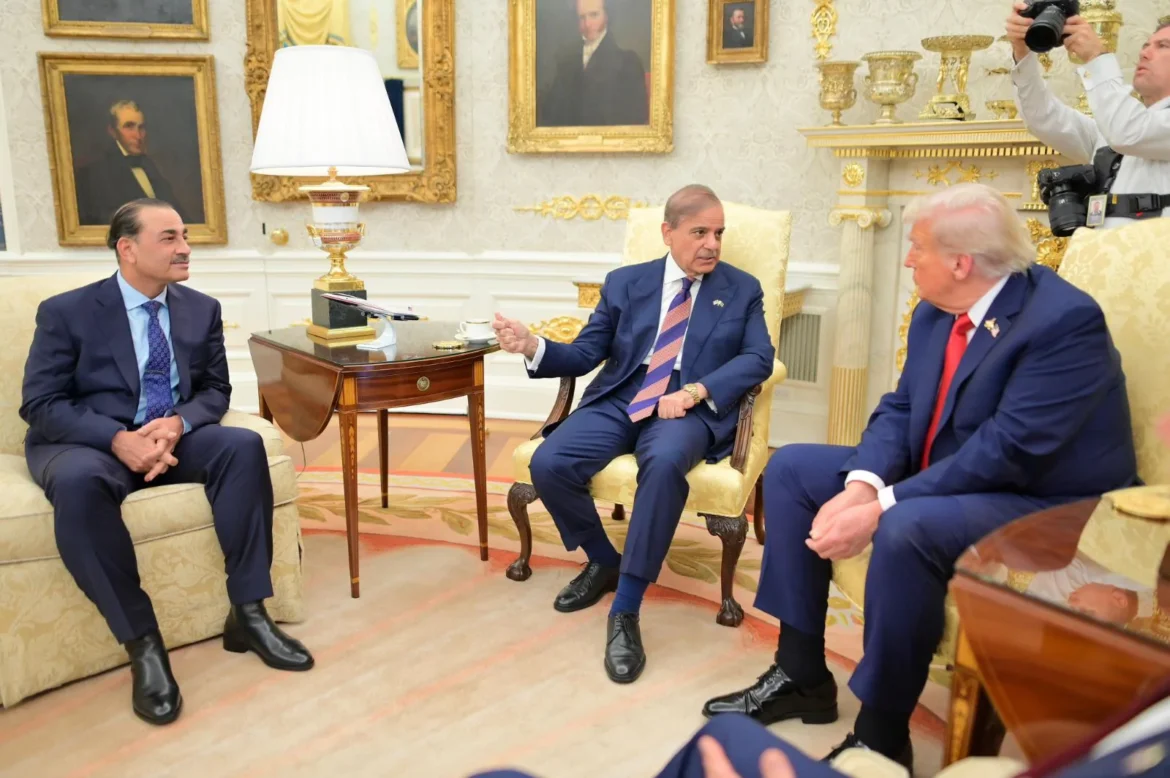
ISLAMABAD: Pakistan’s military and civilian leadership played a decisive role in brokering the memorandum of understanding signed between Washington and Tehran this week, senior security officials have said, insisting the country acted not out of narrow self-interest but from a genuine commitment to regional stability — and doing so, they stressed, entirely out of the spotlight.
The claims were made at a background briefing for selected journalists held on Tuesday, the day after US President Donald Trump announced that Washington had reached a deal with Iran aimed at ending the conflict in the Middle East — a war that erupted on 28 February following US and Israeli strikes on Iranian territory. Pakistan, officials said, has been functioning as a key intermediary between the two sides throughout.
“We are not interested in headline diplomacy,” security sources said. The world was, they added, gradually coming to recognise the role Islamabad had played.
At the centre of that role, officials said, stood Field Marshal Asim Munir, Pakistan’s army chief. His “sincerity, competence, brilliance and Allah’s blessings,” one official said, had helped avert a major war — one that had, in their telling, been actively planned and would have carried grave consequences for the wider region. A war, the official said, had been “won without actually being fought,” describing the outcome as “the pinnacle of strategy.”
Pakistan’s position was made possible, officials explained, by the country’s ability to maintain independent and functioning relationships simultaneously with Iran, Saudi Arabia, and the United States — a triangulation that allowed Islamabad to engage credibly with all parties without being seen as aligned to any one of them. The diplomatic process, one official said, demanded “utmost confidentiality, responsibility and caution,” and Pakistan as a “responsible mediator” would not be drawn on the substance of talks or on what steps might follow, in order to avoid fuelling speculation.
Officials were also careful to distribute credit beyond Pakistan’s borders. Qatar, Saudi Arabia, Turkey, Egypt and the UAE were all said to have contributed to de-escalation efforts. Saudi Arabia, in particular, was praised for what officials described as “masterly leadership, restraint and strategic patience” in helping prevent the conflict from fracturing the broader Muslim world along sectarian or geopolitical lines. One official warned that certain actors were still seeking to undermine the emerging understanding, with Israel singled out as dominating international media coverage in ways officials implied were unhelpful to the process.
On the Indus and Kashmir
The briefing covered considerably more than the Iran-US deal. On the Indus Waters Treaty, officials said Pakistan had pursued what they characterised as a highly successful legal and diplomatic response to what they alleged were Indian violations of the accord, and vowed that “whatever needs to be done, will be done” to protect the country’s water rights.
Officials also alleged that India, seeking to conceal what they described as its failures in Indian-administered Kashmir, was attempting to foment unrest in Azad Jammu and Kashmir. Twelve reserved seats in the AJK Legislative Assembly — set aside for Kashmiri refugees — were, they said, constitutionally tied to the Kashmiri right to self-determination, and no armed faction could “impose its will through force.”
That last remark appeared to be directed at the Jammu Kashmir Joint Awami Action Committee, a civic body that Pakistan has designated as banned. Officials alleged that JAAC members had blocked roads and threatened shopkeepers attempting to reopen their businesses following a call from the government for commerce to resume. “Every moment,” officials said, “JAAC is becoming more exposed,” adding that the matter would be handled in accordance with the constitution.
Afghanistan and the defence budget
On Afghanistan, officials said Pakistan sought good relations with Kabul while stating that Operation Ghazab lil-Haq had resulted in the killing of 862 militants on Afghan soil, with a further 999 eliminated inside Pakistan.
The briefing also touched on defence spending. Officials confirmed that Rs300bn had been allocated in the budget, representing a 17 per cent increase on the previous year, though they acknowledged that most of the sum would be absorbed by mandatory expenditure, leaving limited room for new development. Terrorism remained an acute internal challenge, they said, and modern warfare was growing ever more dependent on advanced technology — a reality that made the allocation feel tight. “The budget is low,” officials conceded, “and both military and political leadership are aware of this.”
Copyright © 2021 Independent Pakistan | All rights reserved