By Staff Reporter
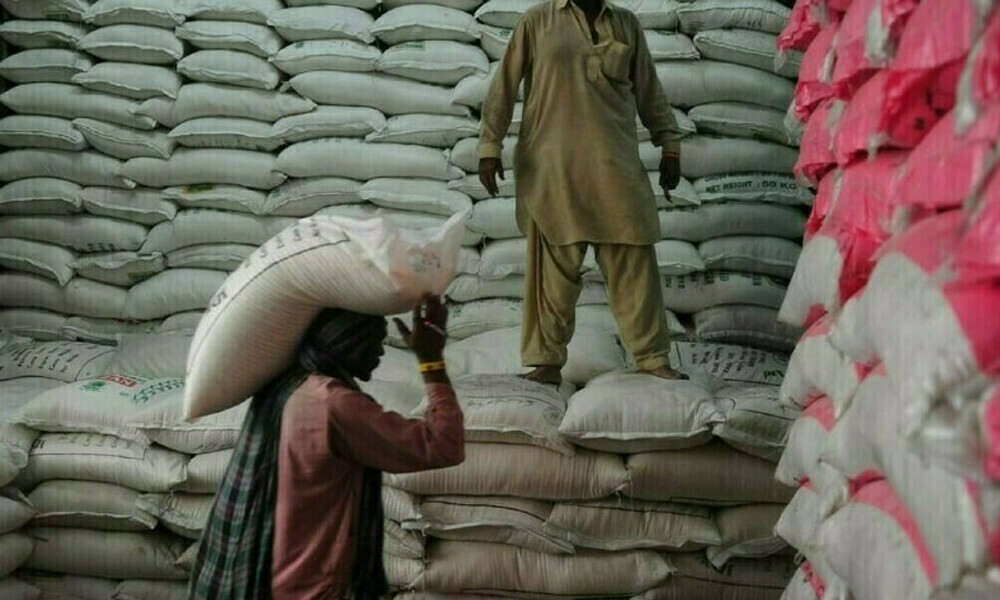
ISLAMABAD: Pakistan’s cabinet approved a policy to dismantle state control over the sugar industry, ending export subsidies and curbs on movement between provinces, and meeting an International Monetary Fund requirement that was nearly five months overdue and had stalled the lender’s board review of the country’s bailout.
The cabinet approved the National Policy for Deregulation of Sugar Sector through circulation on Tuesday, Dawn newspaper reported on Tuesday. The Ministry of Industries and Production had submitted a summary dated Nov. 24 seeking approval.
Approval was mandatory for scheduling the IMF executive board meeting, now set for Dec. 11. The board is expected to consider a $1.2 billion payout, made up of about $1 billion under the Extended Fund Facility and $210 million under the climate-focused Resilience and Sustainability Facility, following a staff-level agreement reached in October. Pakistan had been in breach of the benchmark since June 2026.
The decision followed the government’s approval on Friday of exports of more than 400,000 tons of sugar, on top of 200,000 tons shipped a few months ago. The Economic Coordination Committee cleared that export while the IMF’s deregulation condition was still unmet.
What changes
The policy ends the government’s role at every stage of the supply chain.
– Trade: Imports and exports follow a predictable mechanism, with export subsidies ended completely. There will be no restrictions on moving sugar between provinces, and transitional arrangements cover the current crushing season.
– Cane growing: Restrictions on planting zones and cane varieties are lifted. Growers may sell to any buyer, and mills may sell their product freely. Cane prices will be set by the market, though a negative list of banned varieties remains.
– Milling: There will be no limits on new mills or on capacity approvals. Millers can choose their raw material sources and make market-based production decisions. Government price controls end.
– Farmer safeguards: The transition includes third-party validation of weighing scales, a sucrose-testing framework, and interest payments by millers on late payment of cane dues. The government also promised that the sugarcane cess would fund research, along with easier credit for farmers and millers and farm mechanization schemes.
– State powers kept: The government retains the right to hold buffer sugar stocks and to collect timely data on the cane crop, production and market availability. It will also work toward mandating ethanol blending.
Why it took so long
The IMF has pressed Islamabad for years to leave sugar to market forces, covering everything from cane support prices to production and trade. The fund made a national liberalization policy a condition of Pakistan’s $7 billion program, requiring federal and provincial governments to agree on it and the cabinet to adopt it by end-June 2026. The fund’s governance diagnostic found about 90 licensed mills operating in Pakistan, many owned by party leaders and current or former legislators.
The fund also stayed closely engaged in the work of the ministerial committee that finalized the policy. The IMF proposed revised terms of reference on July 31, 2025, which the prime minister accepted, according to official records seen by Dawn. The Industries Ministry inserted amendments at the fund’s direction and shared the draft by the end of August. The IMF fine-tuned it again on Oct. 1 and insisted that Sindh’s agreement was necessary to complete the benchmark.
Sindh proved the main obstacle, effectively holding a veto even after three other provinces had consented. In May, its cabinet raised nearly a dozen objections, opposed ending crop zoning and the ban on new mills, and favored phasing in deregulation over five to 10 years. After backdoor negotiations, Sindh cleared the policy on Nov. 21 after securing certain amendments.
The committee was led by Power Minister Awais Leghari. Its members include the ministers for finance, food security and economic affairs, the prime minister’s adviser on industries, the chairman of the Federal Board of Revenue, secretaries of the concerned ministries and provincial chief secretaries.
Copyright © 2021 Independent Pakistan | All rights reserved