By Staff Reporter
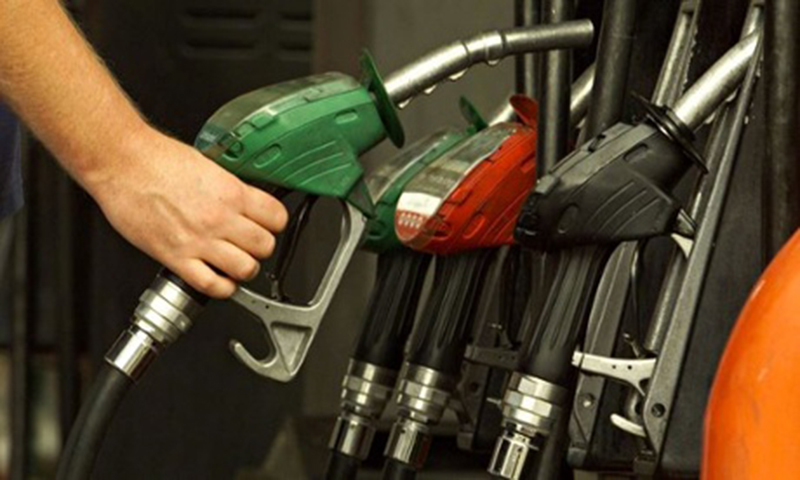
ISLAMABAD: Pakistan cut petrol prices for a second straight day and lowered diesel by 4 rupees a liter, extending a retreat from April’s highs as Brent crude hovers near a three-month low.
The Oil and Gas Regulatory Authority said in a notification on Tuesday that petrol will fall 1 rupee to 318 rupees per liter on Wednesday, Nov. 25. High-speed diesel will drop to 353 rupees. On Monday, the government had trimmed petrol by 3 rupees and left diesel unchanged for Nov. 24.
Pump prices are now well below the levels reached after the US-Iran war broke out on Feb. 28. Petrol peaked at 458.41 rupees on April 3, having started its climb from about 266 rupees in the first week of March. Diesel hit 520.35 rupees the same day, up from 281 rupees before the war. Today’s prices are roughly 31% and 32% below those respective peaks. Petrol was about 378 rupees in the days before the government changed its pricing mechanism on Nov. 2.
The state still takes a large share of every liter sold. Taxes and duties amount to 114 rupees on petrol and 100 rupees on diesel, or about 36% and 28% of the retail price.
The Nov. 2 change shifted part of the cost to the refining industry. Petroleum Minister Ali Pervaiz Malik said local refineries would absorb about 15 billion rupees ($54 million) over 30 days. That allowed the government to avert an increase of about 15 rupees a liter that had been due and to pass on a 14.71-rupee reduction in the petroleum levy to petrol buyers.
Under the revised formula, the import price of petrol is set from the actual cost of cargoes bought by Pakistan State Oil. Refineries surrender the gap between that figure and their ex-refinery price into the levy account. Local refineries supply about 30% of the country’s petrol.
Malik described the arrangement as a one-off for this month and said future contributions would depend on circumstances. That leaves it due to lapse in early December. Industry officials have said the mechanism would require refineries to surrender around 49 rupees a liter, well above the levy reduction, and have complained that the policy changed without consultation.
Brent crude settled at $89.37 a barrel on Monday, down 3.5% on the day and about a fifth lower this month. The benchmark had topped $110 in late October. President Donald Trump has given diplomacy with Iran more time while saying he may resume the war next year if talks fail. Qatari-mediated negotiations have run into obstacles over sanctions relief, and Houthi attacks on Saudi energy facilities continue to cloud the supply outlook. Goldman Sachs has said Brent could reach $140 in 2027 if Gulf output stays 3.5 million barrels a day below its 2025 average.
Pakistan has revised fuel prices almost every day since July 17, after renewed hostilities between Iran and the US rattled global markets. The first daily notification, on July 18, raised diesel by 31.05 rupees. Before that, the government had announced weekly changes from early March, alongside fuel-conservation measures meant to guard against supply disruption. The petroleum minister said the cabinet and the prime minister had made Ogra responsible for setting prices each day based on international trends.
Prime Minister Shehbaz Sharif announced a relief scheme on Sept. 13 offering 100 rupees a liter off petrol for motorcycles, three-wheeler rickshaws and cars with engines up to 800cc. It was rolled out nationwide on Sept. 17. The program is designed to cover an estimated 11.8 million people. About 10 million two-wheeler owners and 800,000 rickshaw operators are entitled to relief on 20 liters a month, a maximum of 2,000 rupees each. Another 1 million owners of small cars get relief on 30 liters, worth up to 3,000 rupees. The government had also announced targeted subsidized fuel in April.
Petrol is used mainly by private motorists, rickshaw drivers and two-wheeler riders, so price changes land hardest on the middle and lower-middle classes. Diesel prices reach more widely because the fuel powers heavy transport, power plants and large generators. The two fuels are the main revenue earners, with oil marketing companies selling more than 1 million tonnes of petrol and diesel combined in February, according to Express Tribune reporting. Kerosene demand is only about 10,000 tonnes a month.
Copyright © 2021 Independent Pakistan | All rights reserved