By Staff Reporter
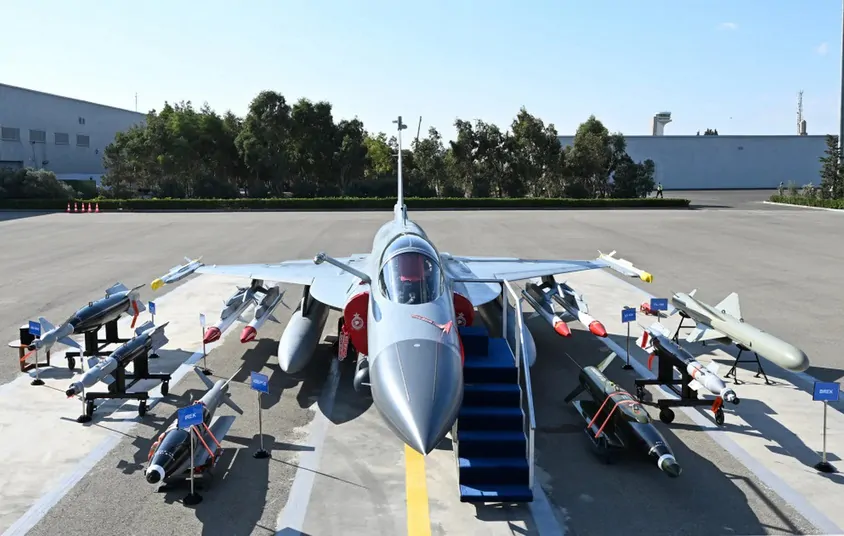
ISLAMABAD: Pakistan and Saudi Arabia are negotiating to convert roughly $2 billion in Saudi loans into a deal for JF-17 fighter jets, according to two Pakistani sources with knowledge of the matter, a move that would further cement military ties between the allies just months after they sealed a mutual defence pact, Reuter reported on Wednesday.
The discussions highlight how the two nations are advancing their security collaboration amid Pakistan’s severe economic pressures and Saudi Arabia’s efforts to diversify its defence relationships, particularly as questions linger over the reliability of American commitments in the Middle East.
The mutual defence agreement, signed in September, was prompted by Israel’s airstrikes on sites it described as Hamas targets in Doha, an assault that rattled the Gulf. One source said the talks center on supplying JF-17 Thunder jets, the lightweight combat aircraft co-developed by Pakistan and China and manufactured in Pakistan. The other source described the jets as the main option among several being considered.
The first source pegged the overall deal at $4 billion, including an extra $2 billion for related equipment beyond the loan conversion. Both sources, who are close to the military, spoke on the condition of anonymity because they lacked authorisation to discuss the negotiations.
Pakistan’s air force chief, Zaheer Ahmed Baber Sidhu, visited Saudi Arabia this week for bilateral discussions on military cooperation, according to the Saudi media outlet SaudiNews50, which posted about the meetings on the social media platform X on Monday.
Amir Masood, a retired air marshal and analyst, said Pakistan is negotiating or has completed deals with six countries for equipment, including JF-17s and associated electronic and weapons systems. He included Saudi Arabia among them but declined to provide specifics. The JF-17’s appeal has grown because “it is tested and has been used in combat,” Masood told Reuters, noting its cost-effectiveness.
The plane saw action during last May’s clashes with India, the most intense fighting between the nuclear-armed rivals in decades. Neither the Pakistani military nor the finance and defence ministries responded to requests for comment. Saudi Arabia’s government media office also did not reply. The September defence pact pledges that an attack on one country would be treated as an assault on both, marking a substantial upgrade to a longstanding security alliance.
Pakistan has historically offered military assistance to the kingdom, including training and advisory roles, while Saudi Arabia has provided crucial financial aid during Pakistan’s economic crises. In 2018, Riyadh extended a $6 billion package, comprising a $3 billion central bank deposit and $3 billion in deferred oil payments. The kingdom has since extended deposits repeatedly, including a $1.2 billion rollover last year, bolstering Pakistan’s foreign reserves amid persistent balance-of-payments woes.
Pakistan has ramped up its arms export efforts in recent months to capitalise on its domestic defence sector. Last month, it inked a weapons agreement exceeding $4 billion with Libya’s eastern-based Libyan National Army, one of Islamabad’s biggest arms sales ever, encompassing JF-17 jets and training aircraft.
Separately, Pakistan’s air force chief met with his Bangladeshi counterpart in Islamabad on Tuesday to discuss a potential JF-17 sale to Dhaka, along with fast-tracked delivery of Super Mushshak trainer aircraft and a full training and support package, according to a statement from Pakistan’s military press wing.
The meeting reflects warming relations since the August 2024 protests that forced Bangladesh’s former prime minister, Sheikh Hasina, to escape to India, straining Dhaka’s ties with New Delhi. “The visit underscored the strong historical ties between Pakistan and Bangladesh and reflected a shared resolve to deepen defence cooperation and build a long-term strategic partnership,” the military statement said.
The two countries have resumed direct trade for the first time since Bangladesh’s 1971 independence war, and their militaries have convened multiple times under Bangladesh’s interim government, led by Nobel laureate Muhammad Yunus. General elections are scheduled for Feb. 12, potentially elevating a once-banned Islamist party with Pakistani connections. The JF-17 has anchored Pakistan’s weapons program, featuring in deals with Azerbaijan and the Libyan pact.
On Tuesday, Pakistan’s defence minister, Khawaja Asif, hailed the industry’s progress as a potential economic game-changer. “Our aircraft have been tested, and we are receiving so many orders that Pakistan may not need the International Monetary Fund in six months,” he told Geo News. Pakistan is operating under a $7 billion I.M.F. program, its 24th, which succeeded a $3 billion short-term bailout in 2023 that staved off default. That support came after financial pledges from Saudi Arabia and other Gulf partners.
Copyright © 2021 Independent Pakistan | All rights reserved