By Staff Reporter
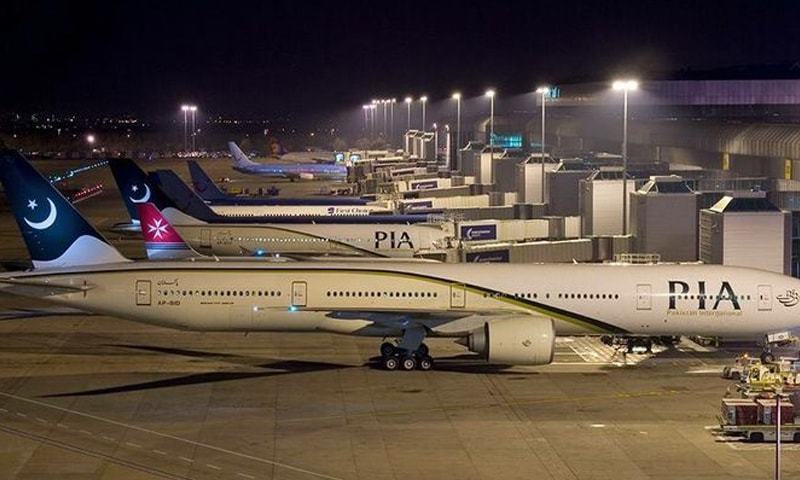
ISLAMABAD: Pakistan International Airlines Corp. suffered losses totaling about Rs22 billion from prolonged aircraft groundings, according to audit officials who briefed lawmakers this week on a litany of financial and operational missteps at the struggling carrier.
The Public Accounts Committee, a parliamentary panel overseeing government spending, was told on Wednesday that PIA planes were sidelined for routine maintenance lasting anywhere from 44 to 239 days in 2022, leading to hefty revenue shortfalls. One aircraft sat idle for 652 days, officials from the Auditor General’s Office said during a review of audit objections for the Aviation Division’s 2023-24 accounts.
The audit department blamed management negligence for the extended delays, which inflicted unjustified operational and financial losses of Rs21.82 billion. Separately, PIA racked up another Rs8.6 billion in losses from failing to dispose of spare parts or retired aircraft. Auditors noted that the airline held onto inventory valued at Rs8.566 billion from decommissioned planes between 2015 and 2021, in violation of disposal rules. The spares came from models including the Boeing 747, 707, Cessna, SA-310 and WB-737. That inaction reflected “negligence and inefficiency,” the audit observed.
But the hits kept coming. PIA lost Rs2.61 billion by not following through on board directives for property management, and another Rs1.669 billion from irregular payments that bypassed validation by user departments. On top of that, auditors flagged Rs0.112 billion in losses tied to improper procurement of stores and spares in 2022, where management skirted Public Procurement Regulatory Authority rules and bought from non-prequalified vendors.
Defence Ministry officials, who oversee the Aviation Division, pushed back on the findings. They attributed aircraft groundings to Covid-era restrictions, global supply-chain snarls, structural repairs, financial constraints and payment bottlenecks that hampered timely maintenance. “The delays in the roll-out of these aircraft were caused by unscheduled repairs in the fuselage structure. Structural repairs are both unforeseen and require additional time and materials,” the Defence Ministry said, noting that leases on the affected planes had been pared back to a minimum.
On the spare parts front, the ministry said Rs3.8 billion worth had already been sold off, with the rest to follow proper procedures. Lawmakers were also told that remaining inventory would go to new owner of the now privatized PIA. As for the procurement lapses, a senior Defence Ministry official defended the moves as vital to sustain flights. “Mission/flight-critical equipment, which was highly expensive and specified by the original equipment manufacturers (OEM), was essential,” the official said. The committee referred several other audit objections to the Departmental Accounts Committee for further fact-finding.
PIA, long plagued by debt and inefficiency, had been a drag on Pakistan’s finances amid broader efforts to overhaul loss-making state enterprises. The airlines 75% stake were sold to a local consortium at Rs135 billion last month. The Cabinet Committee on Privatisation approved the bid from a group led by Arif Habib Corp. on Dec. 23, exceeding the government’s Rs115 billion reference price. The sale, completed after years of stalled attempts, marks a key step in Pakistan’s efforts to offload loss-making state assets under an International Monetary Fund bailout program. Under the terms, the government retains a 25% stake, with the buyers expressing intent to acquire the remainder later.
The Arif Habib-led consortium, which outbid two others, plans to invest up to Rs125 billion in fleet expansion and aims for 7.5% annual revenue growth, including more flights to Gulf Cooperation Council countries and lower fares. A relaunch is targeted for April, following regulatory approvals expected in early 2026. The deal values PIA at Rs180 billion and comes after the airline posted a Rs26 billion profit in 2024, a turnaround from Rs100 billion losses the prior year, aided by debt restructuring and tax deferrals. Critics question whether the Rs135 billion price for the majority stake is fair, given past losses exceeding Rs784 billion. Only a small cash portion goes to the treasury, with much of the value tied to assumed liabilities.
Copyright © 2021 Independent Pakistan | All rights reserved