By Staff Reporter
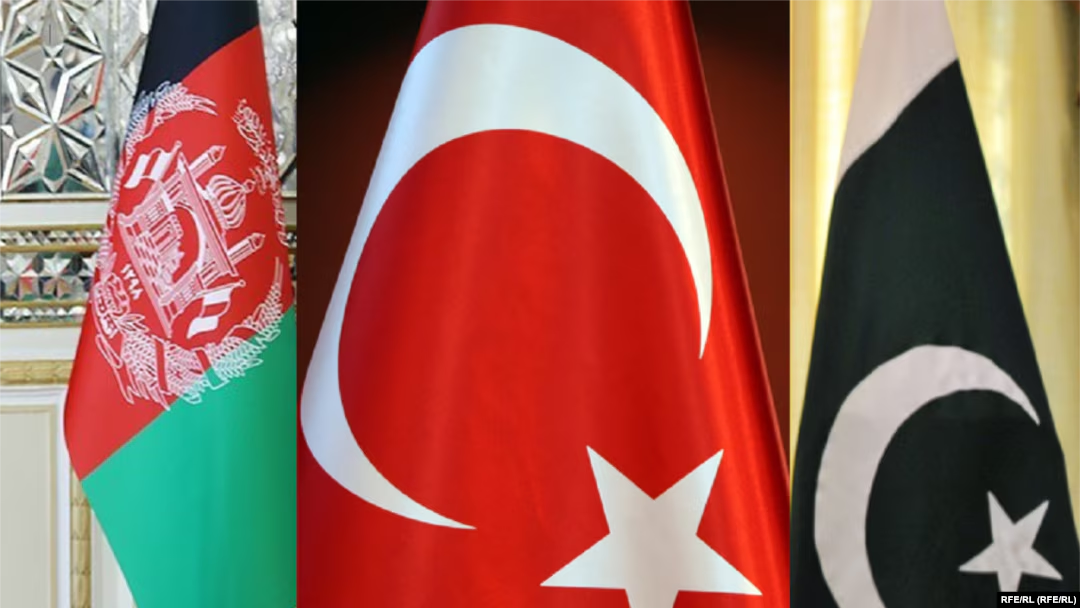
ISLAMABAD: Pakistan agreed on Thursday to extend high-stakes talks with the Afghan Taliban, heeding Turkey’s plea to give peace “another chance”, but only if Kabul delivers “clear, verifiable and effective action” against militants staging deadly attacks on Pakistan from its soil, security officials said.
The abrupt turnaround came as Pakistan’s delegation, packed and ready to fly home from four days of bitter deadlock, stayed put at the mediator’s urging. “It was decided to give another chance to peace by continuing the talks,” one official said.
Pakistan, the official stressed, again drove home its red line: Afghan territory must not be used to launch terrorist strikes.
The decision averted an immediate crisis between nuclear-armed Pakistan and Afghanistan, whose 1,600-mile frontier has erupted in skirmishes, airstrikes and recriminations over the past month. A first round of talks, co-mediated by Qatar and Turkey in Doha on Oct. 18 and 19, had merely prolonged a 48-hour truce after days of clashes and Pakistani bombing runs on camps of the Gul Bahadur group inside Afghanistan.
This week’s session in Istanbul, laser-focused on curbing terror launched from Afghanistan, collapsed short of any deal, Information Minister Attaullah Tarar said late on Wednesday.
The impasse drew an unusually stern warning from Defence Minister Khawaja Asif, who told reporters at Parliament House in Islamabad on Thursday that Pakistan stood ready to launch strikes “deep in Afghanistan” should the attacks persist.
The Taliban delegates conceded in Istanbul that the banned Tehreek-i-Taliban Pakistan, the group blamed for a torrent of violence inside Pakistan, must be curbed because “they use our soil,” Asif told reporters. But Kabul balked at putting that in writing, despite nodding along in principle.
He accused the Afghan delegation of maintaining constant contact with superiors in Kabul throughout the talks, at the direction of an Indian hand that he said was sabotaging any deal.
The Istanbul agenda had been ambitious from the start, aiming to forge a concrete mechanism for monitoring Taliban efforts to prevent cross-border terrorism. Key items included dismantling known TTP sanctuaries, arresting or expelling top commanders, and setting firm timelines with benchmarks, such as raids, detentions and the destruction of safe houses.
To enforce compliance, Pakistan had prepared proposals for intelligence-sharing arrangements, joint cross-border operations and real-time tracking of militants’ movements and funding streams. Islamabad also backs a third-party oversight body, potentially co-led by Turkey and Qatar, to audit progress and penalise foot-dragging.
Afghan pledges to deny safe haven to any anti-Pakistan factions; fortified border security; greater transparency on how militants are financed; and routine review sessions to measure adherence. For Pakistan, the stakes could scarcely be higher. The TTP, which shares ideological roots with the Taliban but regards Islamabad as an enemy, has exploited Afghanistan’s post-2021 chaos to regroup and intensify assaults.
Pakistani officials blame Taliban inaction, or tacit support, for the bloodshed. The Taliban, for their part, have denied sheltering the TTP while bristling at Pakistan’s deportations of Afghan refugees and its military incursions. Border flare-ups have killed dozens in recent weeks, testing the fragile truce.
Turkey, which has positioned itself as a broker in the region, requested the extension after what one security source described as “intense shuttle diplomacy.” Qatar, a longtime player in Afghan affairs, remains involved behind the scenes.
Copyright © 2021 Independent Pakistan | All rights reserved