By Staff Reporter
ISLAMABAD: Pakistan and Afghanistan reached a tentative accord early on Friday to extend a ceasefire along their volatile border, a breakthrough engineered by Turkish and Qatari mediators after days of deadlock in negotiations.
The agreement, announced in a joint statement by Turkey’s Foreign Ministry, came hours after Pakistan’s defence minister declared the talks all but over. It commits both sides to a “monitoring and verification mechanism” to enforce the truce and penalise violations, with further details to be hammered out at a high-level meeting in Istanbul on Nov. 6.
“Further modalities of the implementation will be discussed and decided” at that gathering, the statement said. Though it did not name the participants, diplomats expect the defence ministers of the two nations — who led the first round of talks in Doha — to preside. “All parties have agreed to put in place a monitoring and verification mechanism that will ensure maintenance of peace and imposing penalty on the violating party,” the statement added.
The deal marks a rare moment of de-escalation between Islamabad and Kabul, whose ties have plunged to new lows in recent weeks amid cross-border clashes and finger-pointing over terrorist attacks. Pakistan has long accused the Afghan Taliban, who seized power in 2021, of sheltering militants from the Tehreek-i-Taliban Pakistan (TTP), who stage deadly raids into Pakistan from Afghan soil.
Afghanistan denies the charge and counters that Pakistan has violated its sovereignty with airstrikes and, according to Afghan news reports, by permitting American drone operations from its bases — allegations Islamabad rejects.
The second round of talks, which began in Istanbul last Saturday, foundered over Pakistan’s insistence on “clear, verifiable and irreversible action” against the TTP and other groups. Direct contact between the delegations was minimal, with most exchanges funnelled through Turkish and Qatari intermediaries.
“Even during meal breaks, the sides barely spoke,” one diplomatic source said. Pakistan’s negotiators demanded that the Taliban formally designate the TTP a terrorist organisation and denounce it publicly as a fitna — an Islamic term denoting sedition or mischief. A senior Taliban official countered that Afghanistan lacked full control over TTP militants, many of them Pakistani nationals. “But Pakistan keeps insisting that we control TTP’s attacks inside Pakistan,” the official said. “These fighters are Pakistani nationals operating within Pakistan.”
The Afghan side offered to detain and expel any TTP members found on its territory. Still, Wednesday brought a public rupture: Pakistan’s information minister, Attaullah Tarar, posted on X that the talks had “failed to bring about any workable solution” and that Islamabad would take “all possible measures” to shield its people from terrorism.
Enter Turkey and Qatar, whose interventions rescued the process for the second time in under a week. As mediators, they “expressed their appreciation for the active contribution of both parties” and pledged to press on toward “lasting peace and stability,” the statement said. Turkey enjoys deep bonds with Pakistan, having backed it openly during past clashes with India. Qatar, meanwhile, helped broker the Taliban’s 2020 deal with NATO forces that led to the U.S. withdrawal from Afghanistan.
Pakistan’s defence minister, Khawaja Asif, who had issued a stern warning to Kabul after the impasse, struck a more hopeful note late Thursday. “Different drafts are being exchanged for an eventual agreement,” Asif told a private television channel. “You can say that some ray of light is visible; there is very guarded optimism. Let’s hope that some shape emerges from this.”
“Qatar and Türkiye are very respected by us and are our well-wishers,” Asif added. “Türkiye clearly openly supported us in the Pakistan-India conflict, so we respect them and their opinion.”
Zabihullah Mujahid, the chief Taliban spokesman, said “the Islamic Emirate seeks good relations with other neighbouring countries, it also desires positive ties with Pakistan and remains committed to relations based on mutual respect, non-interference in internal affairs and not posing a threat to any side,” he said.
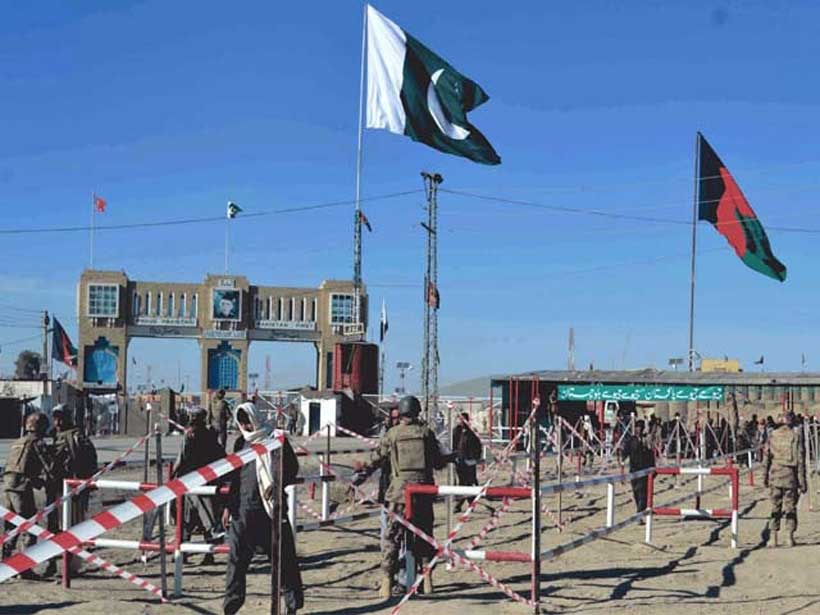
The flare-up traces to Oct. 11, when militants attacked Pakistan from across the border, retaliation, the Taliban claimed, for unacknowledged Pakistani airstrikes into Afghanistan. Skirmishes multiplied along the 1,600-mile frontier, with Pakistan targeting camps linked to the Gul Bahadur group, another militant faction.
The first round of talks in Doha yielded a temporary truce and a vow to reconvene in Istanbul. Yet even as the guns fell silent, Pakistan’s security forces suffered losses in operations against insurgents at home. Diplomats tempered Friday’s relief with caution. “This is a framework for peace, not yet peace itself,” one foreign envoy said. “It will take sustained verification, discipline and trust to make it hold.”
Copyright © 2021 Independent Pakistan | All rights reserved