By Staff Reporter
ISLAMABAD: Pakistan’s health authorities have ordered urgent reviews of syringe regulations and disease-control programs after reports that a team from the Global Fund to Fight AIDS, Tuberculosis and Malaria may soon arrive to examine a sharp rise in HIV infections, including more than 300 cases among children in one southern district linked to the reuse of contaminated syringes.
The Drug Regulatory Authority of Pakistan and the Common Management Unit, which oversees the government’s AIDS, tuberculosis and malaria programs, have been directed to devise a mechanism to halt transmission through unsafe medical practices, ministry officials said. The move comes as experts familiar with the Global Fund’s operations say the organisation is likely to press for technical specialists — rather than bureaucrats — to lead disease-control efforts.
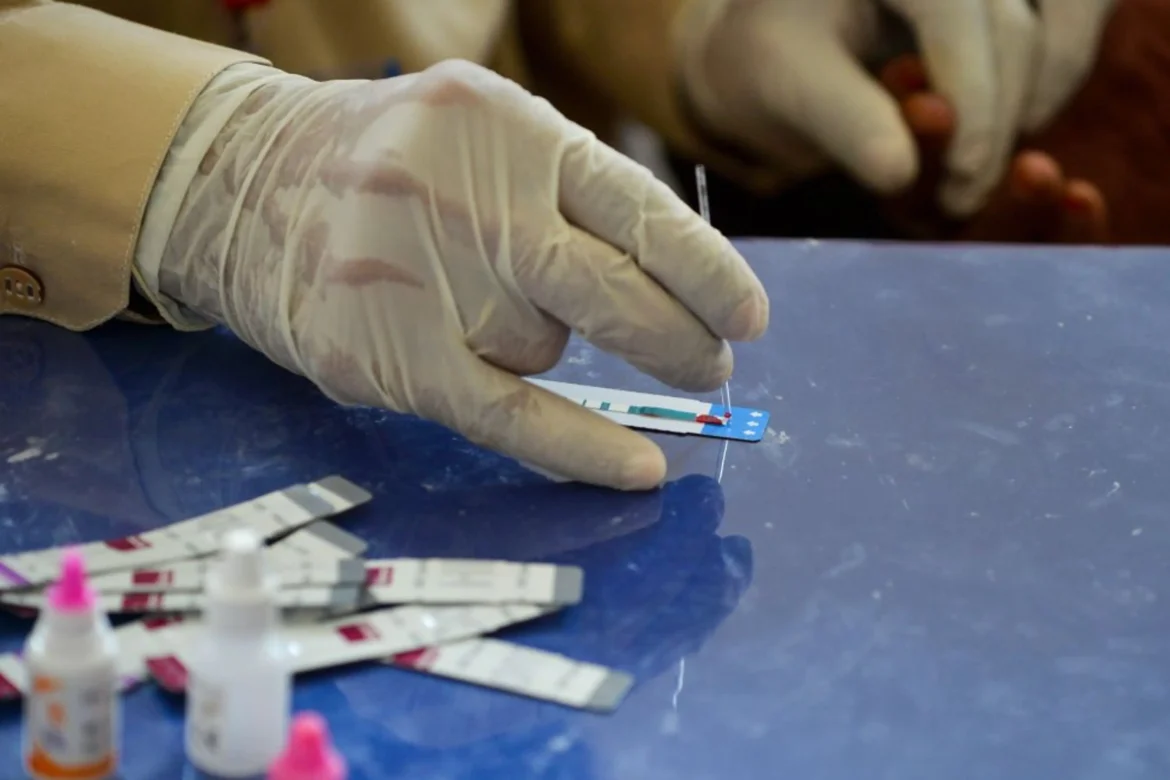
The developments reflect growing international concern over Pakistan’s HIV epidemic. At least 618 new cases were recorded in the capital between January 2025 and March 2026, according to government figures. In Taunsa, a district in Punjab province, more than 300 children have tested positive for the virus, with health officials attributing the outbreak primarily to the reuse of syringes by local practitioners.
Last week, Dr. Zafar Mirza, a former special assistant to the prime minister on health, publicly identified the reuse of contaminated syringes and inadequate screening of blood before transfusions as major drivers of the disease’s spread. The National Assembly’s Standing Committee on Health has also taken notice. Chaired by Dr. Mahesh Kumar Malani, the panel has demanded a detailed briefing on the surge in cases.
A senior health ministry official, speaking on condition of anonymity because the visit has not been formally confirmed, said authorities had been told to expect the Global Fund team in the first half of May. “Although we have not received official confirmation of the team’s arrival, we have been told to expect it in the first half of May, as travel schedules have become unpredictable due to tensions in the Middle East,” the official said. Such delegations typically fly in from the organisation’s headquarters in Geneva.
The Global Fund has invested more than $1 billion in Pakistan over the past two decades to combat HIV, tuberculosis and malaria. Its grants are provided in three-year cycles; the current allocation for the three diseases totals roughly $250 million, with HIV funding divided equally between the government and the private sector, according to ministry officials.
One official, also speaking anonymously, described a shift in program management that occurred about a decade ago. Before then, the three diseases were handled separately by technical experts. Because the Global Fund is the principal donor, the programs were later consolidated under the Common Management Unit. “After that, bureaucrats took control, and many focused more on perks and privileges than on disease control,” the official said.
The Global Fund itself has voiced frustration with Pakistan’s progress. In an audit released in June 2025, the organisation’s Inspector General cited weak governance, limited strategic direction, insufficient domestic financing and frequent leadership changes at the Ministry of National Health Services as significant obstacles to controlling HIV and other infectious diseases.
When contacted, ministry spokesperson Sajid Shah acknowledged the problem but disputed some media reporting on case numbers in Islamabad. He said the ministry was taking concrete steps to contain the outbreak. Shah noted that 2cc and 5cc syringes had already been banned and replaced with auto-disable models that cannot be reused. However, 10cc syringes remain available on the market and can still be repurposed.
“The ministry has directed Drap and the CMU to investigate whether 10cc syringes are contributing to the spread of HIV,” Shah said. “Measures will also be taken to ban them if necessary.” Health Minister Syed Mustafa Kamal is treating the matter with urgency and is personally committed to finding effective solutions, Shah added.
The impending Global Fund visit, if it occurs, would represent the latest high-level international intervention in Pakistan’s long-running battle against HIV. With the country already facing criticism over slow progress and governance shortfalls, the review could carry significant implications for future funding and the structure of its disease-control programs.
Copyright © 2021 Independent Pakistan | All rights reserved