By Staff Reporter
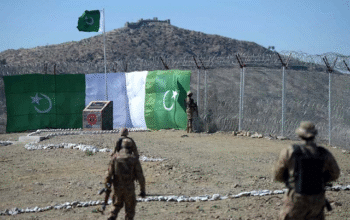
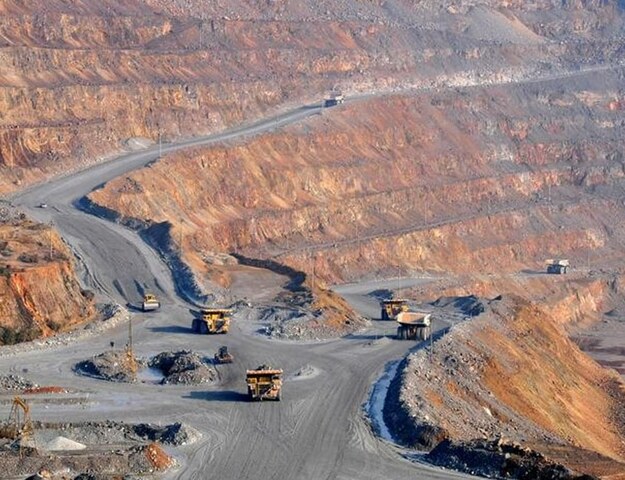
ISLAMABAD: The government pledged on Wednesday to significantly expand security around the country’s largest Chinese-operated copper and gold mine, responding to an unusually blunt warning from the mine’s operator that a monthlong spiral of violence in the southwestern province of Balochistan could force production to a halt within weeks.
The warning, delivered in a letter dated June 29 from Saindak Metals Limited to Pakistan’s energy ministry, said the deteriorating security situation had crippled the supply routes the mine depends on for equipment, fuel, and other essential cargo. Absent a change in conditions, the letter said, there was “a serious likelihood” that operations at the mine would be suspended within a month for lack of materials and logistical support.
The disclosure, first reported by the Financial Times and confirmed to Reuters, offers a rare and pointed acknowledgment of how deeply the insurgency roiling Balochistan has begun to threaten the economic ties that bind Pakistan to its most important ally, China. It also underscores the vulnerability of the mineral wealth scattered across Pakistan’s poorest province, which for two decades successive governments in Islamabad have promised to unlock but have struggled to protect.
Talal Chaudhry, Pakistan’s minister of state for interior, said in an interview that his ministry had received word of the mine operator’s concerns in early July and had since ordered a buildup of security around the site.
“We have directed the provincial authorities and all concerned security agencies to beef up deployment for all of their installations, personnel, logistics and transportation,” Chaudhry told Reuters, adding that shipments of cargo and equipment bound for the mine would now receive additional protection along their routes. “It is our priority to safeguard all projects run by international companies in Pakistan.”
The Saindak mine, tucked into the arid, sparsely populated Chagai district near Pakistan’s borders with Iran and Afghanistan, has been run jointly since 2001 by the state-owned Metallurgical Corporation of China and Saindak Metals Limited, its Pakistani counterpart. Nearly all of its output — copper concentrate along with smaller quantities of gold and silver — is shipped directly to China, and the mine accounted for a substantial share of the roughly $750 million in copper exports Pakistan recorded last year. In January 2023, Islamabad extended the Chinese company’s lease on the site for another five years, over objections from political leaders in Balochistan who have long argued the province sees too little benefit from the minerals extracted from its ground.
That argument — that Balochistan’s resources enrich a distant capital and a foreign partner while the province itself remains underdeveloped — sits near the root of the unrest now threatening to choke off the mine’s supply lines. Balochistan, Pakistan’s largest province by area and its poorest by nearly every economic measure, has for decades been home to a low-grade separatist insurgency, led in large part by the Baloch Liberation Army, alongside a harderline Islamist militancy that Pakistani officials attribute to Tehreek-i-Taliban Pakistan and its affiliates. In recent years, militants from both currents have increasingly targeted the infrastructure of the China-Pakistan Economic Corridor — the mines, highways, and personnel that represent Beijing’s multibillion-dollar bet on Pakistan.
The scale of the violence has escalated sharply of late. At a press conference in Rawalpindi last Wednesday, Lieutenant General Ahmed Sharif Chaudhry, the director general of Pakistan’s Inter-Services Public Relations, said the country had endured three major terrorist attacks across Balochistan over the preceding four days, along with the security operations that followed.
The first came overnight between July 4 and July 5 in the Hanna Urak area outside Quetta, where, according to the DG ISPR, militants attacked local residents before being driven off; four civilians were killed and six injured. The second unfolded at a police checkpost guarding a pumping station near Mangi Dam in Ziarat district, where attackers overran the post in a multi-directional assault on the night of July 6, killing nine police officers before taking others hostage; the ensuing standoff in the surrounding mountains, complicated by the military’s reluctance to use air power because of the hostages, left 18 more police officers dead by the time it was over, and troops reported killing 26 militants in that operation alone. The third came July 8, when an army convoy came under fire near the N-25 highway outside Bela, killing 11 soldiers and, according to the military, 14 attackers identified as belonging to the Baloch Liberation Army. Separate operations that same day in Kharan and Dalbandin left a further 14 suspected militants dead.
In total, Lieutenant General Chaudhry said, the four days of violence and the counterterrorism operations that followed left 42 civilians and security personnel dead — four civilians, 27 police officers, and 11 soldiers — while security forces killed 54 people it identified as militants. The general laid blame for the violence on India and on fighters operating from Afghan territory, an accusation Pakistani officials have repeated with increasing frequency even as the toll from the insurgency continues to climb.
It is against that backdrop that Saindak Metals delivered its warning, and Chinese officials, when asked about it, offered a response notably short on specifics. A spokesperson for China’s foreign ministry said Wednesday that Beijing was not familiar with the details of the mine’s warning but reaffirmed the closeness of the relationship between the two governments.
“China and Pakistan are staunch friends and all-weather strategic partners,” the spokesperson said, adding that Beijing would continue working with Pakistan to protect Chinese citizens, projects, and institutions operating in the country.
The unease radiating from Saindak has already reached beyond its own gates. Barrick Mining’s Reko Diq project, a $9 billion copper and gold venture roughly 50 kilometers away that ranks among the largest untouched mineral deposits in the world, has watched the same security conditions cloud its own timeline. Reko Diq has spent more than a decade tangled in legal disputes and shifting ownership arrangements even before the latest violence, and the Toronto-based company has said it intends to begin production later in the decade — a target that Balochistan’s security climate now threatens to complicate further.
Beyond the mines themselves, the deep-water port at Gwadar — another marquee Chinese investment in Balochistan and a cornerstone of the broader China-Pakistan Economic Corridor — sits well within the same volatile province, a reminder of how much of Beijing’s exposure in Pakistan runs through a single, troubled stretch of territory.
For Islamabad, the stakes reach beyond any single mine. Pakistan owes China roughly $29 billion, more than it owes any other country, according to World Bank estimates, and it has leaned repeatedly on Chinese loan rollovers to keep its foreign currency reserves from crumbling under economic pressure. A prolonged disruption at a flagship joint venture like Saindak would not just cost export revenue — it would test, at a moment of real strain, the durability of the political relationship Pakistan has counted on to keep its economy afloat.
Pakistan’s military and paramilitary Frontier Corps are already stretched across a province larger than the rest of the country’s provinces combined, one where militant groups have shown a growing capacity to strike simultaneously at multiple, widely separated targets.
Copyright © 2021 Independent Pakistan | All rights reserved