By Staff Reporter
LAHORE: The International Cricket Council has torn up the format for next year’s men’s 50-over World Cup, introducing a change that could hand cricket’s most commercially valuable fixture — India against Pakistan — an additional airing.
The revamped structure, confirmed on Wednesday after the ICC’s annual board meeting in Edinburgh, keeps the 2027 tournament in southern Africa at 14 teams. But it inserts a new qualifying hurdle before the competition proper begins, and it does away with quarter-finals altogether — a decision that will strip the tournament of a round of straight knockout football that fans and broadcasters have come to prize.
Under the new system, the three lowest-ranked qualifiers will be funnelled into a preliminary round, with only the winner going through to a 12-team main phase. Those 12 sides will be split into two groups of six, whose survivors then feed into a round-robin “Super Seven” stage — a replacement for the “Super Six” format previously pencilled in, and one team larger. From there, the leading four progress direct to the semi-finals.
It is the extra place in that round-robin phase that carries the real significance. A bigger single pool of contenders means a correspondingly higher chance that India and Pakistan, kept apart in the group stage by seeding, will collide a second time before the knockout rounds — on top of any meeting the draw already guarantees.
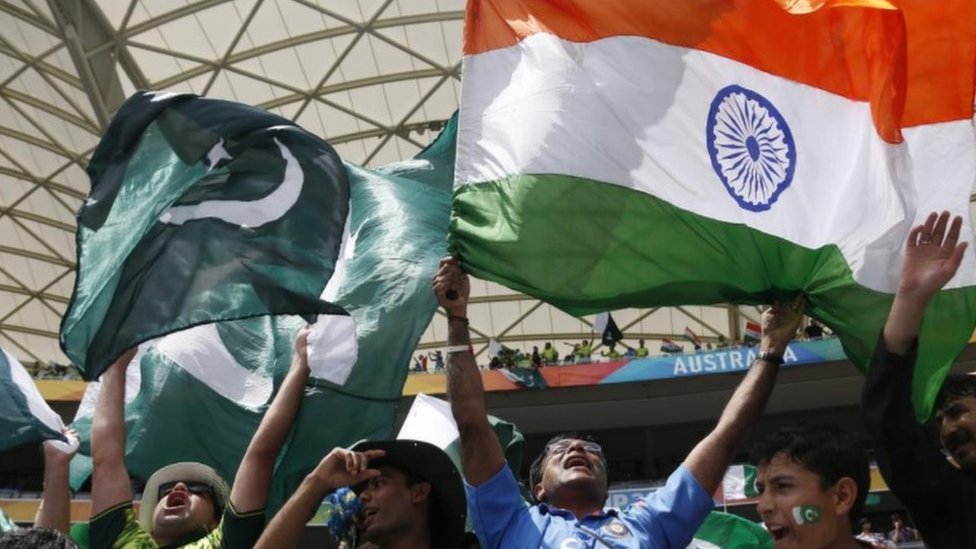
That matters more to the ICC’s finances than any other fixture in the sport. India versus Pakistan draws television audiences and sponsorship on a scale nothing else in cricket approaches, a pull that stems in no small part from the fact the two sides now meet only within ICC events. Political tensions between the neighbours have kept their boards from arranging bilateral cricket for the best part of two decades; India’s last tour of Pakistan, comprising Test and one-day fixtures, was in 2006. Every meeting since has been manufactured by the accident of a shared tournament draw, which is precisely why the ICC has little incentive to design a format that reduces the odds of it happening.
The governing body was characteristically diplomatic about its own motives. “The revised structure has been designed to strengthen the competitive narrative across every stage of the event,” it said in a statement, adding that the changes would deliver “greater context, competitiveness and consequence” throughout the tournament.
What the statement did not dwell on is the trade-off at the sharp end. Quarter-finals — with their single-match, no-second-chances tension — have been discarded in favour of a longer round-robin that spreads jeopardy more thinly across more matches. It is a structure that rewards consistency over the course of a tournament rather than producing the knockout drama of one bad afternoon ending a campaign. Whether that counts as an improvement will depend on who is asked; broadcasters weighing additional India-Pakistan inventory against neutrals mourning the loss of do-or-die football are unlikely to reach the same conclusion.
T20 World Cup also reshaped
The board’s changes were not confined to the 50-over game. The next men’s T20 World Cup, to be staged in 2028, will remain a 20-team event but will send 10 sides through the group phase rather than eight, in a format the ICC says is intended to widen opportunities for smaller cricketing nations while sharpening competition in the tournament’s closing stages.
“The revised format is designed to expand opportunities for emerging nations while increasing the competitiveness of the tournament’s latter stages,” the ICC said, confirming that the 20 competing teams will be arranged into five groups of four — a change from the four groups of five used at this year’s tournament.
The top two from each group advance into a Super 10 phase. The two best-performing sides there go straight into the semi-finals; the remaining two semi-final places will be settled by a newly created eliminator round, pitting the second-placed finishers from each Super 10 group against the third-placed teams from the other group.
Twelve nations have already booked their place at the 2028 tournament on the strength of results at this year’s T20 World Cup and their current rankings: Afghanistan, Australia, Bangladesh, England, India, Ireland, New Zealand, Pakistan, South Africa, Sri Lanka, West Indies and Zimbabwe. The remaining berths will be determined through qualification over the next two years.
Copyright © 2021 Independent Pakistan | All rights reserved