By Staff Reporter
ISLAMABAD: The Economic Coordination Committee stopped short of authorising sugar exports on Wednesday, choosing instead to test international demand through a tender for 108,000 tonnes — a hedge that reflects the government’s wariness of repeating a costly cycle of trade reversals that has rattled consumers and strained its International Monetary Fund program.
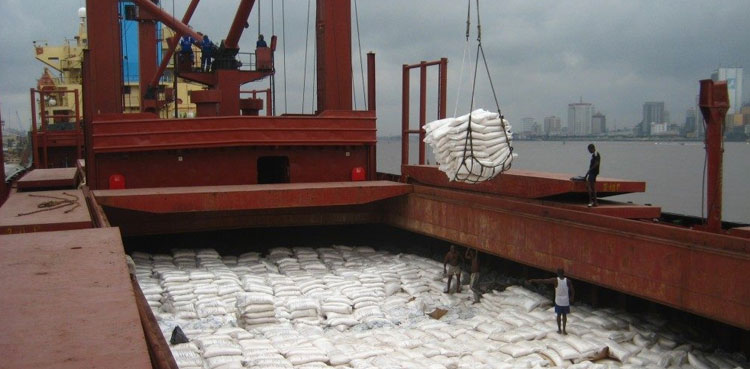
The committee, chaired by Finance Minister Muhammad Aurangzeb, authorised the state-run Trading Corporation of Pakistan to solicit international bids for the sugar, which represents the unsold remainder of 300,000 tonnes imported last year. A final decision on whether to proceed with the export will hinge on the prices tenders generate and will require separate approval from the full federal cabinet, a senior official said.
The tender process alone will consume at least 30 days under Public Procurement Regulatory Authority rules, pushing any actual export decision close to the start of the next cane-crushing season — a timeline that could help contain domestic price pressure, according to the official, who asked not to be identified discussing internal deliberations.
The calculated delay illustrates the bind facing Aurangzeb’s government: Pakistan needs foreign exchange, and its sugar millers are lobbying hard for permission to sell into overseas markets. But the finance minister has resisted a swift decision, mindful of how similar moves have backfired politically in the past.
A Costly Precedent
The caution is rooted in recent history. Pakistan exported 790,000 tonnes of sugar last year before reversing course and importing 500,000 tonnes months later, after the export drive helped drain domestic supply and sent local prices spiralling. That sequence allowed millers to profit on both ends of the trade while consumers absorbed the cost.
A steering committee led by Deputy Prime Minister and Foreign Minister Ishaq Dar approved the import order after prices surged. The government ultimately imported just 300,000 tonnes of the authorised amount, and 108,000 tonnes of that stock remains unsold — two separate attempts to move it domestically failed because local prices were too low to justify a sale, according to information the food security ministry provided to the ECC.
The mismatch underscores the volatility that has characterised Pakistan’s sugar policy. The Ministry of National Food Security and Research told the committee that the export decision, combined with a 15% drop in production, pushed prices as high as 220 rupees per kilogram at one point. Prices have since fallen 18% from a year earlier, to an average of 148 rupees per kilogram, as this season’s harvest improved supply.
That price relief is precisely what mills are now angling to unwind. The Pakistan Sugar Mills Association, a cartel representing more than four dozen mills, has pushed the government to permit exports as a way to firm up local prices — a dynamic that has fed scepticism inside the government that any new export authorisation will simply repeat the last cycle: thin domestic stocks paired with rising prices.
IMF Complications
The situation carries an additional complication: Pakistan’s decision to import sugar last year required waiving roughly 53% in import taxes, a move that risked friction with the IMF, whose lending program restricts the government from offering tax exemptions. The waiver was designed to cut the import price by 82 rupees per kilogram, making the purchase commercially viable. Aurangzeb himself had opposed the tax waiver at the time.
The Ministry of Commerce told a parliamentary panel just last week that no sugar export proposal was under active consideration, citing the political fallout from the prior export-then-import sequence.
Millers see a different picture in the numbers. The PSMA reported total sugar stocks exceeding three million tonnes as of July 31, against monthly domestic consumption of 564,000 tonnes. By the association’s calculation, roughly 1.9 million tonnes would cover the next three months of demand, leaving a surplus approaching one million tonnes. The industry is projecting output of around eight million tonnes this coming season on the back of a strong cane crop.
The PSMA has requested permission to export at least 600,000 tonnes — a volume it argues would still leave more than 500,000 tonnes in carryover stock heading into the new crushing season, enough to keep prices stable. That request was not on Wednesday’s agenda; the ECC’s discussion was confined to the 108,000-tonne tender for last year’s leftover import stock.
Complicating the timeline further, the crushing season, which typically begins by late September, has in recent years been pushed back to November by mills — delays that have drawn criticism from officials who accuse the industry of manipulating supply timing to its advantage.
Broader Trade Strain
The sugar decision landed the same day Prime Minister Shehbaz Sharif convened a separate meeting to review Pakistan’s external account position, which absorbed a $3 billion hit last fiscal year as exports fell and food imports climbed.
Sharif was told that export earnings for the food group dropped by $2.1 billion while food imports rose by $955 million, with the overall food import bill climbing to $9.15 billion from $8.20 billion. Rice, vegetables and sugar exports all declined, though the impact was partially offset by higher imports of soybean oil and pulses.
The food ministry has proposed a series of measures to reverse the trend, including efforts to recapture rice markets in Indonesia, Afghanistan, Malaysia, Senegal, Madagascar and the Philippines, along with a review of alternate trade routes and border facilitation measures. Pakistan’s food exports have been hampered in part by their heavy reliance on Afghan transit routes, which have suffered from periodic border closures.
The ministry also recommended a broader review of sugar export permissions, domestic stock positions and import requirements — an acknowledgment, officials suggested, that Wednesday’s tender-first approach may become the template for avoiding the kind of abrupt policy reversal that cost consumers and credibility last year.
Copyright © 2021 Independent Pakistan | All rights reserved