By Staff Reporter
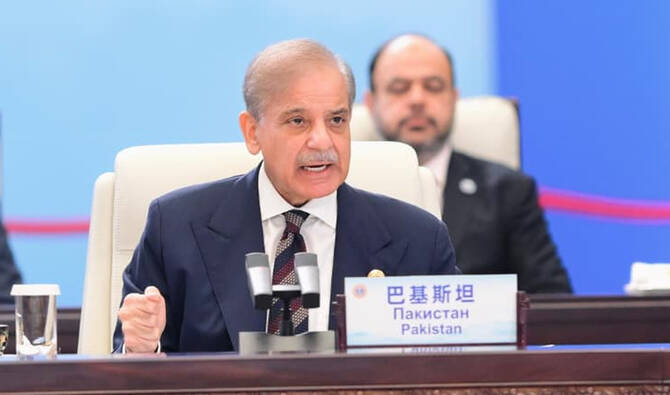
ISLAMABAD: Prime Minister Shehbaz Sharif called on Monday for all sides to “give peace a little more chance” after Iran and Israel traded fire for the first time since an April ceasefire, in an escalation that complicated Islamabad’s intensive mediation efforts and rattled global markets.
The exchange — Israel striking targets in western and central Iran after Tehran launched missiles at Israeli territory late on Sunday — marked the most direct confrontation between the two countries since the Pakistan-brokered truce took effect on April 8, threatening to unravel months of painstaking diplomacy aimed at ending a war that began when Washington and Israel launched coordinated strikes on Iran on February 28.
“The recent surge in violence in the Middle East is a stark reminder of the dangers associated with a tenuous ceasefire and the unbearable consequences it may lead to,” Sharif wrote on X. “We sincerely urge all sides to exercise restraint and give peace a little more chance.”
Iran and Israel said by Monday they had halted their attacks following a direct appeal from US President Donald Trump, who demanded they immediately stop shooting. Tehran, however, warned it would resume strikes if Israel continued operations against Hezbollah in Lebanon. A source briefed on the matter told Reuters that Israel had also decided to halt its attacks on Iran.
Oil prices, which had surged as much as 5% during the flurry of attacks, pared gains once Iran’s military declared its first wave of strikes complete. The dollar retreated from its highest level in nearly two months.
Escalation rooted in Lebanon
The chain of events began on Saturday, when Israel struck Beirut’s southern suburbs despite a US-announced truce plan for Lebanon. Tehran said its missile salvoes at Israel were direct retaliation for those strikes on Hezbollah strongholds. Israel then hit a petrochemical plant in southwestern Iran, which it said was used to manufacture ballistic missiles. Iran’s Islamic Revolutionary Guard Corps responded with a strike on a similar facility in the Israeli port city of Haifa.
Iran’s military headquarters described its response as “a painful” blow against Israel, adding in a statement: “If the aggressions and acts of mischief continue — including in southern Lebanon — much more severe and crushing actions than before will follow.”
Israel went ahead with its strikes on Iran even after Trump reportedly urged Prime Minister Benjamin Netanyahu to refrain from further attacks. The US president nonetheless struck an optimistic tone on social media, writing that both countries wanted “an immediate ceasefire” and that final negotiations on peace were continuing, “subject to ignorance or stupidity getting in its way.” He added that a US naval blockade of Iranian ports would remain in place until a final deal was reached.
The wider ceasefire landscape in the region remains deeply fragile. A truce meant to halt hostilities between Israel and Hezbollah took effect on April 17 but has never been fully observed, with each side accusing the other of violations. Israeli operations in Lebanon have continued, including airstrikes, forced displacement orders and the capture of the historic Beaufort Castle, which diplomatic sources say has further inflamed tensions with Tehran.
Pakistan’s mediation under strain
The flare-up dealt a blow to Islamabad’s sustained diplomatic push, which has positioned Pakistan as the primary back-channel between Washington and Tehran since the war began. Pakistan hosted the first round of direct US-Iran peace talks on April 11, which failed to produce a breakthrough. Since then, senior Pakistani officials have shuttled between capitals in an effort to hold together what remains of the ceasefire architecture.
Interior Minister Mohsin Naqvi was in Tehran over the weekend as part of those efforts. Iranian state media reported that Naqvi delivered a written message from Sharif to Iranian Supreme Leader Ayatollah Mojtaba Khamenei. Separately, Iran’s Foreign Minister Seyed Abbas Araghchi spoke by telephone on Sunday with Field Marshal Syed Asim Munir, Pakistan’s Chief of Defence Forces, to discuss what Tehran described as “the dangerous consequences of the ceasefire violation by the Zionist regime in Lebanon,” according to the state-run Islamic Republic News Agency.
Sharif, in his post, said Pakistan was working “earnestly and painstakingly, together with our brothers and partners,” to find a diplomatic solution, and stressed that “the final objective is just about to be achieved.” He urged all parties to remain on “the path of peace and diplomacy, which have bright prospects of success instead of violence and destruction.”
Stalled talks, unresolved disputes
Even before Monday’s exchange, indirect negotiations between Washington and Tehran had drifted into what diplomats described as a fragile stalemate. Fundamental disagreements persist over Iran’s enriched uranium stockpile and enrichment programme, the future of sanctions, the status of the Strait of Hormuz and a range of broader regional security questions.
Trump’s push to conclude a comprehensive agreement now faces its stiffest test yet. The exchange underscored how quickly localised clashes — particularly those involving Hezbollah in Lebanon — can cascade into direct Iran-Israel confrontation, even when both sides nominally remain committed to the ceasefire framework.
Copyright © 2021 Independent Pakistan | All rights reserved