By Staff Reporter
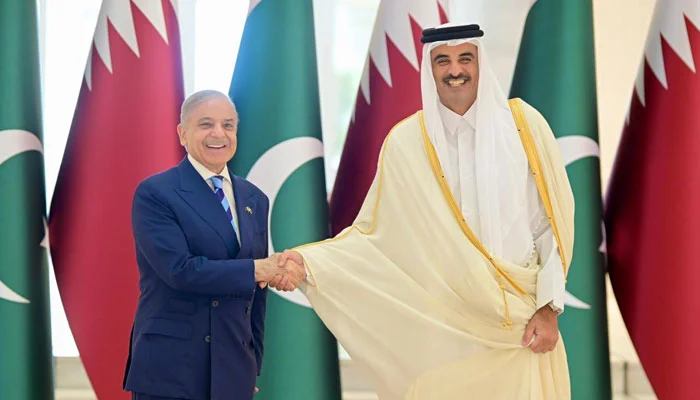
ISLAMABAD: Prime Minister Shehbaz Sharif and Qatar’s Emir Sheikh Tamim bin Hamad Al Thani spoke by telephone on Wednesday and expressed satisfaction on the opening round of US-Iran technical negotiations, pledging to sustain diplomatic momentum as the two co-mediating nations prepared to rejoin talks in Switzerland that are expected to resume early next week.
The call, Sharif on social media said was “warm and most cordial,” and came as Qatar’s Prime Minister Sheikh Mohammed bin Abdulrahman Al Thani flew to Oman on the same day to open separate consultations with Gulf states, Iraq and Iran on arrangements for the Strait of Hormuz — one of the most contested elements of the framework the two sides are trying to lock down.
Together, the twin diplomatic moves illustrated the scale of the architecture that Pakistan and Qatar have built around a landmark accord signed a week ago and the pace at which they are now working to translate it into durable agreements.
“We expressed satisfaction at the positive progress made during the first round of technical talks in Bürgenstock and agreed on the importance of sustaining this momentum through continued dialogue and diplomacy,” Sharif wrote in a post on X.
THE ACCORD AND ITS ARCHITECTURE
The framework driving the process — formally known as the Islamabad Memorandum of Understanding — was electronically signed on June 18 between the United States and Iran, with Pakistan serving as mediator. The 14-point accord sets out a framework to end hostilities, reopen the Strait of Hormuz and negotiate on a range of security and nuclear issues within 60 days of signing.
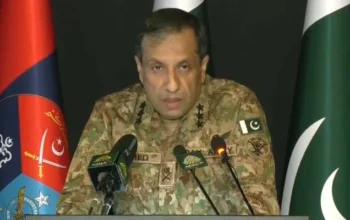
A first high-level meeting under the MoU followed on June 20-21 at the Swiss resort of Bürgenstock. US Vice President J.D. Vance and Speaker of the Iranian Parliament Mohammad Bagher Ghalibaf led their respective delegations. Pakistan was represented by Prime Minister Sharif and the Chief of Army Staff and Chief of Defence Forces, Field Marshal Asim Munir. Qatar’s prime minister led the Qatari delegation.
A joint statement issued by Pakistan and Qatar as co-mediators laid out five concrete steps from that meeting: a high-level political oversight committee; working groups on nuclear issues, sanctions and dispute resolution led by chief negotiators reporting to that committee; a 60-day roadmap toward a final agreement; a dedicated communication channel between the parties to prevent incidents and ensure safe passage through the Strait of Hormuz; and a “de-confliction cell” between the parties and Lebanon, facilitated by the mediators.
Technical-level talks between Washington and Tehran then followed on June 22, also at Bürgenstock, mediated by Pakistan and Qatar. Pakistan’s delegation at those talks was led by Special Secretary and head of the United Nations and OIC Division, Ambassador Nabeel Munir, who is expected to continue in that role for subsequent sessions.
The foreign ministry said the technical talks were not concluded but had entered a brief pause, with the next session due around Tuesday. “The parties are on the table. This is a significant positive outcome,” Pakistan’s foreign ministry spokesman told reporters on Wednesday. “This is the start of the process. Positive results will be yielded as we move ahead.”
HORMUZ: THE PRESSURE POINT
The Strait of Hormuz, through which roughly a fifth of the world’s traded oil passes, remains the most operationally sensitive thread in the negotiations. Conflicting positions among the parties on the waterway’s legal status — complicated by the fact that Iran does not recognise the UN Convention on the Law of the Sea, to which the United States and most Gulf states are party — have made it one of the harder problems to resolve.
Pakistan’s official position sidesteps the legal question while pressing for an outcome. The foreign ministry spokesman described the strait as “an important maritime route, which is essential for global economic sustenance, for supply chains, for energy markets,” and said Islamabad wanted it to remain open for navigation as it had been “for years and decades.” He said Pakistan backed any Gulf Cooperation Council initiative on the waterway and supported the rights of littoral states under applicable international maritime law, provided those rights were exercised in a manner consistent with freedom of commerce.
Qatar’s prime minister’s mission to Oman is aimed at building a regional ownership structure around that principle. A diplomat briefed on the discussions told AFP that the visit was intended to initiate talks between Gulf states, Iraq and Iran on the Strait — a parallel track to the formal US-Iran negotiations mediated by Islamabad and Doha.
In a sign of the pace of incremental progress, the United States has already suspended, temporarily, some of its economic pressure on Tehran. Washington issued a general licence permitting the sale of Iranian crude oil and petrochemical and petroleum products of Iranian origin, valid through August 21 — a measure widely seen as conditional on continued engagement at the table.
Pakistan’s foreign ministry said the de-confliction mechanism established at Bürgenstock, including the communication channel on the strait, was already operational. The spokesman said that a return to the full pre-conflict status quo in the waterway would take time, not from lack of political will but as “an operational necessity,” given the military assets still deployed by both sides.
IRAN’S PRESIDENT IN ISLAMABAD
Tuesday’s visit by Iranian President Masoud Pezeshkian to Islamabad — his first trip to Pakistan since the war and the signing of the Islamabad MoU — provided an opportunity for both governments to consolidate the relationship that has grown from Pakistan’s mediating role.
In formal delegation-level talks with Sharif, the two sides reviewed the full breadth of bilateral ties, covering trade, energy, border security, people-to-people exchanges and regional connectivity. The Army Chief and the Field Marshal separately called on the Iranian president. Pezeshkian also met Pakistani President Asif Ali Zardari.
The visit produced no new memoranda of understanding. Pakistan’s foreign ministry said this was intentional: the purpose of the visit was to advance implementation of agreements reached during Pezeshkian’s earlier trip to Islamabad, not to sign new ones. Iran, it said, had used the occasion to reaffirm its confidence in Pakistan as mediator — an outcome Islamabad described as the most significant result of the day.
The spokesman was pointed on the question of when economic dividends would flow. Prospects for bilateral projects — including the long-stalled Iran-Pakistan gas pipeline, which remains exposed to U.S. and European sanctions — would depend directly on the pace of sanctions relief for Tehran.
“As sanctions are lifted, the opportunities will open up,” the spokesman said. “Progress on these projects will hinge on the pace of relief on sanctions. It is important to match the two.”
One episode during the visit drew brief but pointed media attention. Prime Minister Sharif appeared to have made a reference to strategic and missile programs in remarks delivered during the delegation-level segment of the talks, then deleted at least one social media post related to the subject. Pakistan’s foreign ministry declined to elaborate, referring reporters to Sharif’s own public statements and emphasising that the missile program was not part of the Islamabad MoU. The spokesman said the matter had been “very amply” addressed by the prime minister himself and should rest there.
THE REGIONAL ARCHITECTURE: R-4 AND BEYOND
In his Wednesday call with the Qatari emir, Sharif also thanked Qatar for its “steadfast support for the peace efforts that culminated in the historic Islamabad Memorandum of Understanding” and expressed appreciation for the roles of Saudi Arabia, Turkey and Egypt — the three countries that, alongside Pakistan, form the “R-4” contact group supporting the process.
The R-4 foreign ministers had met in Cairo on June 21, with Pakistan represented by Deputy Prime Minister and Foreign Minister Ishaq Dar. The group reviewed progress on the MoU, issued a joint statement and held a collective call with Egyptian President Abdel Fattah el-Sisi.
Dar had also maintained an intensive parallel diplomatic engagement in the weeks leading up to the MoU’s signing, speaking with his counterparts in Turkey, Egypt, China, Saudi Arabia, Italy, Japan, Switzerland, Canada, Bahrain, Azerbaijan, Uzbekistan and the EU’s foreign policy chief across a ten-day span. He made multiple calls to some counterparts, reflecting the sustained coordination required to bring the process to the point of a signed agreement.
Sharif told the Qatari emir he looked forward to welcoming him to Pakistan “later this year,” and thanked him separately for condolences extended over the death of a Pakistani national in a fire and explosion at the Ras Laffan liquefied natural gas complex in Qatar. At least 13 people were killed and 66 injured in that incident, which Qatari authorities attributed to a technical malfunction; twelve of the dead were Indian nationals.
WHAT COMES NEXT
Pakistani officials said they harboured no illusions about the difficulty of the path ahead, but expressed confidence that the institutional structure created at Bürgenstock — with its working groups, oversight committee and defined timeline — had given the process a durability it previously lacked.
The working groups on nuclear issues, sanctions and dispute resolution are expected to be the mechanism through which the three core Iranian demands — relief from U.S. and UN sanctions, restoration of freedom of navigation in the Strait of Hormuz and guarantees against future military action — are addressed in parallel with U.S. concerns about Iran’s nuclear programme.
Whether the 60-day clock produces a final deal remains uncertain. But Pakistan’s foreign ministry, in rare public satisfaction with its own diplomatic output, noted that the Islamabad MoU and the Bürgenstock meetings had reinforced “faith in dialogue and diplomacy as the most effective means for the peaceful settlement of disputes.”
Ambassador Nabeel Munir is expected to lead Pakistan’s delegation when the technical talks reconvene in Switzerland early next week.
Copyright © 2021 Independent Pakistan | All rights reserved