By Staff Reporter
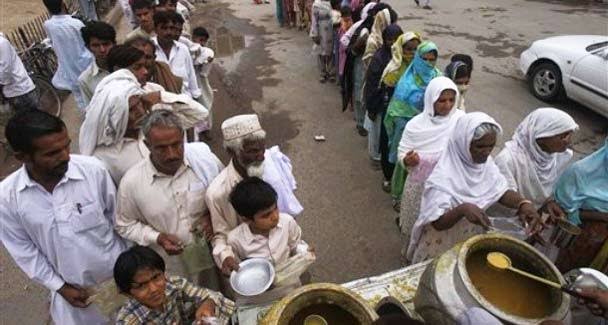
ISLAMABAD: Hunger in Pakistan has worsened since 2018, leaving it ranked 106th of 122 countries on the 2026 Global Hunger Index and one of just two South Asian nations to lose ground.
Pakistan scored 25.5 on the index, which was released Wednesday, up from 24.0 in 2018 and still within the “serious” category. Afghanistan, ranked 108th with 28.6, was the only other South Asian country whose score deteriorated over the period. India, Bangladesh, Nepal and Sri Lanka all improved.
The report was published by Welthungerhilfe, the Institute for International Law of Peace and Armed Conflict at Ruhr University Bochum, and the Swiss organisation Helvetas under the theme “No Security Without Food Security.” It said economic instability and sharp food-price inflation have eroded Pakistani households’ purchasing power and limited their access to food. Undernourishment in the country has climbed from a low level in 2018 to a medium one, while child wasting has risen toward the high threshold. Pakistan’s child stunting rate continues to fall, whereas Afghanistan’s has edged up since 2018. Child mortality in both countries has declined from very high levels in 2000 to medium levels.
South Asia as a whole scored 23.5, down from 37.5 in 2000, though the report said most of that progress came before 2018 and has since largely stagnated. India scored 24.1 and ranked 100th, Bangladesh scored 19.2, and Nepal, at 14.5, achieved the region’s strongest long-term progress. Pakistan and Afghanistan have both moved from the “alarming” to the “serious” category since 2000, but child stunting in the region remains very high.
The report warned that acute food insecurity will stay elevated across the region. Heavy rains and flooding caused localised crop losses in parts of Pakistan and Bangladesh, while below-average rainfall and above-average temperatures hurt Afghanistan’s 2026 cereal-growing season. The Food and Agriculture Organization estimates that 218 million people in South Asia, including Iran, were undernourished in 2023-2025, roughly one-third of the global total.
Other assessments this year have pointed in the same direction. The 2026 Global Report on Food Crises listed Pakistan among the 10 countries with the largest food crises in 2025, with about 11 million people facing severe food insecurity, and it flagged Balochistan, Sindh and Khyber Pakhtunkhwa as areas of nutrition concern. That report projected inflation in Pakistan rising to 6% in 2026. At a seminar in Islamabad in May, projections were presented pointing to as many as 20 million people facing acute food insecurity and malnutrition between April and September.
Globally, hunger is rising again after nearly two decades of progress. The 2026 global score is 18.1, worse than 17.6 in 2018, and well below the 28.2 recorded in 2000. Three of the index’s four indicators have deteriorated since 2018: undernourishment, child stunting and child wasting. Only child mortality has continued to decline, and only slightly. Hunger has increased in 32 countries over that period, and if progress continues at the pace seen since 2000, 57 countries will miss the low-hunger threshold by 2030.
Hunger is classified as serious in 36 countries and alarming in eight: Burundi, Chad, the Democratic Republic of the Congo, Madagascar, Somalia, South Sudan, Sudan and Yemen. Somalia posted the highest score among countries with full data, at 47.0. The report said data gaps in several crisis settings, including Sudan, South Sudan and Yemen, prevented full scoring, a problem it linked to access constraints and funding shortfalls.
The report identified conflict and climate as the main drivers of the reversal. State-based armed conflicts are at their highest level since World War II, and extreme weather events have become frequent. The war involving the US, Israel and Iran, along with shipping disruptions in the Strait of Hormuz and the Bab al-Mandab Strait, is pushing up fuel, transport and fertiliser costs. The head of the Institute of Regional Studies in Islamabad said in May that almost 30% of global fertiliser trade passes through Hormuz. Russia’s war in Ukraine and Black Sea export restrictions threaten higher wheat prices, which would make basic supplies less affordable across the Global South.
Money for the response is shrinking. Humanitarian and development financing for food sectors in crisis settings has fallen to levels last seen in 2016-2017, forcing cuts to major operations and emergency rations. The report urged governments and donors to halt and reverse those cuts, to keep funding data collection, and to build food and nutrition security into national security and resilience policy.
It also pointed to progress. Since 2018, 31 countries have cut their scores by at least 10%, including nine by more than 20%. Uganda recorded the largest improvement in sub-Saharan Africa, and Togo moved from the serious to the moderate category.
Copyright © 2021 Independent Pakistan | All rights reserved