By Staff Reporter
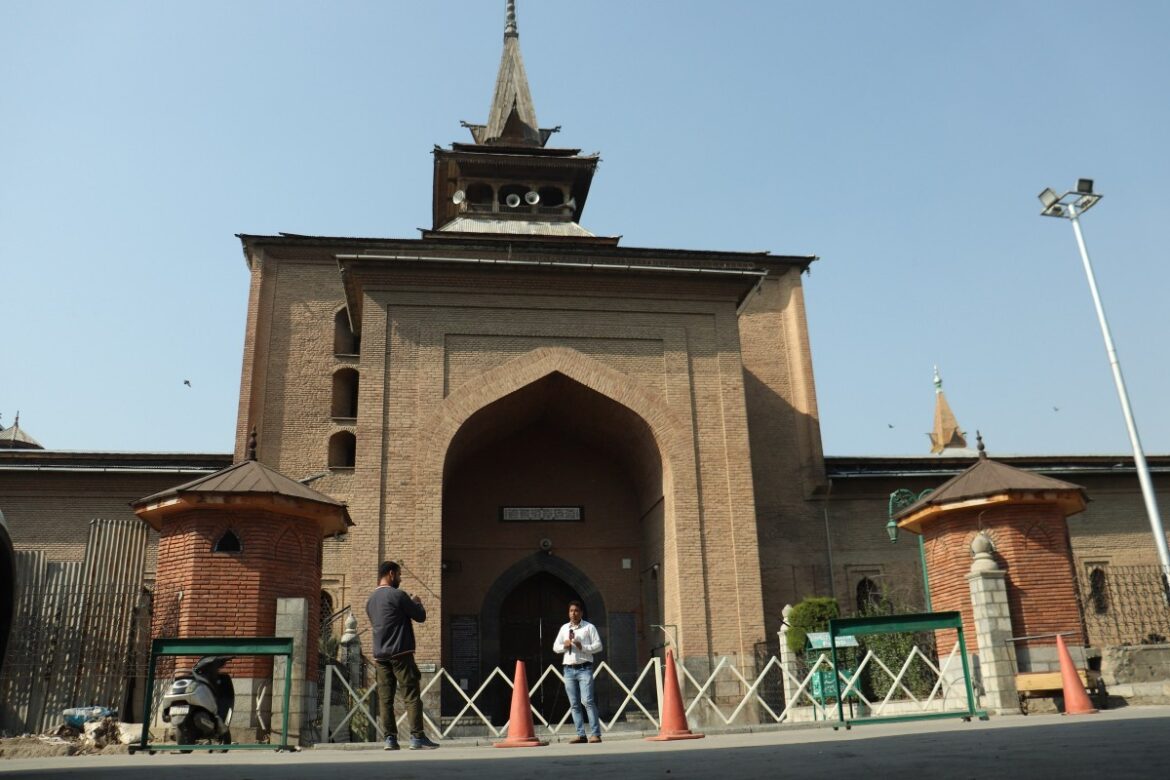
ISLAMABAD: The Foreign Office on Friday issued a sharp rebuke of Indian authorities for keeping the gates of Srinagar’s centuries-old Jama Masjid locked, barring thousands of Muslim worshippers from prayers on the last Friday of Ramadan in the disputed Himalayan region of Kashmir.
The ministry described the closure as a “serious violation of religious freedom and fundamental human rights” in Indian Illegally Occupied Jammu and Kashmir. It marked the seventh straight year the mosque had been sealed on this spiritually significant day since India stripped the region of its special autonomous status in 2019.
“Preventing worshippers from offering congregational prayers at one of the most revered mosques in the valley constitutes a serious violation,” the Foreign Office said in a statement. “Such restrictions on religious practice, particularly during the sacred month of Ramazan, are deeply concerning.”
The statement called on the United Nations, human rights organisations, and the broader international community to “take notice of these actions and urge India to ensure the freedom to practice religion as a fundamental human right in the occupied valley.”
The condemnation followed a public appeal earlier Friday by Mirwaiz Umar Farooq, the chief cleric of Kashmir and chairman of the Hurriyat Conference, who posted on X that authorities had once again “locked” the mosque “from all sides.” “On the last Friday of holy Ramazan, when tens of thousands gather from towns and villages for prayers and supplication at the historic Jama Masjid Srinagar, its gates have once again been locked from all sides,” Farooq wrote. “As Israel has forcibly shut the gates of Masjid al-Aqsa during Ramazan, similar painful reality is witnessed here. Our hearts bleed.”
From the Azad Jammu and Kashmir, Information and Religious Affairs Minister Chaudhry Muhammad Rafique Nayyar issued his own forceful statement, calling the ban “extremely regrettable” and labelling it “an act of extremism that constituted a blatant violation of not only fundamental human rights but also internationally recognised principles of religious freedom.”
Nayyar accused New Delhi of first unleashing “some of the worst atrocities in human history in occupied Kashmir” and now seeking to silence the Kashmiri people by restricting their religious and social freedoms. The repeated closures of mosques and bans on religious gatherings, he said, revealed “the ugly face of the Indian extremist government,” which he charged with pursuing “a malicious policy aimed at suppressing the religious freedom and fundamental human rights of Kashmiri Muslims through coercive means.” “Faith, identity and religious freedom of the Kashmiri people could not be suppressed through force,” Nayyar declared. He, too, appealed directly to the international community and global human rights bodies to intervene immediately and help secure the fundamental rights of Kashmiris.
The episode underscores the persistent tensions over religious access in the region, where India and Pakistan have long clashed over control of Kashmir and where local leaders have repeatedly accused New Delhi of tightening restrictions on Muslim practices since the 2019 revocation of Article 370, the constitutional provision that had granted the territory limited self-rule.
Copyright © 2021 Independent Pakistan | All rights reserved