By Staff Reporter
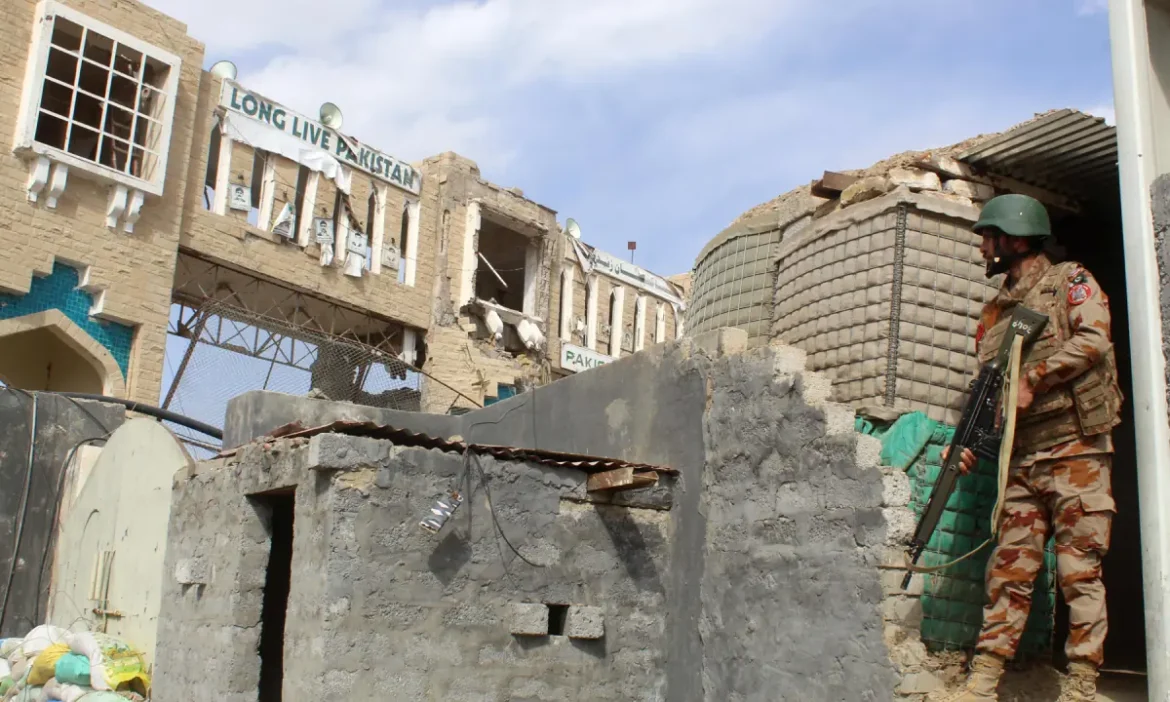
ISLAMABAD: The security forces have killed at least 641 Afghan Taliban operatives and wounded more than 855 others in a month-long border offensive that has become the most intense fighting between the two neighbors in decades, information minister said on Wednesday.
The toll, announced by Minister Attaullah Tarar on the social media platform X, also included the destruction of 243 Afghan checkpoints, the capture and demolition of 42 more posts, and the elimination of 219 tanks, armored vehicles and artillery pieces. Tarar said Pakistani airstrikes had further “decimated” 65 terrorist hideouts and support locations inside Afghanistan.
“Summary of Fitna Al Khawarij/Afghan Taliban losses: 641 killed, 855+ injured, 243 check posts destroyed,” Tarar wrote, using a term that frames the Taliban as extremists. He added that the operation Ghazab lil-Haq was continuing “as security forces press ahead with actions aimed at dismantling Afghan Taliban infrastructure and eliminating threats along the border.”
The clashes erupted Feb. 26 after Afghan border forces opened fire on Pakistani military installations. Kabul described its actions as retaliation for earlier Pakistani airstrikes that had struck Afghan territory. Both sides have since traded artillery barrages, ground assaults and air strikes along the 1,600-mile frontier, with Pakistani forces conducting repeated cross-border raids.
Pakistan has insisted that its campaign is strictly defensive, aimed at stopping systematic Taliban support for anti-Pakistan militant groups, including the Tehreek-e-Taliban Pakistan. Islamabad maintains that the Afghan Taliban government in Kabul has allowed these groups to operate training camps and staging areas on its soil. The Taliban has repeatedly denied the accusations, insisting it does not permit its territory to be used for attacks against other countries.
Relations between the two Muslim-majority neighbors have been poisoned since the Taliban seized power in Kabul in August 2021. Pakistan, which once backed the Taliban insurgency against the US-backed Afghan government, has watched with alarm as attacks inside its own territory have surged. Pakistani officials say the uptick is directly linked to sanctuaries inside Afghanistan. Afghan authorities reject the charge and have called for dialogue. Pakistan has ruled out negotiations, vowing to press the operation until Kabul ends all support for militants.
The fighting has placed an already volatile region on heightened alert. The border crisis unfolds against the backdrop of the ongoing US-Israel war against Iran, which has kept much of the Middle East and South Asia on edge. On Tuesday, the United States added a new layer of international pressure on Taliban regime. Secretary of State Marco Rubio announced that the Trump administration had designated Afghanistan a “State Sponsor of Wrongful Detention,” the second country placed on the new blacklist after Iran. The designation demands that the Taliban immediately release two detained Americans and abandon what Rubio called “hostage diplomacy.” “The Taliban continues to use terrorist tactics, kidnapping individuals for ransom or to seek policy concessions,” Rubio said in a statement. The move came just over a week after Iran was added to the list, which was created by executive order signed by President Donald Trump in September.
The border region, long one of the most remote and lawless in the world, has seen sporadic skirmishes for years. But the scale and intensity of the current fighting — involving tanks, artillery and airstrikes on both sides of the Durand Line — mark a dangerous new chapter in the turbulent relationship between two governments that once viewed each other as ideological allies.
Copyright © 2021 Independent Pakistan | All rights reserved