By Staff Reporter
KARACHI: Finance Minister Muhammad Aurangzeb pushed back against suggestions that the International Monetary Fund is dictating terms at odds with the country’s priorities, saying all reforms to date have bolstered the economy while serving national goals.
Speaking at the Pakistan Embassy in Washington on Saturday at the end of a six-day visit, Aurangzeb said the IMF cannot impose any conditions that run counter to Pakistan’s interests. “All the reforms undertaken so far under IMF programmes were consistent with Pakistan’s own economic priorities and had contributed to improving the national economy,” he said. “Please name any IMF-suggested reform that is not aligned with our national interest,” he added in response to a question.
The comments come as Islamabad awaits a key cash infusion from the multilateral lender. Aurangzeb announced that the IMF is expected to release a $1.2 billion tranche pledged under last week’s staff-level agreement by Dec. 31. “The Fund’s executive board will soon meet to review the agreement, and the amount will be released shortly thereafter,” he said.
The tranche forms part of a $7 billion IMF program agreed earlier this year, which has underpinned Pakistan’s efforts to stabilise its finances amid high debt levels and fiscal pressures. The government has committed to sweeping changes, including bolstering tax collection, trimming subsidies and privatising state assets, in exchange for the funding.
Aurangzeb, who held 65 meetings during the World Bank Group’s annual autumn meetings in Washington from Oct. 13 to 18, struck an upbeat note on bilateral ties with the US. He expressed optimism about finalising a trade and tariff agreement “within a week or two,” a potential boost for Pakistan’s exports at a time when global trade tensions are easing.
On the privatization front, the minister said the government is “close to deciding” the fate of the Roosevelt Hotel in New York, a storied property owned by flag carrier Pakistan International Airlines. The 100-year-old Manhattan landmark ranks among Pakistan’s most valuable overseas assets. Seven international consortia, including Citigroup Inc., have submitted bids to advise on the sale process. Media reports indicate Islamabad favors a joint venture model over an outright sale, aiming to partner with a redeveloper to unlock the site’s long-term potential. The move aligns with IMF-mandated privatisation steps designed to ease the burden on state-owned enterprises and generate revenue.
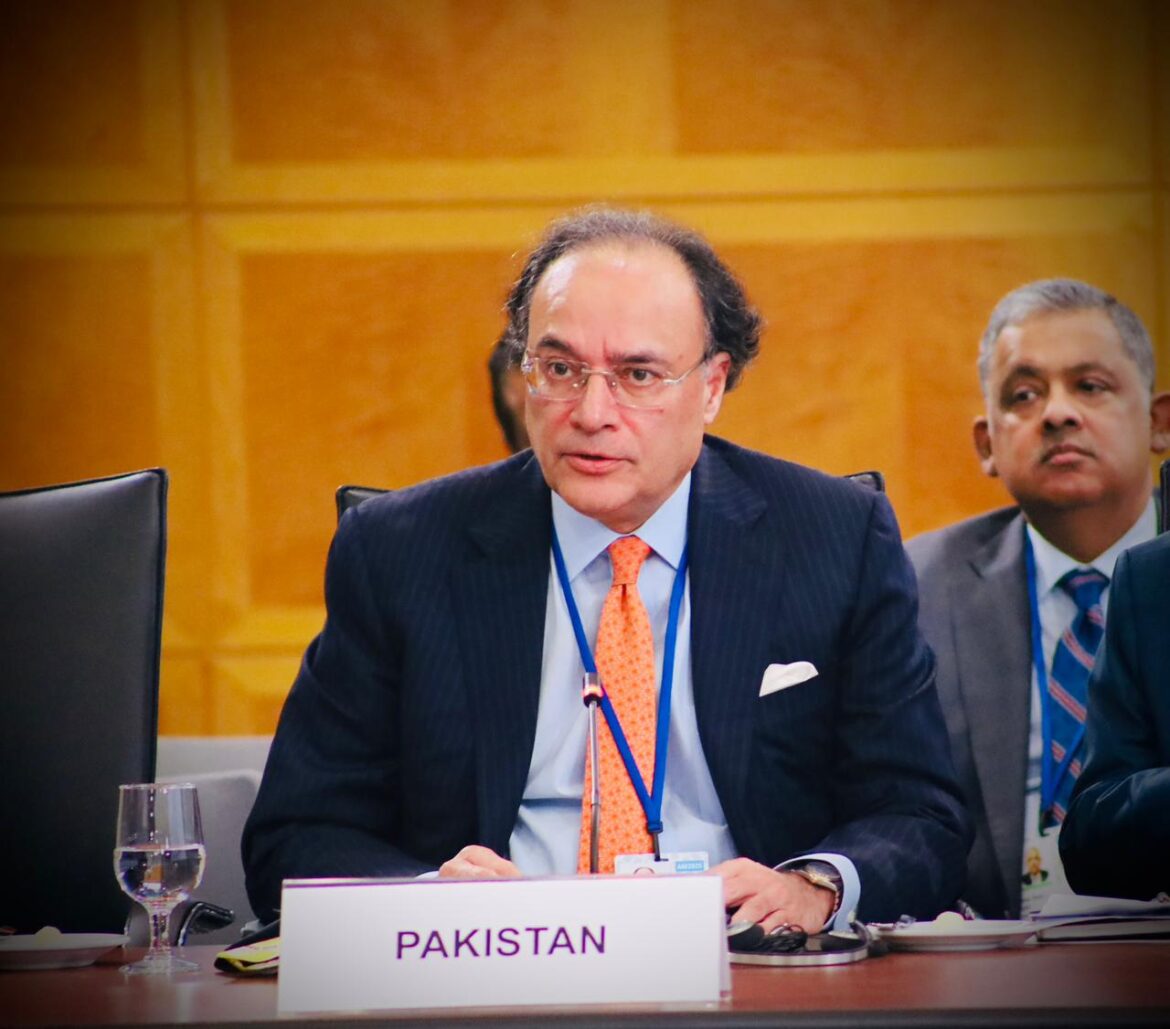
Pakistan’s economic overhaul extends beyond bilateral deals and asset sales. On Saturday, the country joined 68 other nations in the Vulnerable 20 group — a coalition of finance ministers from climate-exposed economies — in urging reforms to the global financial system. The appeal, issued on the sidelines of the IMF and World Bank annual meetings, calls for fairer access to climate finance and tweaks to lending rules to aid adaptation and recovery.
“Pakistan strongly supports the V20 agenda to reform the global financial architecture, ensuring that climate finance is more accessible and affordable,” Aurangzeb said in his address to the group. He stressed the imperative to tailor climate funding to vulnerable nations’ needs in order to “ensure resilient growth.” The South Asian nation, which contributes less than 0.9% to global greenhouse gas emissions, tops the Climate Risk Index 2025 amid recurrent disasters including the devastating 2022 floods. Experts estimate Pakistan requires $40 billion to $50 billion annually to mitigate and adapt to these threats effectively. To that end, Aurangzeb told the V20 gathering that Islamabad is advancing domestic reforms to draw in equitable climate capital. These include building pipelines of bankable projects, issuing green bonds and establishing carbon market mechanisms to lure investors.
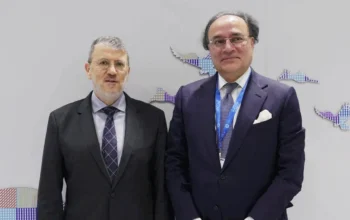
Aurangzeb capped his US visit by overseeing the signing of a swap agreement between the State Bank of Pakistan and the International Finance Corporation, while courting JPMorgan Chase & Co. on the country’s debut Panda bond and privatisation push. The accord with the IFC, part of the World Bank Group, was inked during Aurangzeb’s meeting with Managing Director Makhtar Diop on the sidelines of the IMF-World Bank annual meetings.
The finance minister hailed the IFC’s recent reorganisation, which has designated Pakistan as a regional hub, calling it a strong vote of confidence in the country’s rising economic potential. He also reaffirmed the government’s commitment to strengthening its partnership with the IFC across key development and financial sectors. Highlighting progress on the Reko Diq project, Aurangzeb expressed optimism about the EXIM Bank’s participation in the near future. The minister further appreciated the IFC’s continued support for subnational finance and Digital Payment Rights initiatives, as well as its advisory role in sectors such as pharmaceuticals, electric vehicles, and commodity exchanges. Aurangzeb welcomed Diop’s upcoming visit to Pakistan around the Spring Meetings, expressing confidence that it would further strengthen Pakistan-IFC collaboration.
Separately, Aurangzeb participated in the 15th V20 Ministerial Dialogue on “Cost of Capital, Debt & Growth Pathways.” In his address, he highlighted the increasing frequency and intensity of devastating floods in Pakistan, emphasising that the government continues to fund rescue and relief operations from its own resources. He appreciated the support extended by the CVF-V20 Secretariat in assisting Pakistan with the preparation of its Climate Prosperity Plan, and informed that financing is being made available under the Country Partnership Framework to operationalize the plan.
Aurangzeb also underscored the need to operationalise the Loss and Damage Fund and called for fast-tracking decision-making processes at the Green Climate Fund to ensure timely and effective climate action for vulnerable countries. In another engagement, the finance minister called on the senior management of JPMorgan on the sidelines of the IMF-World Bank meetings. He briefed the JPMorgan team on Pakistan’s upcoming inaugural issuance of the Panda Bond in the Chinese market, noting that it would be launched as a green bond to support sustainable financing objectives.
Copyright © 2021 Independent Pakistan | All rights reserved